Showing posts with label Afghanistan. Show all posts

Monday, January 9, 2023

War by Sebastian Junger


Reviewed by Ben


War by Sebastian Junger is a true story of an American journalist who embeds himself in Battle Company, a US Army infantry division that fought for control of the Korengal Valley in Afghanistan. Published in 2010, the events described in the book take place during the early years of President Obama's first term. While collecting notes for the book, Junger and cameraman Tim Hetherington captured video footage that would be used to make the documentary "Restrepo." War was written with plain-yet artful-language describing the company's tour in the Afghan mountains. Junger is never pretentious. He levels with the reader regarding what happens during war and how it changes people. The narrative hits the reader with a thud.


The overriding themes of the book are how combat forges bonds and--sometimes--sucks people in. Some of the fiercest fighting of the war in Afghanistan took place in the Korengal Valley, a short, narrow strip of land in the mountains. If you search for this location in Google, you will see a lot of sources calling this one of the most dangerous places on Earth during the war and the US occupation. The valley presented a harsh environment that conferred an advantage to local insurgents who were accustomed to climbing the steep, rocky hillsides and less laden with heavy loads of equipment. Battle Company could come under fire anywhere, at any time. The Americans thus depended on each other for protection and became very close to each other. Deaths and casualties hit the group hard.


Even though combat presented the dangers of potential death, dismemberment, and psychological trauma, some of the members of Battle Company enjoyed combat. When winter brought a lull in insurgent activity, the men openly wished for firefights. One member of Battle Company who featured the most prominently in the book, O'Byrne, had a hard time conceiving of life back home as his tour drew to a close. He weighed signing a new contract with the Army and returning to the remote Korengal outpost, where mysterious men would resume trying to kill him.


War is a book I highly recommend. The narrative of the true events is exciting. The author's reflection on combat and what it does to men is compelling. Hearing the stories of enlisted men who long for gunfights is fascinating. All of this comes in a package that eschews the partisan political takes that we all heard years ago. Do yourself a favor and read this book.

Monday, June 8, 2015

The Pearl That Broke Its Shell by Nadia Hashimi

Wednesday, May 28, 2014

Nevermore: Sliver of Light, Wrong Enemy, Maine, Star Called Henry, and Close My Eyes


Summary by Jeanne
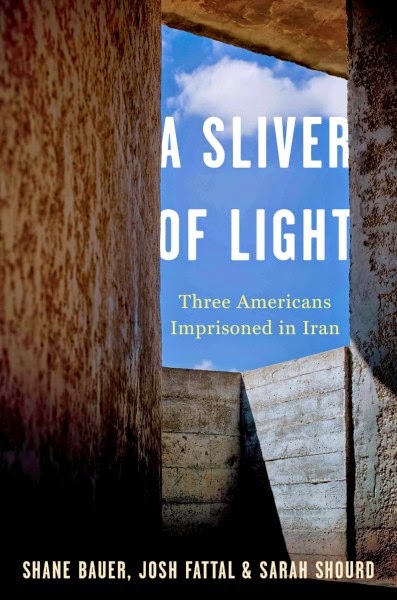
One of our Nevermore regulars was unable to attend a meeting, but she insisted on phoning in a review.  She was most enthusiastic about A Sliver of Light:  Three Americans Imprisoned in Iran by Shane Bauer, Joshua Fattal and Sarah Shourd.  This is the story of the three young hikers who were captured and held for two years, at least in the case of the two men.  Our reviewer said it was a beautifully written book and the story was absorbing.  According to the book, they were actually lured across the border to be used as political pawns.  Much of the rest of the story concerns how they were able to survive imprisonment, the relationships they forged with each other and with their captors, and how they were finally released. The story is told by all three in alternating chapters.  A Sliver of Light is highly recommended.

Another book receiving much praise is set in the same region.  The Wrong Enemy: America in Afghanistan, 2001-2014 by Carlotta Gall is an overview of the U.S. involvement in the area.  Gall, a foreign correspondent for the New York Times, brings over a decade’s worth of observation to this insightful, well written, and—in the words of our reviewer—scary book.  Gall views Karzai as both inept and corrupt, but makes a case that our real problem is actually Pakistan where the ISI has supported the Taliban for its own purposes.  Again, the book is highly recommended.

Moving from non-fiction to fiction and from Iran to Ireland, our next reader touted Roddy Doyle’s A Star Called Henry.  This is the first book of “The Last Roundup” trilogy which tells the story of Ireland in the 20th century as viewed by Henry Smart.  In this book, we meet Henry as an impoverished child, son of a hit man with a wooden leg and a teenage girl.  By 14, Henry is involved with the Irish Republican Army and is a witness to the 1916 Easter Rising. Later books follow Henry as he goes to New York, encounters film director John Ford, and back to Ireland.  The other books are Oh, Play That Thing and The Dead Republic.

Maine is the second novel for J. Courtney Sullivan, following Commencement.  Once again, Sullivan explores the intricacies of relationships, but this time between three generations of women in the Kelleher family.  Each year, they all meet at the family beach house in Maine.  The point of view rotates between the characters, giving the reader multiple viewpoints to consider.  Our reader praised the book for its great dialog and well-written characters.  She commented that while the reader does see the mistakes of one generation repeated in the next, that it all “felt real.”

In Close My Eyes, Gen Loxley is still grieving for her stillborn daughter eight years later.  Then one day a woman shows up at her door with a fantastic story about the baby being stolen and that Gen’s husband Art was in on the scheme.  Desperate for answers, Gen doesn’t know who to turn to for help or who to trust as she tries to discover the truth about her child.  Our reader found this thriller by Sophie McKenzie to be a very satisfying book, and thinks any suspense fan would enjoy the book.

Wednesday, July 10, 2013

Don’t Go by Lisa Scottoline


Reviewed by Kristin

Bestselling author Lisa Scottoline is known for her strong female characters and gripping suspense stories.  In Don’t Go, Scottoline tackles a male protagonist, Dr. Mike Scanlon.  For the most part, I found the main character to be believable, although there were a few spots where I didn’t believe he would act in a particular manner.

On military duty in Afghanistan, Mike receives word that his wife Chloe has died in a household accident.  He is granted a very short leave to come home to arrange her funeral, and then must return to the frontlines, leaving his baby daughter with his wife’s sister and brother-in-law.  With an extreme shortage of doctors, Mike is asked to extend his service in Afghanistan.  Mike is pulled in both directions, feeling that he needs to be home for his daughter, but also feeling that military casualties will rise if he does not stay in Afghanistan to support his unit.  His remaining time overseas is fraught with danger, and he returns home with a whole new set of challenges.

His medical practice has been changed with the addition of new partners and he has trouble finding his place within the medical field as well as within his own family.  Because Mike has been away from his daughter Emily for an extended time, she does not recognize him and is scared of him.  Although Mike tries his best, he knows next to nothing about caring for a baby.  Additionally, many questions have popped up about Chloe’s death, although Mike seems to be the only one suspicious enough to investigate.  He goes blundering about like the proverbial bull in a china shop, risking his professional and family life.

In the end, Mike discovers many things about himself and about his co-workers and family.  The book takes a couple of twists and turns that I found hard to believe, and perhaps all the story lines are tied together a little too quickly and neatly at the end.  But overall, this was still a worthwhile story to read.

Lisa Scottoline is the author of twenty novels and also has a column entitled “Chick Wit” in The Philadelphia Inquirer, which she writes with her daughter, Francesca Serritella.  Their humorous stories have been turned into a series of non-fiction books entitled Best Friends, Occasional Enemies, Why My Third Husband Will Be a Dog, My Nest Isn’t Empty, It Just Has More Closet Space and Meet Me at Emotional Baggage Claim.  These stories, which only take a couple of minutes to read, are laugh-out-loud funny.

Wednesday, January 6, 2010

In the Graveyard of Empires Clarifies the Gordian Knot of Afghanistan

Reviewed by Doris

A few weeks ago a group of online friends and I were discussing the situation in Afghanistan and what should be done there. I realized I knew almost nothing about the history of Afghanistan. I went looking for a book that would help me with the country’s history and information about what is arguably the longest war America has ever fought. On our new book shelf was In the Graveyard of Empires: America’s War in Afghanistan by Seth G. Jones (958.1047 JON Main). Though I am still quite conflicted as to what the best move is for the United States regarding Afghanistan, I understand so much more about the complexity of the country and our current situation there after reading this excellent book.

Afghanistan rightly deserves the title of “the graveyard of empires.” In 330 B. C. Alexander the Great had defeated the great Persian Empire and headed into Afghanistan on his way to India. Having encountered little resistance throughout Eurasia, Alexander was unprepared for the fierce Afghan tribesmen. His legions, which may have numbered more than 100,000 soldiers in Afghanistan, suffered their heaviest losses at the hands of the phantom attackers who slaughtered his troops from their mountain hideaways. Under continuous attack, Alexander ordered his generals out of the region with all possible speed.

Over the next two thousand years the region continued to be a problem for major empires from both the East and West including Genghis Khan, Tamberlane, Babur, the British, and of course the USSR. In 1842 in the First Anglo-Afghan War the departing British forces were reduced from 16,000 to one lone Army surgeon who survived. It is about this war that Rudyard Kipling wrote of the young soldiers lying wounded on the battlefield waiting for the Afghan women to come with their sharp knives. England would fight two more Afghan-Anglo wars with similar results. Most recently, the ten year war the USSR fought against the Muhadjin is partially credited for the downfall of the Soviet state with billions spent and causalities totaling more than eleven thousand elite Spetsnaz GRU Soviet Special Forces.

Jones has done a tremendous amount of research and combined it with his own perceptions. He carefully documents America’s invasion of the country after 9/11. From that point forward he fully explains the development of the insurgency that evolves as America misses opportunity after opportunity to shut down the Taliban, warlords, and the drug cartels that thrive in the unstable atmosphere. As each military decision seems to create more problems for a fragile Afghan government and our own forces, Jones shows how the insurgency is rapidly growing in strength, arms, and area. It is obvious we have lost the tiny window of opportunity we had as Afghanistan and Pakistan become more and more unreliable allies and unstable politically. Unsurprisingly this has been confirmed this week with the release of additional intelligence information about our initial move into Afghanistan after 9/11.

Jones’ research is thorough and well-documented. He weaves history and his own knowledge into the mix along with information from his sources within the Afghan military and government. The issues are highly complex, but I found his style of writing and the knowledge he was sharing relatively easy to follow. He does not take a political stand at all: he provides the facts and shows where we missed each opportunity and where failure after failure has led us to today. While I have always thought I followed the news closely and I understood what the issues are, I was wrong. The country of Afghanistan is still a Stone Age country in many, many ways. It has been at war almost its entire existence. There is no simple answer to any of its problems or to our involvement. In the Graveyard of Empires is an outstanding analysis of the place, the war, and America’s dilemma.