Showing posts with label family relationships. Show all posts

Friday, November 6, 2026

Some People by Parini Shroff


Reviewed by Jeanne

Nathan Whitlock is startled to receive a call from the hospital about his mother-in-law, Malti Patel.  Well, soon to be ex-mother-in-law. With her daughter Kavya studying in India, Nathan is the only contact they can find and he dutifully goes to check on Malti.

Trouble is, Malti and Nathan have never really gotten along.  From Nathan’s point of view, Malti is stubborn, judgmental, and unreasonable.  Of course, from Malti’s point of view, Nathan is the same.  Can these two possibly stand each other for a week?

I love good characterization and this book relies on exactly that.  It’s pretty much just these two characters trying to navigate a constrained space, butting heads, and coming to some interesting realizations.  Shroff uses these two to provide some thoughtful commentary about gender divides, cultural divides, and even generational divides, and does so in a delightful manner.  There is so much humor in the book, which is a great disarming technique.  I found myself agreeing with both characters, even as they gradually let down their guards to consider another point of view, and to examine assumptions they have made. It’s quite the feat for the author to have created two sympathetic characters who are so at odds. The one thing they both agree on is that they love Kavya, and that both of them have let her down. They also realize that they are more alike than is comfortable. Malti even says at one point that she was so determined to keep Kavya from marrying a man like her father that she didn’t notice she married her mother.

The other thing that I love is that even as the two learn to view each other differently, it doesn’t make everything all hunky-dory. They still butt heads and get on each other’s nerves; they’re also just a little more open—maybe because they are also both aware that when the divorce is final, they won’t have any ties to each other. They can feel free to say what they like, because soon it won’t matter.

It also gave me food for thought about my own relatives and, well, I guess myself. Because Shroff isn’t into pointing fingers or declaring one thing right and another wrong, it’s all but impossible to get defensive.  As Nathan points out, we are more than the sum of our mistakes. And we can’t control what other people perceive or remember.

Funny, moving, and wise, this is a real gem.  And did I mention funny?

Monday, September 9, 2024

The Most Human: Reconciling with My Father, Leonard Nimoy by Adam Nimoy


Reviewed by Jeanne

While the title sounds a bit like a celebrity tell-all, this is no Mommy Dearest.  While Adam Nimoy does blame some of his problems on having a father who was an emotionally distant, hypercritical, and often absent alcoholic, the primary focus of the book is about how Adam faced up to his own addiction to pot.

He became addicted as a teenager but it wasn’t until he became an adult that Adam realized he needed to break his habit. Unhappily married with two young children, he enrolled in a program and began to try to put his life together. 

Getting sober didn’t immediately fix all his problems.  His marriage ended in divorce, and his children were angry and hurt, especially his daughter, Maddy.  His relationship with his father didn’t improve.  His mother suffers from depression and possibly hypochondria, visiting doctor after doctor in hopes of a terminal diagnosis.

That’s a lot of temptation to fall back into old habits, but Adam perseveres.  The reader learns a lot about the Twelve Steps and just what it means to make an amends. He also has the support he needs to realize what he needs to work on, including thinking twice before speaking, and to recognize that being an addict since his teens has stunted his emotional growth.  He’s very much a work in progress.

To his credit, he also refrains from celebrity name-dropping and downplays some of his entertainment connections.  He does reference his directing jobs and why those ceased (“It’s not the work, it’s the attitude”) while he was still using.

That’s not to say there are no personal aspects to the book. One important part is when Adam examines his father’s formative years as the child of Jewish immigrants who did not support Leonard’s acting ambitions either emotionally nor financially.  It does help him understand some things from his father’s perspective, even if Adam does have grievances of his own.

Mostly, it’s the story of a man trying to find his place in life and his search for someone to share it with.  It’s well told and interesting, though at times there is an emotional distance from the reader.  It does read more like AA Sharing in that he is only reporting his feelings and not anyone else’s with very few exceptions.   I liked learning about the recovery program, and hope to employ WAIT (Why Am I Talking?) in my own life because there are times I just need to shut up.

Like now.

Monday, May 25, 2020

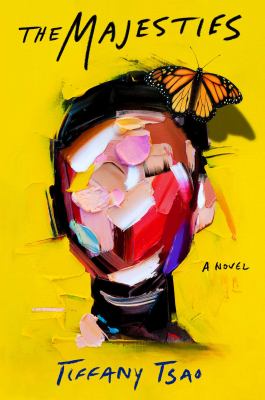
The Majesties by Tiffany Tsao


Reviewed by Christy

            Estella and Gwendolyn are part of a very large and very rich Chinese-Indonesian family. The two sisters have always been close and each other’s best friends. So when Gwendolyn finds herself in a coma, unable to regain consciousness but still fully aware, she is devastated and confused. She is the only survivor of Estella’s poisoning of their entire family (as well as a significant number of family friends) at their grandfather’s birthday celebration.

            The entire novel consists of Gwendolyn rifling through her memories and trying to figure out what could push Estella so far over the edge. Tsao writes a compelling narrative. Gwendolyn jumps around in time quite a bit, and it can be disorienting. But I think it works well with a mystery as she slowly reveals more information. It also seemed realistic given her circumstances. The story of the family’s climb to power and wealth is rich and layered, as are Estella and Gwendolyn as characters. Tsao’s writing is mostly straight forward with poetic dashes thrown in here and there. I enjoyed my time reading her book – for the most part.

            The ending, however, is where it almost all collapses for me. I don’t want to spoil anything for anyone but it includes a trope that is, in my opinion, very overdone and one of my least favorites. It’s particularly disappointing because I do think the story is strong and with a few tweaks of the ending, it would be a solid 4 or 5 star read. There didn’t need to be a gimmick. As it is, it was only an unexceptional 3 star read for me. If you’re a reader who doesn’t let an unsatisfying ending negatively influence your reading experience, you might like it more.

** I received a copy of this book from Netgalley in exchange for an honest review. **

Friday, August 30, 2019

The Library of Lost and Found by Phaedra Patrick


Reviewed by Jeanne

Martha Storm is a volunteer librarian—actually, she’s a volunteer everything whether she wants to be or not.  She’s just one of those people who ends up being a doormat for others.  She was the one who looked after her parents, Thomas and Betty, until they died, while younger sister Lilian married and began a family.  Martha is the one who ends up doing laundry, altering clothes, storing costumes, and even trying to repair a papier-mache dragon’s head.  She’s always been the one people depended on but never seemed to appreciate. 

Except for Joe, whom she had hoped to marry before her parents became ill; and Zelda, her mother’s mother, who encouraged her to do outrageous things that incurred her father’s wrath.  But Joe moved to America, and Zelda died long ago, so now all Martha has is her place at the library and a house packed to the brim with things: her parents’ things, her sister’s things, all the stuff that people want to keep but not at their houses.

Then one day, Martha finds a package addressed to her.  Inside is a coverless book of fairy tales with an inscription to Martha from Zelda, dated 1985.

 Only Zelda died in 1982...

I admit I was put off a bit at first because not only was Martha downtrodden, but the flashbacks to her childhood made me dislike her father intensely.  He was incredibly controlling, keeping a tight rein on the purse strings, his daughters’ reading (disdaining fiction, fairy tales, and everything creative), and generally kept everyone under his thumb—except for Zelda, which is exactly why he and Zelda clashed so fiercely.

However, I felt sorry for Martha and thought I owed it to her to see her through. Surely, things have to look up for this poor woman!

I’m glad I did, and was able to see her rise to the occasion over and over again. It was good to see her gradually realize that she had intrinsic worth, that she wasn’t defined only by ways that she could help others.  I also met vivid characters—Suki with her malapropisms, ah-mazing Zelda, stoic Siegfried, and even rigid Thomas-- and explored a tangle of family secrets.  There was young love, mature commitment, and a woman learning that she can break free from the past and her own insecurities.  I may still not approve of Betty’s choices, but I understood them a bit by the end, and I closed the book satisfied.  I liked how the author used the fairy tales to illuminate situations and characters, and how skillfully she wove the strands of the story together.  Of course, all the book titles and authors that were dropped into the story delighted me. 

This is a charming tale and I look forward to reading more from Patrick.

Monday, October 10, 2016

Saint Anything by Sarah Dessen


Reviewed by Ambrea
Sydney is used to being invisible.  Her brother, Peyton, is like the sun in her family’s little universe—bright, iridescent, and undeniable—and Sydney has grown accustomed to living in his shadow and the benign indifference of her parents.  But when Peyton is involved in a drunk-driving accident that leaves a boy crippled and her family reeling, Sydney feels like her entire world is falling apart and she can’t help worrying about her tenuous hold on her family, especially when her brother’s friend Ames enters the picture and focuses all their energy on Peyton.

But when Sydney meets the Chatham family, she finds herself drawn into their chaotic but strangely wonderful world—and she finds herself being actually seen for the first time.  She quickly befriends Layla, a bubbly, effervescent would-be fashionista who constantly falls for the wrong guy, and her incredible family.  Even Mac, Layla’s older brother, becomes an integral part of her life as she copes with her brother’s crime, her parents’ forgetfulness, and Ames’ uncomfortable attentions.

After reading one of Sarah Dessen’s previous novels (Just Listen, for the curious minds), I wasn’t particularly impressed.  Like my first encounter with Nicholas Sparks, my introduction to Sarah Dessen did not go well.  Don’t get me wrong, I liked her novels, but I didn’t love them.  She fell into a familiar category of good-but-not-great young adult books I toss aside once I’ve finished.  However, Saint Anything immediately revised my opinion.

Sydney is a complex, but oddly compelling character.  I enjoyed following her narrative as she coped with her brother’s incarceration and Ames’ unwanted (albeit creepy) attention, as she discovered new friends and forged new relationships.  I liked watching her grow as a character, weathering storms, struggling with her tumultuous relationship with her mother—and, more importantly, managing to define herself once she slips out from her brother’s shadow.  Her ordeal is heart-wrenching, especially when Ames is involved.

And, speaking of Ames, I want to state for the record that I simply couldn’t stand him.  Any time he appeared in the story, I had an immediate feeling of apprehension mixed with revulsion.  He was a predator in more ways than one by leeching off of the generosity of Sydney’s family, playing upon their grief and their belief in him as a friend to their beloved Peyton, and preying upon Sydney who consistently seems to fall at the periphery of her parents’—specifically her mother’s—concern.  I always hated the sense of foreboding that came up in the novel when he appeared, and I don’t know why Sydney’s parents couldn’t (or wouldn’t) see it.

Despite Ames marring the story, Saint Anything was a wonderful book.  Complex but not overwhelming, it’s a lovely book about love and friendship, mother-daughter relationships and self-realization.  Most of the characters I encountered felt realistic and wonderfully tangible; the story felt real, incredibly plausible; and the plot moved at a pace I could enjoy.  Dessen’s novel had an authenticity, a realism to it, that I didn’t expect but thoroughly appreciated.  More importantly, it packed an emotional punch.  I enjoyed Saint Anything much more than I expected, and I’m glad I took the opportunity to give Dessen’s work a second chance.

Monday, August 22, 2016

The First Time She Drowned by Kerry Kletter


Reviewed by Ambrea


Cassie O’Malley has spent her life treading water, trying to appease the mother she both loved and hated, fighting to find herself beneath a lifetime of psychological trauma that left her vulnerable—and trapped in a mental institution for almost three years.  At eighteen, Cassie is finally ready to return to the world and the life she left behind, even if it means relying on the twisted generosity of her mother.

As Cassie tries to adapt to her new life at school, she struggles to forge meaningful relationships, make new friends, and trust her peers—or her memory.  After a lifetime of abuse, Cassie isn’t sure she knows how to swim on her own in a world full of depths and dangers and, as she comes to terms with her tumultuous past, she must learn to weather the storm or succumb to the waves that would pull her under if she lets them.

I loved reading The First Time She Drowned by Kerry Kletter.  I know, I love a lot of books (hence my enormous reading list); however, The First Time She Drowned has quickly taken its place beside such young adult favorites as The Fault in Our Stars, I’ll Give You the Sun, and The Book Thief.  It has many of the same tragic, but beautiful qualities that made me love these books more than the usual novels I read.  I ugly cried with this book, and I do not very often ugly cry with my books.

The First Time She Drowned is a very special novel.  This book hurt my heart—I mean, absolutely crushed it—and then it made me cry for all the small, beautiful things (a best friend with a heart of gold, small kindnesses from classmates, a counselor who actually cared) that made Cassie’s unbearable life more manageable and, ultimately, helped her heal.  My heart was broken by all the unbelievable cruelty and grief she endured, only to be broken again when she finally begins to piece her life together.

Additionally, Cassie makes a wonderful narrator.  Her descriptions are beautiful, and her voice is unique and strangely compelling.  She tells her story with such emotion, giving it a depth that rivals the very ocean she loves.  Personally, I loved her words.  I loved the way she spoke, the way she related her history and made it a sensory experience.

As a reader, I enjoyed those little details that gave an added emphasis to what she felt, tastes and sounds and tactile sensations that made her experiences undeniably real.  It’s fascinating to see her story unfold, to see her life come together in bits and pieces as she uncovers dark secrets from her family and makes new friends, finds new ways to heal herself and her relationships, and I quickly became entranced by her narrative.

However, I sometimes found Cassie’s narrative difficult to read.  It’s staggering the amount of abuse she endures.  Great-aunt Dora was terrible, of course.  I despised her, because I could tell her place in the story would lead to very bad things.  (I was right, which didn’t make me feel any better.  It puts me in the mind of The Perks of Being a Wallflower, tragic and horrifying all at once.)  But I was most shocked by her mother.

At first, Cassie deals with all these little slights—small, tiny things, like her preference for Cassie’s older brother or her demeaning comments meant to make Cassie feel bad about herself—and then it turns into outright abuse.  Her mother is malicious and, if things don’t go her way, she’s not above manipulating the situation to turn things in her favor.  I mean, she even goes so far as to confine Cassie to a mental institution when she realized she could no longer control her daughter.

It’s absolutely gut-wrenching, and I hated to see it.

Cassie’s narrative also frequently bounces through time.  It’s easy enough to distinguish between the past and the present:  one, Cassie frequently notes when she’s reaching into her memories; two, she speaks in the past tense when she’s referring to the past, but she speaks in the present tense when she’s living in the moment.  There’s a definitive line between her past and present, but I was sometimes surprised (or, maybe more accurately, alarmed) by her history as the boundary between the two became very fluid.

Basically, readers are caught in the middle of her story.  She’s still living her life, struggling to survive and heal from the various hurts she endured from her mother (and, by proxy, her easily manipulated father), but she’s also reliving her past.  I started in the middle of her story and worked my way out, seeing her past and glimpsing her future as she fights for the present.  It can sometimes be complicated, but I can’t say I didn’t expect it in a novel as emotionally complex as The First Time She Drowned.

Overall, I absolutely loved reading The First Time She Drowned.  It’s heart-breaking, but it’s so beautifully compelling.  I can’t completely describe how much I enjoyed this novel.  It hit me on an emotional level and it made me care about Cassie, made me care about what was happening in her life and gave me hope that everything would eventually be okay—and, of course, it made me ugly cry.

But I think that’s always the mark of a good book:  it makes you care.