Wednesday, August 12, 2015

Nevermore: Irish Game, Sociopaths, Quanah Parker, Devil in the White City, Art of Racing in the Rain, and Stuff Matters


Reported by Ambrea

Nevermore had a plethora of books to discuss for our July 7th meeting, such as The Irish Game and Empire of the Summer Moon and Stuff Matters, and revisited a handful of works from the previous meeting, diving into Confessions of a Sociopath for a second time.

Our Nevermore readers first discussed The Irish Game:  A True Story of Crime and Art by Matthew Hart.  In 1986, Ireland’s Russborough House was robbed and several paintings, including a priceless work of art by Vermeer, were stolen.  Authorities suspected Martin Cahill, a notorious Dublin gangster, of the theft; however, having no proof, they could never make an arrest, until one mistake broke the case wide open.  One member said it was an interesting story as it combines art thievery and the mob, but another member didn’t enjoy it nearly as much, claiming it didn’t quite hold the same appeal.


Members also revisited Confessions of a Sociopath:  A Life Spent Hiding in Plain Sight by M.E. Thomas.  Another one of our Nevermore members had the opportunity to comment on it, leaving us with two differing reviews:  one positive, one negative.  After reading a handful of pages, our Nevermore reader just couldn’t become involved.  Some chapters were great, but others weren’t.  For example, in the earliest pages of the book, Thomas inserts an anecdote about her earlier life that left our reader with the feeling it was added only for shock value, leaving her with a very negative impression.

One Nevermore reader had several books to share, including The Art of Racing in the Rain by Garth Stein, Empire of the Summer Moon:  Quanah Parker and the Rise and Fall of the Comanches by S.C. Gwynne, and The Devil in the White City:  A Saga of Magic and Murder at the World Fair that Changed America by Erik Larson.
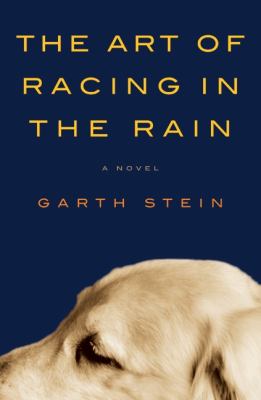

The Art of Racing in the Rain is a story about family, specifically Enzo, a loyal and highly intelligent dog, and his family.  Chronicling events surrounding his family as they struggle to fix relationships, as they endure the hardships of the race circuit (Denny Swift, Enzo’s owner, being an up-and-coming race car driver), Enzo offers a candid picture of “the wonders and absurdities of human life...as only a dog could tell it.  For our Nevermore reader, it was a great book, having a very good ending and a very sweet story.


Empire of the Summer Moon, likewise, received great reviews from our readers.  Set in the middle of the nineteenth century, S.C. Gwynne’s book follows the rise and fall of the Comanche Indians, one of the most powerful and fiercest Native American tribes on the North American continent.  Following the life of Cynthia Ann Parker, who was kidnapped at the age of nine and eventually became a member of the Comanche tribe, and her son, Quanah, Empire of the Summer Moon chronicles a vivid story about the clashes between American settlers and native tribes.  Both our readers who had the opportunity to read it said it was excellent, being very well-written and very interesting as a work of nonfiction.


Additionally, our Nevermore reader called The Devil in the White City “fabulous, absolutely fabulous.”  Set during in Chicago in 1893, The Devil in the White City chronicles events surrounding and within the “White City” that served as the location for the World’s Fair.  Although Erik Larson’s book chronicles various feats of engineering, including the creation of the first Ferris Wheel and the astounding architecture of the city itself, he also follows the startling story of a serial killer who stalked the World’s Fair.  As one reader said, “It was fascinating,” like reading a work of fiction that’s startlingly true.


Last on our list was Stuff Matters by Mark Miodownik.  A piece of nonfiction concerning the origins and creation of “stuff,” Stuff Matters approaches all kinds of stuff, dealing with things that seem inconsequential - like a paper clip, or a nail - but are actually really important, things that one may never even think about.  More importantly, Stuff Matters deals with the how and the why, providing insight into the creation of the simple things that everyone encounters in their daily life.  According to our Nevermore reader, this novel was filled with a lot of little oddities, being “a book about stuff, but never [being] stuffy.”

Monday, August 10, 2015

The Weird Sisters by Eleanor Brown


Reviewed by Ambrea

After spending years consciously avoiding Barnwell, their quiet Midwestern hometown, Bianca (curiously nicknamed Bean by her family) and Cordelia (Cordy) Andreas have returned home and rejoined their sister Rosalind (Rose) in caring for their ailing mother.  But their family reunion is far from happy:  Bean, pregnant and uncertain of her future, and Cordy, faced with criminal charges after embezzling money from her former employer, are struggling to right their lives and take control—and even responsible, dependable Rose isn’t above keeping her own secrets.

Faced with their mother’s growing illness and their own shortcomings, Rose, Cordy, and Bean must learn to accept the challenges and changes in their life to grow into the women they were meant to be.

The Weird Sisters is a uniquely entertaining book that incorporates life, the good and the bad, into a twisted tale of family and all the things that can be strange, go wrong, or just drive a sibling crazy.  Well-written and fairly easy to read, Eleanor Brown’s novel is a pretty enjoyable story.

The one thing I never understood about The Weird Sisters, however, was the narrator.  While I give her credit for creating a unique narrator, I can't say it made the novel any better or even made me appreciate the work more.  The narrator uses inclusive terms like “we” and “our,” which makes this anonymous, omniscient being sound like one of the sisters.

But the narrator obviously isn’t.

Despite seeming to manifest as one of the sisters, the narrator remains decidedly separate, located within the sisters’ midst but simultaneously not, almost like a collective consciousness that is all and none at the same time.  It’s an unconventional vehicle for the story and I will say it’s interesting, but, more often, I found it a confusing literary tic because I was immediately flummoxed by the narrator and his/her/its relationship to the Andreas sisters.  Honestly, it left me pondering over exactly who or what is telling the story, looking back to see what tidbit of information I missed.

(Note:  there was an earlier review of The Weird Sisters here.)

Friday, August 7, 2015

Changes by Mercedes Lackey


 Reviewed by Holly White
Changes, the third in the Collegium Chronicles quintet by Mercedes Lackey, continues the story of Mags, the orphan boy.  Mags was raised as a slave working in a gemstone mine before being Chosen by Companion Dallen as a trainee to become a Herald of Valdemar.  Mags has risen to fame as one of the Heraldic Collegium’s star kirball players.  His best friend Bear, a Healer trainee without the healing Gift, has successfully begun his campaign to provide every Healer and Herald on circuit with an herb kit containing medicines that could be used by anyone, Gift or no.  Bear’s girlfriend Lena, a Bardic trainee, still tries to live up to the reputation of her father, the famous and incredibly Gifted Bard Marchand.  Mags has discovered he is sweet on Amily, the crippled daughter of the King’s Own Herald Nikolas.  In his spare time, Mags has been working off and on under Herald Nikolas’ direction, as an undercover spy for the Crown.
The story opens with Nikolas urging Mags to let his three friends, Bear, Lena, and Amily, in on the fact that he has been doing undercover spy work, in the hopes that they can be a support to him, in addition to using their own eyes and ears when necessary.  Bear’s family, all Healing-Gifted, seek to force Bear to leave the Collegium, return home, marry someone of their choice, and produce heirs with the Healing Gift.  Lena finds out that her father has not only accepted a protégé apprentice other than herself, but is now claiming that she is not even his child.  Bear has plans to try a risky experimental surgery on Amily to fix her crippled leg, but Nikolas nips Amily’s hopes in the bud when he orders her to put off the surgery indefinitely and will not tell her why.  Mags and Nikolas learn that enemy spies have infiltrated not only the capital city of Haven, but the Palace itself.
During the hottest part of the summer, everyone at the Collegium is arguing with everyone else, rendering the heat even more unendurable.  Lena learns that her father has done something more unthinkable than even she had suspected.  Things for not only Mags’ circle of friends, but for all of Valdemar, come to a head when Mags learns that Amily’s life is in danger from the enemy spies.  If harm were to come to the daughter of the King’s Own Herald, that would not only incapacitate the King’s Own Herald, but also by extension, the King himself.  Amily and her friends become increasingly aware of the fact that she is crippled and unable to defend herself.   For some unfathomable reason the spies want Mags, too.  On top of that, the unknown enemies are impervious to mind magic, so there is no way to ferret them out or to learn what they are thinking.
Will Bear prove to his family that he can Heal without the Gift of healing?  Will Lena prove to everyone and to herself that she does not have to stand in her father’s shadow?  Will Mags find out who the spies are and where they are staying?  Will the Heralds find out why mind magic won’t work on the spies?  Will Nikolas and Mags be able to foil the plot against Amily?  Will Amily walk again?  Will the Heralds find out who is the mole on the Palace grounds?  Will Mags find out what the enemy spies want with him?  Will Mags earn his Whites (the sign that he is no longer just a trainee, but a full Herald)?  Find out by reading Changes.
If you love stories with good vs. evil elements, lots of action and adventure, with a fantasy element, and a dash of romance, you will enjoy this book.  This earlier books in the series are Foundation and Intrigues. My next review will be on Book Four of the Collegium Chronicles quintet, which is Redoubt.

This book follows Intrigues, the second in the series.

Wednesday, August 5, 2015

Nevermore: Animals, Quitting Money, Around the World in 50 Years, and More


Reported by Meygan

One of our Nevermore members is an avid e-book reader. She discussed several books that she has been reading. First was 44 Horrible Dates by Eddie Campbell, an outlook of a homosexual man’s dating world and his horrible, horrible dates. Our Nevermore reader said regardless of one’s sexual orientation, everybody will recognize these 44 types of people. She found the book to be very funny and enjoyable. Next was Ghost Boy by Martin Pistorius, the true story of Martin and the coma he tragically endured when he was only twelve years old. (He developed locked-in syndrome after an illness.) Martin tells how he was never expected to move or talk again and his experience of being abused by his caretakers. She also discussed Some We Love, Some We Hate, Some We Eat: Why It’s So Hard to Think Straight About Animals by Hal Herzog, a professor at Western Carolina University, who goes into the study of animal and human relationships and why we view some animals as OK to eat and not to eat. The last book mentioned was The Wright Brothers by David McCullough. She was fascinated by the compilation of letters and diary entries within this book. This book tells the tale of the Wright brothers and their determination to fly. 


Up next was The Man Who Quit Money by Mark Sundeen, a man who did the unthinkable and left his life savings (though only thirty dollars) in a phone booth to whomever wanted it. He was tired of living off money and he yearned for financial freedom. This is the fascinating true story of how Sundeen lives without money or government assistance. 


Death on the D-List by Nancy Grace was also mentioned. This is the second book to the Hailey Dean series. Hailey, a former violent crimes prosecutor, steps back into the crime-fighting spotlight and starts focusing on D-List celebrity murders. The Nevermore member appeared to be pleased with Nancy Grace’s novel. 


Also discussed was Karin Fossum’s The Water’s Edge. Husband and wife Reinhardt and Kristine Ris come across a boy’s body after their Sunday stroll. Kristine is horrified, but especially by her husband’s actions of taking pictures of the dead boy on his cell phone. Kristine cannot believe that her husband would take pictures of a young child who appears to have been murdered. Another boy disappears and the whole town becomes questioned by two inspectors, Konrad Sejer and Jakob Skarre. Who is doing this to these boys? And why is Reinhardt becoming obsessed with the events? The Nevermore member said the author did a job well done on writing this mystery without repeating the same material she has written about in the past. Another member commented that he, too, has read a few of Fossum’s books and how her plots are not redundant. 


Last but not least was Around the World in 50 Years: My Adventure to Every County on Earth by Albert Podell. Podell was a business man for a company that provided him the opportunity to travel. Someone commented to Podell that before he died, he would probably travel to every country, which is exactly what Podell sought out to do. Our Nevermore member said he went into this book with great hope and zeal but the book was not like that at all. Instead of focusing on the fun parts of his trips, Podell instead focuses on the hazardous journey to places where the people would rather string him up and kill him than to let him in. The Nevermore reader said there was no mentioning of England or Paris, which disappointed him, and overall he would rate this book a C minus. Also, there was no index which many Nevermore members were surprised to hear.

Monday, August 3, 2015

The Cat Sitter’s Whiskers by Blaize and John Clement


Reviewed by Jeanne

Dixie Hemingway—no relation to you-know-who—gave up her job in law enforcement after a family tragedy and now earns her living as a pet sitter on Siesta Key, Florida.  The problem is that while Dixie is no longer with the police, crime still has a way of finding her.  This time, she’s taking care of a mischievous Maine Coon cat named Barney Feldman but it certainly wasn’t Barney who conked Dixie on the head when she came to the house. Dixie reports the incident as a break-in, but nothing seems to have been taken even though the house has a lot of expensive items, including a valuable collection of antique masks.  The police think that perhaps Dixie passed out and hit her head.  

The only one witness was Barney Feldman.  And Barney isn’t talking.

For those unfamiliar with the series, the Cat Sitter books are an interesting blend of cozy with grit. On the one hand, there can some messy deaths but there’s no wallowing in graphic detail.  Dixie does tend to rush in where angels fear to tread at times, but she’s also a strong character who has had some training in dealing with emergencies, making her interventions more plausible.  She may have been broken a bit by fate, but she’s working her way back.  The pet sitter angle is well done; Dixie tosses out a pet care tip or two and obviously cares about the animals but maintains a business like attitude. 

This is the tenth book in the Cat Sitter series, but only the third for John Clement who took over writing up Dixie’s adventures after his mother Blaize passed away.  I had enjoyed the previous two but had a vague feeling that something was missing.  All the familiar characters were there, all the expected trimmings, but somehow it felt a bit by the numbers.   This time, however, I think John really found Dixie’s voice all the way through

Part of the appeal of almost any series, mystery or not, is finding out what’s going on with the characters’ personal lives. Recently, Dixie embarked on a new romance but still carries some heavy personal baggage.  Some of the reoccurring characters are fleshed out a bit more this time, and Clement creates some memorable new ones. The animals shine with their own personalities, which is part of the appeal for me.    The primary mystery plot was a bit slow building as Dixie found herself a bit sidetracked by her personal life, but there were a couple of particularly nice twists this time around which made it all worth the wait.  Some I saw coming, some I didn’t.  

I usually advise people to start with the first of any series, and while I would suggest that you do so with this one as well but I don’t think folks would have any trouble just diving in with this one.  If you haven’t read any of Dixie’s adventures recently, then I think you’ll find yourself right at home.