Showing posts with label graphic novel. Show all posts

Friday, February 20, 2026

The Brownout Murders by Luke C. Jackson and Kelly Jackson, illustrated by Maya Graham


Reviewed by Jeanne

Melbourne, Australia, 1942. In a world at war, people struggle with ways to stay safe.  Australians have been warned of the possibility of Japanese attacks. While the city isn’t extinguishing all lights at night as is London, they are limiting the amount of light--a brownout, not a blackout.  Troop ships from America bring soldiers, visible reminders that Australia is a nation at war and far away from most allies.

The story is told from the point of view of Beatrice, one of three sisters living in Melbourne.  She is a warden and wants to do her part for the war effort. Her sister Lizzie is more interested in the handsome American GIs and having a good time than volunteering, but needs Beatrice’s help to circumvent their mother’s reservations about  about her daughters consorting with soldiers. Sister June casts a cynical eye over both, being a part of a young communists group and not interested in frivolous pursuits.

Then a young woman is found strangled to death, her clothing removed. In a city already under stress, the incident strains nerves to the breaking point.

The black and white illustrations add to the atmosphere.  The authors do a wonderful job of conveying the tension and fear.  Early in the book, Beatrice speaks to a group of school children, explaining what she does to help keep Melbourne safe. Then the children fill out identification cards to carry in case the city is attacked.  I have to admit I had some flashbacks to my childhood when we were told to get under desks in case of a nuclear bomb.

I found this to be a very powerful story.  There is a great deal to unpack here; there are so many layers.  After another murder occurs, there’s talk about evacuating women and children.  There was talk of banning women from going to bars. And the victims were blamed for being victims.  As Beatrice notes, “They blamed alcohol.  They blamed men.  But they blamed women most of all.” 

The serial killings are more of a back-drop to the book than the total focus, but are chilling all the same especially since it’s based on a true story. This book really resonated with me, and I loved the way they used one image in particular to great effect. There’s more I would like to say, but I don’t want to spoil the book for anyone else.  It’s too good for that.

Friday, October 24, 2025

Bloody Mary: A Graphic Biography of Mary Tudor by Kristina Gehrmann


Reviewed by Jeanne

People are still fascinated by the Tudors.  Not only did they reshape parts of Europe, but there were so many complicated and charismatic characters involved, none more so than King Henry VIII, Mary’s father.  The book begins in 1518, when times were happy for two year old Mary.  Her parents, Henry and Catherine of Aragon, were (apparently) happily married, though Henry still wants a son and heir.  A daughter is not going to cut it.  He does have Mary educated as befits a ruler but his attention soon turns to another woman—Anne Boleyn. 

Told from Mary’s point of view, this book covers a lot of British history in a personal way.  It deals with Mary’s relationship with both her parents, and reflects Mary’s deep Catholic faith.  When her father breaks with the Catholic Church and becomes head of the Church of England, she is devastated, both emotionally and spiritually.  Yet she survives, and goes on to become the Queen of England after her brother’s death. The way that she rules is a reflection of that faith, and the belief that it is God’s will that she eradicate heretics. It’s also how she became known as “Bloody Mary.”

I know there are some who are not sold on the graphic novel format for non-fiction but I have to say I have seen some excellent ones. My personal favorite is The Twilight Man: Rod Serling and the History of Television by Koren Shadmi.  (Christy's review of that title can be read here.) This one, while drawn in a somewhat more cartoon style, still does an excellent job of presenting the facts.  She includes scenes which may reflect opposing views of Mary as a way of showing what others thought or passing on bits of gossip, such as when a very young Mary learns that her father is having an affair.  While these instances may not have a specific source to back them up, it would be reasonable to assume that such things occurred.

While I’m not really well versed in Tudor history, the book did back up what I did know.  I have long been interested in King Henry VIII and his six wives, and this book gives the reader a good feel for the “behind the scenes.” I did read the end notes, and while the author doesn’t cite her sources, some of the text reads as if it has been quoted.  The author, who is German, does explain some of her artistic techniques and that she used as well as references and illustrations for clothing, buildings, etc.

I found this to be an informative and attractive way to learn more about Queen Mary and the Tudor family.

Monday, October 13, 2025

Creepy Cat by Cotton Valent


Reviewed by Jeanne

I love cats and I like creepy (not horror) so this title was a natural for me. A young woman named Flora moves into an old mansion with a supernatural vibe.  She soon discovers it’s occupied by big white marshmallow of a cat who can shapeshift and who likes to play tricks.  That’s pretty much the setup.  There’s no real storyline to it, though other characters are introduced, such as Oscar, a former schoolmate who has a crush on Flora.  His attempts to flirt with her are constantly undermined by Creepy cat.

Each page is sort of a vignette, a joke with a visual punchline usually provided by Creepy Cat. I’ll admit there are some I don’t get.  This is a manga style graphic novel, and while I have read a few manga I’m not a regular consumer.  I tend to get a little confused: I understand about reading back to front but the dialog always throws me—I read the last part of a sentence first.  I’m also a bit hampered because I’ve found volume 2 of the series but not volume 1 so I’m a little hazy on the backstory. (There are four volumes total.)  I do understand that Flora needs to keep Creepy Cat a secret, or else an organization dedicated to investigating Mysterious Animal Sightings might take him away.

What I’m not hazy on is how much I love this little book.  For me, the art is a cross between Charles Addams and Tim Burton: Flora reminds me of Wednesday.  All the human-ish characters tend to be thin and pale while Creepy Cat and friends are pudgy round creatures with never-changing smiles.  I am besotted.  Those faces!  That maddeningly adorable way they cheerfully cause chaos! They enlarge and fly and split into numerous little cats and do all sorts of strange and enchanting things. I may not understand all that’s going on but I do know one thing:

 I want my own copies of these books. 


Monday, May 19, 2025

Dick Tracy by Segura, Moreci, Borges, Osman, Englert, Campbell


Reviewed by Jeanne

I grew up reading the comic strips in the local paper.  I read them all, from Peanuts to Far Side to Little Orphan Annie, so of course I also read Dick Tracy.  Tracy was created by Chester Gould and made its first appearance in the papers in 1931.  By the time I came along, Tracy had his iconic two-way wrist radio (which appeared in 1946, so talk about being ahead of its time!), a wife named Tess, and a son called Junior who met and married a girl from the moon.  She was named Moon Maid and their daughter was Honey Moon.

I am not making this up.

Dick Tracy was one of those strips that was both serious and over the top at the same time.  Tracy was a strong-jawed, rather grim figure who was out to deliver justice.  His adversaries were often mob figures with names like Pruneface and Flattop.  Characters often met violent ends, and there was corruption in high places, both government and corporate.

When I saw the Dick Tracy graphic novel come in, I was immediately intrigued. It was both immediately recognizable and noticeably different:  Tracy wore his trademark yellow fedora and coat and was appropriately square-jawed, but in a more realistic style.  I found the graphic novel did reflect the tone of the original in a lot of ways, but it was also set firmly in the late 1940s. The opening scenes have a reporter meeting with a nervous councilman who wants to unburden himself, but the two are rapidly murdered along with everyone else who had the misfortune to be at a local cafĂ©.  The councilman’s daughter, one Tess Trueheart, joins forces with Tracy to find out who was behind the hit.  An old war buddy of Tracy’s also shows up, trying to figure out what happened to his brother, a WW II veteran who had been struggling with civilian life before his disappearance. And he’s not the only vet to go missing:  there’s something very wrong going on in the city.

Being used to the flatter newspaper style, it did take a few pages to get used to the artwork in this graphic novel.  It’s dynamic and more realistic, not to mention more colorful. The old daily strips were black and white, with the only color being on Sunday.  The graphic novel uses the expanded color palette to good advantage, giving a moody, noir feel to some scenes. The plot is well supported by the strong tension that runs through the art and dialog; there’s a lot of action to keep a reader turning pages. It seemed a bit more violent than the strip, but on reflection it’s probably just the color and larger page size.

In short, I was impressed with this effort which remained true to the original while—in my opinion—making Dick Tracy more interesting to a modern audience. For me, it was a trip down memory lane. I was very surprised at how many of the names I remembered, including some who didn’t appear in this incarnation.  (B.O. Plenty, for example—Gould really liked descriptive names.) It’s apparently coming out in comic book form on a regular basis; this is listed as volume 1 in the series, containing issues 1-5 of the comics.  Volume 2 is due out in the summer of 2025 and I’ll be on the lookout for it. In the meantime, I now want to find a copy of the Dick Tracy movie with Warren Beatty and watch it. 

Friday, September 27, 2024

Suffrage Song: The Haunted History of Gender, Race and Voting Rights in the U.S. by Caitlin Cass


Reviewed by Kristin

This graphic novel packs a lot about the right to vote in the United States into its pages in a very accessible format. From the early Suffragists who never were able to vote (Lucretia Mott, Elizabeth Cady Stanton, Susan B. Anthony, Frederick Douglass, among others) to the later activists following in their footsteps through the Civil Rights era around the 1940s-1960s, this book presents an enormous amount of information. The graphic format makes it engaging and entertaining, avoiding the pitfalls of some scholarly works.

Moving forward in a mostly linear fashion, the narrative sometimes includes side stories to illustrate the suppressive societal expectations faced by both women and minorities. In the “New Women” era of the 1900s-1920s, women began to question tradition and stretch their boundaries. While dressing in clothing that allowed women to move and take more risks, the bicycle was a natural choice for many. However, male doctors began to warn that bicycles could be harmful and lead to “bicycle face” (for women only, naturally) and this could include bug eyes, a red complexion, and a permanent grimace.

The push and pull between suffrage for women and racial minorities is also discussed. Many who believed that women should be allowed the vote were not willing to take on the vote equality for all, as they saw votes for white women much more achievable than universal suffrage.

The bibliography at the end is extensive, showing the in depth research done by Caitlin Cass. Organization names and dates are also mentioned, along with popular songs included in the book.

This book is timely, no matter your political or partisan views. 2024 is an election year, and I strongly believe that we should all speak our minds at the ballot box.

Friday, July 19, 2024

Third Shift Society by Meredith Moriarty


Reviewed by Jeanne

Ellie is not having a good day.  Bills are due, well, okay PAST due, the landlady wants the rent, and when she goes into work, she finds she is now unemployed.  Desperate, she tries her hand at several jobs and manages to fail spectacularly.  As Ellie says, “Why am I so bad at adulthood?”

Her day may not get worse but it is about to get weirder.  As she walks down an alley, there’s a guy who looks as if he’s wearing a jack-o’-lantern for a head being attacked by some sort of dog thing with horns and a mane.  Impulsively, Ellie leaps in to help—and suddenly there’s blue fire coming from her hands.  Together they manage to subdue the dog/lion whatever and Ellie gets a job offer as a paranormal investigator.

And by the way, his head IS a pumpkin. And his name is Ichabod.

That’s the opening sequence for Third Shift Society, a graphic novel that began life as a web-comic.  Meredith Moriarty, Eisner Award nominee, does both the art and the script.  Ellie is definitely in for the ride of her life as she meets other supernatural beings, friendly or not, and helps Ichabod solve cases.  The artwork is wonderful, very expressive and vivid. I liked both the style and the color palette.   The characters are well developed, especially Ellie who is an appealing heroine:  brave and impulsive, but with a good heart. This is probably a good place to mention that she’s also a bit gullible. It’s very easy to get drawn into this world of curses, vampires, demons, and things that go bump in the night.

More and more web-comics are making the leap into print, and I definitely approve.  I now have several favorites which began life online such as Breaking Cat News, Swan Eaters, and Lore Olympus.  I had never heard of this particular web-comic until the book came out but I have now become a fan.  A second volume is in the works and I’ll look forward to reading it.

Friday, January 5, 2024

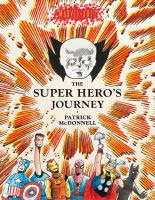
The Super Hero’s Journey by Patrick McDonnell


Reviewed by Jeanne

Growing up, I was an avid consumer of comics—or funny books, as we called them.  I spent hours with various DC heroes (Batman, Superman, and Wonder Woman were my favorites) but also with Casper the Friendly Ghost, Wendy the Good Little Witch, Baby Huey, and especially with Little Lulu and Sugar Spike.  Many’s the time my grandparents would park me at the magazine section of a grocery store and go off to run errands, knowing I’d be happily occupied for hours.

I did not read many Marvel titles, though.  I did read some, but as a sight reader I found some of the dialectal renderings difficult to read. (“Sez” for “says” for example.)  I do remember reading some Namor and Thor, and one of two Spider-Man but I was not a “true believer.”

Patrick McDonnell was, though, and as a devoted fan of his strip Mutts as well as his children’s books, I decided to take a look at The Super Hero’s Journey. This is his story of a childhood growing up with the Marvel universe.  He retells some parts of stories, recreating the art work, giving credit to the original artist who had such an influence on his own life and work.  Most of the reviews call it “a love letter to Marvel” and I can certainly second that.  He is most definitely paying tribute to his artistic heroes.

I’ll admit much of the Marvel storylines didn’t mean much to me, but I did enjoy seeing young Patrick and his romance with the comics.  It brought back my own happy memories.  I was also interested in the glimpses of his childhood.

Marvelites, especially those of a certain age, will thrill to this re-telling; McDonnell fans will still enjoy the book for its personal touches.

Monday, September 12, 2022

Chivalry by Neil Gaiman, art by Colleen Doran


Reviewed by Jeanne


Elderly widow Mrs. Whitaker likes to stop at the Oxfam shop on her way home from the post office on Thursdays. You never know what you might find at a thrift shop: a stuffed cobra, for instance.  This day Mrs. Whitaker finds some romance novels to read and the Holy Grail.

She thinks it will look nice on her mantelpiece.

It does, but then a young man on a horse comes by and wants the Grail.  His name is Galaad, and he’s on a quest, you see.

Only Mrs. Whitaker likes the way it looks on the mantelpiece and doesn’t want to give it up.

I first read this as a short story in a collection of Gaiman’s work and found it charming.  It’s just as charming in graphic novel form, with beautiful watercolor artwork and hints of illuminated manuscript that fit in well with the tone of the story.  It’s not surprising to read in the afterword that artist Doran fell in love with the story and waited years to be able to illustrate it. Her attention to detail is really extends the story, especially as it pertains to Mrs. Whitaker and her late husband. It's truly a gorgeously illustrated version.

The juxtaposition of the ordinary and the fantastic is handled so well in both formats, and the gentle humor just shines.  One thing I love about both versions is that Mrs. Whitaker is no fool.  To say more would venture into spoiler territory, I think.

Frankly, I like both versions.  I love Gaiman’s way with words, with the nuances that he coveys.  I do envision the story my way, though, and I’m glad that I had read it first before seeing the illustrated version. And, I confess, I still like the text only version a little bit better because sometimes illustrations take me away from the words.  It’s sort of the difference between reading a book and seeing the movie but let me hastily add that I feel Doran has been far more faithful to Gaiman’s vision than almost any movie version.  She truly wants to compliment his work and I believe she has succeeded brilliantly.

And I have to say that I think this version will find its way into more hands and introduce this lovely tale to more people, which is a most noble and worthy quest.

Monday, January 24, 2022

Penny: A Graphic Memoir by Karl Stevens


Reviewed by Jeanne

Penny, as is obvious from the cover, is a tortoiseshell cat with lots of dreams—of herself, mostly, since she is the center of the universe. I was captivated by the expressions on the cat’s face, so I had to pick this book up without really knowing what it was about except, well, a cat.

The opening panels tell briefly of Penny’s origin, born outside to a stray (or feral) mother, becoming aware of the beauty around her, before being kidnapped by humans and taken to their place.  The wet food is plentiful but there isn’t much to do except eat, sleep, and think. Or as Penny puts it, “So much thinking.  So so much thinking.”

Which is actually pretty lucky for us, because Penny’s thoughts are most entertaining even when she is suffering an existential crisis. She questions reality. She seeks meaning.  She catches a mouse. The humans think she is dense and demanding, never dreaming of the philosophical musing going on beside them, intense thoughts only derailed by the thought of food, or a nap.

She definitely has her priorities in order.

There’s not much in the way of a narrative, expect for a couple of episodes such as “The Vacation” where the people have gone away and it has gotten dark and light and dark again (“I must accept that they are dead”) and “Penny’s Escape,” in which she steps through the magic portal into another world, i.e., she gets outside the apartment building. Most of the scenes are one or two page thoughts, self-contained moments as if they had run individually in a magazine or online post, but that doesn’t make them less wonderful.

Otherwise, this book is a bit hard to explain.  All I can say is that I love it. The tone of the book reminds me a great deal of Henri, Le Chat Noir of blessed memory.  If you have seen any of those videos, you’ll know the type of dead pan, overly serious humor I mean. 

The expressions on Penny’s face are perfection.  Stevens is the author of other graphic novels and his work has appeared in the New Yorker and The Village Voice, according to his bio.  From my perspective, he is a close observer of the feline condition and an artist sensitive to nuance of expression. I think this work is brilliant. It's beautifully realistic and detailed-- well, except for the times Penny goes into the Portal-- and the color palate is lovely.

Kristin says that this book is really about her cat PB, but I am sure that this is my judgmental looking Tessa, who could have been the model for “Resting Cat Face.” The cat thoughts ring true.  I am sure this is what Tessa is thinking and am grateful for the insight. I have no doubt that other cat servants will think the same thing.

I am buying my own copy of this book.  I may have Tessa autograph it.

Highly recommended!


 Tessa is not amused.


Friday, November 12, 2021

Inkblot Vol. 1 by Emma Kubert and Rusty Gladd


 Reviewed by Jeanne

As this graphic novel opens, we’re introduced to the Seeker, one of ten siblings of a powerful and magical family who gain strength and longevity by killing other magical creatures.  When those ran short, the eldest brother found a way to break into other worlds. While the other siblings have largely scattered in search of adventure, conquest, or whatever, the Seeker remains to record all the deeds and histories of her family. Over the years, these records become so unwieldy that she has to create a library to house them all.  She spends all her days writing to the point of exhaustion.   She falls asleep, quill in hand, and knocks over an ink bottle which seems to explode.  Out of the chaos comes a cat.

Or is it a cat?  It could be a demon, something she accidentally conjured.

Whatever it is, it seems to have the power to open portals in time and space, including the seven realms of reality.  Such power could unravel the universe. The Seeker tries to catch it—

And finds herself in another realm. One with giants, who want to take her apart.  She chases after the cat who seems bent on escaping and it looks as if they both end up back in the room where they started, except that she can’t find the cat.  It’s somewhere, she knows. And she WILL find it.

Meanwhile, the cat appears in a different setting and we meet a new set of characters, apparently in a different reality. This pattern is repeated for the rest of the book.  Some characters reappear, but at different ages.  Throughout it all, the cat stares with beautiful big green eyes and speaks:  “mow.”

I wasn’t sure where this was going, and frankly I’m still not sure.  This is a collection of the The episodes are rather choppy and, being easily confused, I had trouble keeping track of who was who.  But there was a dragon, what looked like a baby Nessie, family dynamics, giants, magical things, books, and a cat.

The artwork is lush and beautiful, the coloring is marvelous, and the cat’s big round eyes are mesmerizing.  The text hints that the cat is not a cat, and it does seem to have an agenda—don’t all cats?—but in other ways, I find it very catlike.  This is a big plus for me as we all know. I’ll put up with a lot for a good cat character.

And while I have been a bit bewildered by the narrative, I am also intrigued.  It’s obvious that the creators have a definite route in mind for this story and will draw these threads together.  I think it’s going to be worth the wait.
Inkblot, Vol. 1 collects the first six issues of the comic; Inkblot, Vol. 2 is due out in October and will contain issues 7-12.

Comic art fans will take note of Emma’s last name.  Yes, she’s one of THOSE Kuberts!  Joe is her grandfather, and her father is Andy. In my estimation, she is definitely keeping up the family tradition.

And did I mention adorable cat?