Showing posts with label Ken Follett. Show all posts

Wednesday, July 10, 2019

Nevermore: Jeffrey Epstein, Falter, Ona Judge, Kamala Harris, Ken Follett, Curious Charms


Reported by Kristin


Nevermore sometimes (but not always) follows the news headlines, and this was the case today with our first reader describing her initial impressions of the James Patterson book Filthy Rich: A Powerful Billionaire, the Sex Scandal that Undid Him, and All the Justice that Money Can Buy: The Shocking True Story of Jeffrey Epstein. Convicted in 2008 for soliciting an underage girl for prostitution, Epstein served a short sentence and during that term was given liberal work release privileges thanks to a high powered attorney. Patterson (and co-authors John Connolly with Tim Malloy) published this volume in 2016 about how justice really is differently served for the elite versus the common criminal.


Next up: Bill McKibben’s book Falter: Has the Human Game Begun to Play Itself Out? Speaking about climate change, genetic engineering and other global challenges of the 21st century, McKibben paints a pretty grim picture of the outlook of the human race. Our reader appreciated the straightforwardness of the issues discussed, and was particularly touched by the quote, “Even, especially, in its twilight, the human game is graceful and compelling.”


Another reader was fascinated by Never Caught: The Washingtons’ Relentless Pursuit of Their Runaway Slave, Ona Judge by Erica Armstrong Dunbar. While President George Washington was serving in the nation’s temporary capital in Philadelphia, he attempted to maintain his household standards by bringing along nine slaves. However, Pennsylvania law said that slaves must be set free after living there for than six months. Washington swapped out his slaves often in order to avoid losing his “property,” but young woman Ona Judge chose to run away to New Hampshire. Martha Washington was particularly fond of Ona’s services, leading to an extensive manhunt and court proceedings in an attempt to retrieve her. But as the title says, Ona was never caught.


Another timely book, The Truths We Hold by Democratic presidential candidate Kamala Harris was enjoyed by another book club member. Our reader said that although she has mixed feelings about the political strategies Harris is taking, she is nevertheless impressed with her accomplishments and her policies.
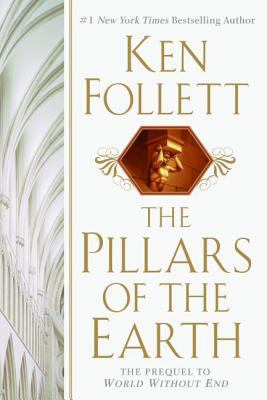

Turning to fiction, another reader claimed that her light reading was the 900+ page paperback The Pillars of the Earth by Ken Follett. Set in the 12th century, Follett’s saga follows a huge cast of characters through many years. Our reader said that she really enjoyed it and was pleased to have made it all the way through. At that point, another book club member pointed out that there are two more books in this, the Kingsbridge, series: World Without End and A Column of Fire.


Another bit of light reading was found in The Curious Charms of Arthur Pepper by Phaedra Patrick. Arthur is a widower who on the first anniversary of his wife’s death finds a charm bracelet among Miriam’s jewelry. Nothing unusual, except that he’s never seen it before. Arthur sets out on a journey to discover from where each charm came, and what they meant to his wife. Our reader found this to be a very good story and highly recommends it.

Wednesday, December 14, 2016

Nevermore: Civil War, White Trash, Whiteout, Big Short, A Great Reckoning, and The Innocent


Reported by Ambrea


Kicking off Nevermore this week, we looked at a fascinating book by Thomas Fleming titled A Disease in the Public Mind:  A New Understanding of Why We Fought the Civil War.  Described as a “riveting, character-driving history” on the book jacket, Fleming’s book was a fascinating exploration of the Civil War and the divisions that pitted North against South—and why, as Fleming seems to assert, a war was bound to happen with or without slavery as a justification.  According to our reader, Disease in the Public Mind was a marvelous book.  Wonderfully detailed and incredibly well written, Fleming’s book is “the best explanation of why the Civil War started” and how the deep rooted prejudices (and, in some cases, fanaticism) between North and South inflamed—and eventually ignited—violence.  Our reader gave it very high marks, recommending it to history buffs and Civil War aficionados alike.


Next, Nevermore took a second (or third) look at White Trash:  The 400-Year Untold History of Class in America by Nancy Isenberg, which takes a long hard look at political and social prejudices that have divided and, in essence, polarized the so-called “class-free” society of the United States.  Isenberg describes the plight of the poor and succinctly looks at how history has shaped Americans’ vision of poverty, how it impacts our reactions and our perceptions of it:  “First known as ‘waste people,’ and later ‘white trash,’ marginalized Americans were stigmatized for their inability to be productive, to own property, or to produce healthy and upwardly mobile children…[and well] into the twentieth century, expulsion and even sterilization sounded rational to those who wished to reduce the burden of ‘loser’ people on the larger economy.”  Our reader said she enjoyed reading White Trash, because, like Disease in the Public Mind, it is incredibly detailed and it looks at racial tensions, as well as class distinctions, that have shaped the American public.  At once jarring and fascinating, Isenberg’s book proved to our reader that “the more things change, the more they stay the same.”


Shifting gears, Nevermore decided to share a suspenseful, yet entertaining read by Ken Follett.  In Whiteout, Toni Gallo, direct of security at a Scottish medical research firm, has a problem:  a canister containing a deadly virus is missing and one of the lab technicians is dead, bleeding from his eyes—which means someone has already released the virus.  Which means the world is about to face one of the most terrifying biological disasters in history.  Our reader said she enjoyed reading Follett’s novel.  Described as fun and frivolous, Whiteout was a wonderful change of pace and it was such an exciting crime story.  Our reader admitted that she finished it in two days, high praise in her book, and said she enjoyed almost every minute of it.

Nevermore also looked at economics and finances—and the big stock market crash of 2008—in The Big Short:  Inside the Doomsday Machine by Michael Lewis.  “The real crash, the silent crash, had taken place over the previous year where the sun doesn’t shine and the SEC doesn’t dare, or bother, to tread,” reads the book cover.  “The smart people who understood what was or might be happening were paralyzed by hope and fear; in any case, they weren’t talking.”  According to Lewis, several people knew that impending financial devastation was on the horizon—and yet, instead of warning anyone, some did nothing and others decided to make millions.  Our reader, who admitted she was not savvy when it comes to the stock market and economics, said she enjoyed reading Lewis’ book.  She understood many of the complicated concepts outlined by Lewis, which she liked, but, most of all, she was duly impressed by the fact the author names names.  Overall, she said it was a great book to read and she recommended it anyone curious about the complicated state of financial markets and stock exchanges.


Next, Nevermore pulled out a favorite novelist to share:  Louise Penny.  In A Great Reckoning, our reader revisited Armand Gamache, former Chief of Homicide for the Sûreté du Québec, as he stepped into a new mystery involving a strange old map, four young cadets at the Sûreté academy, a stained glass window with its own horrific secrets—and a murdered professor.  Gamache, along with a young cadet named Amelia Choquet, finds himself caught in a tangled web of secrets and lies that will lead to places that even he is terrified to see.  Our reader, a fan of Penny and her Inspector Gamache series, said she enjoyed loved reading A Great Reckoning.  Although she said the story does become a little technical, she pointed out that it didn’t diminish the novel or make it any less appealing.  It’s Penny’s most recent novel—the twelfth in a long running series—but, according to our reader, it stands well on its own and provides an intriguing, entertaining mystery that will leave the audience breathless.

Last, Nevermore shared The Innocent by Ian McEwan.  Leonard Marnham is twenty-five years old and looking for excitement, and he certainly gets it when he is tasked with tunneling under a Russian communications center to tap phone lines and when he meets the alluring, enigmatic West Berliner, Maria Eckdorf.  Caught up in an international “comedy of errors,” Marnham finds himself risking everything when, in one night—one terrible, terrible night—everything goes horribly awry.  Our reader highly recommended reading McEwan’s novel.  Personally, he said he enjoyed excavating the pieces of Marnham’s and, moreover, he enjoyed the way McEwan writes.  However, he did point out to his fellow readers that “you do need some bravery to read this book.”  It’s guaranteed to surprise and, possibly, horrify.

Saturday, October 6, 2012

Nevermore Talks (Mostly) Fiction


Pillars of the Earth by Ken Follett and its sequel, World Without End, were deemed hackneyed but exciting. The first is set in 12th century England and centers around the building of a cathedral. The second picks up in the same location two centuries later, but you don’t need to have read the first book to enjoy the second.

 Shadow of the Wind by Carlos Ruiz Zafon is set in the aftermath of the Spanish Civil War when a young man’s search for books by a favorite author reveals that someone is destroying all copies of the author. This is one of those books which is difficult to describe, but which the New York Times Book Review called “Umberto Eco meets Jorge Luis Borges.”

 The Good Father by Noah Hawley was described as both beautifully written and thought provoking. The plot concerns a doctor whose life is turned upside down when his adult son from a previous marriage is accused of murdering a presidential candidate. The book asks hard questions about love, responsibility and biological inheritance.

The other observation was about books that are most meaningful and have the most appeal for young adults and adolescents. These are books that can have a profound effect on outlook and thinking at a crucial time, but may or may not be meaningful when re-read years later. Among the titles cited were Catcher in the Rye, Catch-22, Atlas Shrugged, and Red Badge of Courage.

However, some books evoking adolescence can still evoke strong emotional responses in adults. According to our reader, a case in point is Stitches: A Memoir by award-winning children’s artist David Small. He tells his story in graphic novel format, and it’s a harrowing one: his parents were cold and unsympathetic, giving little affection. The story covers his life from about age six to sixteen, but it’s a harrowing decade—and our reviewer thought it best viewed from an adult perspective.

Wednesday, October 26, 2011

Raven Report: October 18


 Reported by Jeanne
The Nevermore Book Club was very lively this week!  Russell Banks was still under discussion, with one person championing his novel Rule of the Bone as his best, while others praised The Sweet Hereafter.  Director Jud Barry had a serendipitous experience by following Cloudsplitter with Barbara Kingsolver’s The Poisonwood Bible.  He felt the themes of the two books complimented each other.
Michael Connelly was praised by several there, especially his novel The Poet.  When reporter Jack McEvoy finds evidence that a series of suicides might be the work of a serial killer, he finds himself behind the scenes of an investigation.  The killer is leaving quotations from Poe at the scene, so the reader learns quite a lot about Edgar Allan in the course of the investigation.  McEvoy turns up in several other Connelly books, including Scarecrow and The Narrows.
Stuart Woods’ Son of Stone was praised as a fun read as were the books of the late Stephen J. Cannell.  The latter made his name first in television where he was a successful writer and producer, overcoming dyslexia to do so.  His ability to tell a good story makes his Shane Scully novels great escapist reading.
Ken Follett has started a new epic after his best selling Pillars of the Earth.  The new book is Fall of Giants and it follows the fortunes of five families from different countries (England, Germany, Russia, America, and Wales) through the tumultuous years of the First World War.  There are two sequels planned.
At the other end of the scale is Abide with Me by Elizabeth Strout which deals with a small New England community in the 1950s.  The town’s minister suffers a terrible loss and finds himself questioning his faith and his community questioning his fitness as church leader.  Strout is also the author of the critically acclaimed Olive Kitteridge.
Non-fiction was well represented, too.  1491 by Charles C. Mann is a new look at the Americans before Columbus. New archaeological research offers challenges to our previously held view of Native American civilizations, which were both thriving, complex and, in some cases, technologically superior to their European counterparts.  Mann is careful to explain how these new conclusions have been reached in a fascinating challenge to conventional views.
Howard Zinn’s A People’s History of the United States also questions some standard assumptions.  Zinn’s focus is not on towering individuals but on what he perceives as the struggle between various classes and groups of people.  It was noted that some of what Zinn says might have particular resonance today with the “Occupy Wall Street” movement. 
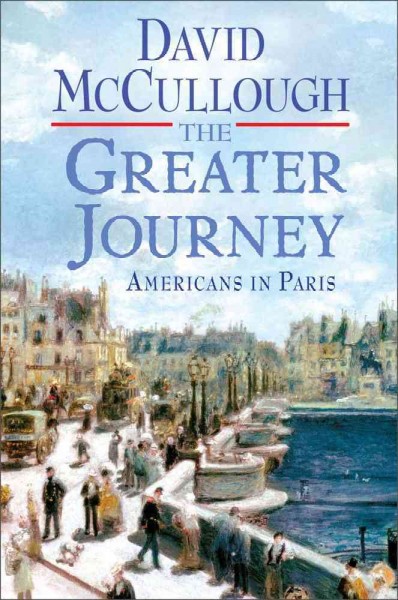
The Greater Journey:  American in Paris by David McCullough is another winning look at history from the man who gave us 1776 and John Adams.  Americans in the 1800s were venturing abroad in goodly numbers, bringing back with them ideas and inspirations that would change their homeland.  At that time France was seen as the center of the arts and sciences, a place where dance and medical advances stood together.  Many of the people were accomplished in several areas, though became known for one:  Samuel Morse, for example, is justly celebrated for his telegraph, but he was also an accomplished painter.  James Fennimore Cooper, Mark Twain, Mary Cassalt, Elizabeth Blackwell and Harriet Beecher Stowe are just a few of the accomplished folk we meet in these pages. As ever, McCullough tells a fine story and makes history come alive.