Showing posts with label Astrophysics for People in a Hurry. Show all posts

Wednesday, June 13, 2018

Nevermore: Matheson, Genova, Kushner, Tyson, Chang, Butler


 Reported by Ambrea


Nevermore jump-started their meeting off with The Best of Richard Matheson.  Best known for his novel I Am Legend and his work on Twilight Zone, Matheson was a master of twentieth-century horror and fantasy.  According to the cover synopsis, “Matheson revolutionized horror by taking it out of Gothic castles and strange cosmos and setting it in the darkened streets and suburbs we recognize as our own.”  Our reader picked up Matheson on a whim and, while she didn’t regret picking up a collection of his greatest works, she noted that she didn’t finish much of it.  “I made it through two chapters, but I had to stop [because] it scared me,” she admitted.  She noted that Matheson had a gift for the frightening, creating stories that had a heavy emotional impact—“a lot of oomph,” she said—and an underlying feeling of suspense that left her shoulders coiled with dread long after she put the book aside.


Next, Nevermore explored Factory Girls:  From Village to City in a Changing China by Leslie T. Chang, which offers a look at the everyday lives of the migrant factory population of China.  More than 130 million migrant workers live and toil in China’s cities, many being young women from impoverished, rural towns.  Our reader had previously explored Two Years on the Yangtze and Country Driving:  A Journey Through China from Farm to Factory by Peter Hessler, who happens to be married to Chang, and she thought Factory Girls was a wonderful book to round out her exploration of China.  Although she noted the book was rather long, she thoroughly enjoyed Chang’s book.  It was an interesting and in-depth study of women who had the courage to uproot their lives and start fresh somewhere else.
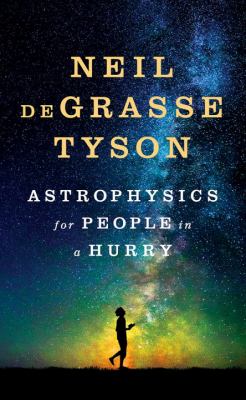

Astrophysics for People in a Hurry by Neil deGrasse Tyson was very popular with our next reader.  A quick but concise examination of the universe, Astrophysics for People in a Hurry offered incredible insight into the subtleties of astrophysics such as the nature of space and time, humanity’s place in the universe, and what quantum mechanics really mean.  “[The author] admitted there are things they don’t know,” our reader said, “and I was thrilled about that.”  He noted that, as a scientist, Tyson was willing to admit that human knowledge is still growing and expanding like the universe; moreover, he offered reflections on the cosmic perspective that was both enlightening and truly fascinating.


Nevermore also checked out a new book by Lisa Genova:  Every Note Played.  In her new novel, Genova tells the story of Richard, a world-renowned concert pianist with ALS, and his estranged wife, Karina, who is living an unfulfilling life as a piano teacher—and, soon, Richard’s reluctant caretaker.  As Richard slowly succumbs to his disease, he and Karina must reconcile their tumultuous past and learn forgiveness before it’s too late.  Our reader said, “This is a book that will make you cry.”  Although it was rather depressing and, of course, tragic, she noted that Every Last Note was incredibly well written, beautifully told, and wonderfully enlightening.


Next, Nevermore took a look at Kindred by Octavia Butler.  Dana, a modern black woman, is celebrating her twenty-sixth birthday with her new husband when, suddenly, she is transported from her home in California to the antebellum South—somehow summoned through time to save Rufus, the white son of a plantation owner.  Time and again, Dana is drawn back to the old plantation and each stay is longer, more arduous, and more dangerous until Dana fears her life will end long before it even begins.  Our reader, who is a fan of Butler, said she really enjoyed reading Kindred.  She noted that the author seriously researched her subject, drawing on historical details to give the story a strong sense of place and an astonishing emotional impact.  She highly recommended it to her fellow readers, along with Butler’s other works Fledgling and Lilith’s Brood.


Last, but certainly not least, Nevermore shared Angels in America by Tony Kushner.  Set in the 1980s, Angels in America is a Pulitzer prize-winning pair of plays that follows the interweaving lives of Prior, Louis, Joe, Harper, and Roy Cohn as they attempt to reconcile the disheartening truths of their world—and the heartbreaking reality of AIDS within the gay community.  Our reader said, “[Kushner’s play] was a tough book, but, at the same time, it’s tough to put it down.”  It’s very real, very raw, and limned with unexpected bouts of humor and heart-wrenching moments of tragedy.  Although she wouldn’t say she loved Angels in America, she liked it very much and she recommended it to anyone who might enjoy a serious, thought-provoking play on human nature.

Wednesday, May 16, 2018

Nevermore: Charming Billy, Manhattan Beach, Midnight Sun, Astrophysics, Coal Miners' Wives, Vonnegut


Reported by Kristin

Nevermore kicked off the week with Charming Billy by Alice McDermott. The 1998 fiction National Book Award Winner, this novel takes readers on a journey through Billy’s life, albeit beginning with the stories people are telling about him at his funeral.  Billy was a thoughtful and giving man, but tortured by his own alcoholism.  Our reader said that there was no better title for this book, as Billy certainly was charming.

A new bestselling novel, Manhattan Beach by Jennifer Egan was enjoyed next.  Set in the 1930s and World War II, Anna Kerrigan becomes the first female diver to repair American war ships.  Anna is also devoted to her beautiful younger sister, who is an invalid due to injuries at birth.  The story is told from alternating points of view: Anna, her father Eddie, and night club owner Dexter Styles.  Their lives intertwine through the years, forever changing the lives of the Kerrigan family.


Another reader enjoyed Midnight Sun by Jo Nesbo.  The author is well known for his Harry Hole novels, but this story features Jon Hansen, a drug dealer and hit man who has fled Oslo for a tiny village, and calls himself Ulf.  Wanting to avoid his bosses, Jon befriends a local who allows him to stay in her family hunting cabin.  Our reader said that this was a very fun book, and she particularly liked that there wasn’t as much violence as in a typical Nesbo book.


Astrophysics for People in a Hurry by Neil deGrasse Tyson keeps showing up periodically at Nevermore.  This reader enthused that Tyson included it “all” in here: black holes, dark matter, quarks, cosmic background noise, the Kelvin temperature scale, and so much more. Tyson has a reputation for being the best known figure we have today who makes science understandable.

Carol A. B. Giesen interviewed eighteen West Virginian women for the collection of stories that makes up Coal Miners’ Wives: Portraits of Endurance.  These women varied in age, from under twenty to over eighty, but all had moving stories of what it was like to be living under constant awareness of the dangers faced by their coal miner husbands.  The women shouldered much stress, but had no ability to change their lives.  Our reader found it a very grim story, but very important to read.


Wrapping up with what was termed a “really fun book,” God Bless You, Dr. Kevorkian by Kurt Vonnegut is a series of “interviews” of the dearly departed, as posed by a public radio reporter.  Originally broadcast as ninety second spots on a New York radio station, Vonnegut asks questions of such varied people as Adolf Hitler, Isaac Asimov, William Shakespeare and Eugene Debs.  The kicker is that in order to do these do these interviews, Vonnegut needed a round trip ticket (via Dr. Kevorkian) to and from the pearly gates in order to speak to those beyond the grave.

Wednesday, December 20, 2017

Nevermore: Wiley Cash, Astrophysics, Elly Griffiths, Bloody Roads South, Murder on the Orient Express


Reported by Kristin


Nevermore began with some Appalachian flavor with The Last Ballad by Wiley Cash.  Ella May Wiggins is living in North Carolina in 1929, scraping by on the night shift at the local cotton mill.  The dirt and the danger are hard for the young woman to handle, but she is desperate to feed her family.  Union organizers start pushing for reform, but the leadership denounces their efforts as Communist.  Ella May decides to join the union movement at great personal risk.  The story is told by Ella May’s daughter Lilly, an old woman at the time of the telling.  The mingling of points of view is one of Cash’s trademarks, and he tells the story well.

A tiny book put in an appearance, What Women Say About Men: Witty Observations on the Male of the Species.  While group members chuckled, our reader said that it was a very enjoyable book, and surprisingly, she didn’t finish as quickly as she would have thought because she had to reflect upon the points made.


Another small but dense book was discussed next:  Astrophysics for People in a Hurry by Neil deGrasse Tyson.  Our reader said that this is for people who really want the big picture, and although it took him three weeks to read and digest it, it was well worth it.  Covering universal concepts (pun intended,) Tyson proposes many new facts for the lay person to get his or her mind around, so that many people may end up with even more new questions and ideas to explore further.


The Chalk Pit by Elly Griffiths brings back anthropologist Ruth Galloway to examine another set of bones, these found in the labyrinth of tunnels under Norwich.  The bones were translucent, almost as if they had been boiled.  Ruth has been involved with a local policeman during the earlier books in the series, and the affair continues.  Our reader very much enjoyed the characters and gives Ruth positive reviews, reading everything in the series for the past several years.

Our next reader was intrigued by Bloody Roads South: The Wilderness to Cold Harbor, May-June 1864 by Noah Andre Trudeau.  Vividly detailed personal accounts from the last strategic push of the Civil War show what carnage the soldiers endured and their thoughts as poured out to loved ones in letters.  Bringing alive the people involved, these little vignettes tell an engaging story to lovers and students of history alike.


Lastly, the new movie in theatres inspired another reader to pick up Murder on the Orient Express by Agatha Christie.  Called “the most widely read mystery of all time,” the story is comprised of a classic locked room murder, when Edward Ratchett is stabbed to death inside his train berth with the door locked from the inside (but no murderer in sight.)  Our reader said that she still had about twenty pages to go, and was looking forward to the dénouement.

Wednesday, November 29, 2017

Nevermore: Astrophysics, Everybody Lies, Carl Sagan, British, Suzy Hansen


Reported by Kristin


Nevermore began with a fascinating book: Everybody Lies: Big Data, New Data, and What the Internet Can Tell Us About Who We Really Are by Seth Stephens-Davidowitz.  The author has spent years examining what data people really share in their online searching, gaining insight into what people really think about racial, political, and personal issues.  Our reader found the book extremely informative and interesting.


Turning to scholarly non-fiction, another reader was tackling two books on the ethnic origins of the people of The Origins of the British by Stephen Oppenheimer and Saxons, Vikings, and Celts by Bryan Sykes.  Both examine the linguistics, sociology and even DNA evidence to determine historical migration patterns.  Both authors propose that the British Isles were completely de-populated by the last ice age, but humans found three sites of refuge within Europe and later branched out again.  Our reader said that sometimes the statistics quoted were way beyond her, but were still well worth reading.


Next up was Notes on a Foreign Country: An American Abroad in a Post-American World by Suzy Hansen.  Journalist Hansen worked at a high-profile newspaper in New York, but chose to move to Istanbul, Turkey to learn more about the Islamic culture that was influencing so much of the world.  She was surprised to learn more about the United States of America and how it was often viewed as an overbearing, imperialist bully which invades other countries in the name of doing good.  Our reader learned a lot from the book and believed that everyone should live abroad at some point in order to gain a wider worldview.


Another reader completed Carl Sagan: A Life by Keay Davidson.  Written a few years after Sagan’s death, this book didn’t sugarcoat his shortcomings.  Sagan was very interested in non-terrestrial life and admitted that there are so many things that we don’t know about science.  His desire to spread scientific knowledge to the masses led to the Cosmos television series and to many books.  Our reader found it very intriguing, and said, “I read it because I wanted to think about intelligent life, somewhere.”


Still out in space, Nevermore then discussed Astrophysics for People in a Hurry by Neil deGrasse Tyson.  Pop-culture references such as Star Trek are included, blurring the line between science and entertainment, just as both Sagan and Tyson have done while producing the television series Cosmos.  Our reader enjoyed listening to the book and found the author’s anecdotes interesting and relatable, saying that although she didn’t understand all the science, it was enough to give her a small understanding of grand concepts.