Friday, September 8, 2017

The Soul of an Octopus: A Surprising Exploration into the Wonder of Consciousness by Sy Montgomery


Reviewed by Kristin

I never thought a book about octopuses would be interesting.  Sure, they are kind of cool and pretty to look at behind glass at an aquarium, but I couldn’t imagine reading an entire book about them.  However, a Nevermore book club reader absolutely raved about The Soul of an Octopus, so I decided to give it a try.  Sy Montgomery is a naturalist known for her non-fiction books for both adults and children, and I was pleasantly surprised by the depths she reached in this volume.

Montgomery forged a relationship with the New England Aquarium in Boston that allowed her behind the scenes and eventually earned her a volunteer badge with the grand title of “Octopus Observer.”  From Athena the giant Pacific octopus to tiny Karma, (only nine or ten pounds when she first arrived,) Montgomery learned that each octopus had a distinct personality and the intelligence to remember individual humans.

The author was amazed at how octopuses can gather so much information using their eight limbs and thousands of suckers.  Even their brains are so unlike other animals; while human brains have four lobes, octopus brains have as many as 50 to 75 lobes.  Not only that, but most of their neural activity is located in their arms.  It’s no wonder that an octopus’ front arms are fully capable of doing one thing while their back arms are doing something entirely different.  Very dexterous, octopuses are also known as accomplished escape artists.
I also learned that octopuses have a relatively short life span, perhaps only three or four years in captivity.  They may have much shorter lives in the open ocean where there are predators lurking behind every plant and rock.  While it may seem cruel to contain these creatures in an aquarium, Montgomery points out that aquarists acknowledge that they are changing the fate of the individual octopus, but promoting human knowledge of the wild creatures which will in turn protect their entire species.

Montgomery imbues her writing with such a sense of wonder that I was drawn into her experiences.  I can’t quite imagine what it must feel like to have my human arm explored by the tentacles of an octopus, but I can understand that it must be a very unique and sensational experience.

Wednesday, September 6, 2017

Nevermore: Earthquake, Brothers of the Sea, Lizzie Borden, Jamaica Inn, Down Among the Dead Men, Sing for Your Life


Reported by Kristin

Nevermore began with a big disaster:  not Hurricane Harvey, but the 1964 Alaskan earthquake that was the strongest earthquake ever recorded in North America.  In The Great Quake: How the Biggest Earthquake in North America Changed Our Understanding of the Planet, author Henry Fountain describes how the earth shook for over five minutes and how some pieces of land dropped ten feet.  Our reader had toured Alaska a few years ago and found this a very interesting depiction of places she had seen.

Our next reader was charmed by a small novel published in 1966, Brothers of the Sea by D.R. Sherman.  In the Seychelles Islands in the Indian Ocean off the coast of southern Africa, a foundling with a limp is left on a doorstep.  Taken in by a kind man, fifteen year old Paul helps his adoptive father in his fishing boat, and one day meets a dolphin.  Our reader found this simple story quite meaningful and appreciated the respectful relationships between the characters.


Continuing in fiction, See What I Have Done by Sarah Schmidt takes another piece of history—the Lizzie Borden case—and speculates what actually happened in the brutal ax murders of Andrew and Abby Borden Fall River, Massachusetts in 1892.  The Bordens were a wealthy family, and Lizzie had a bit of a reputation for bossing around her family members.  Although acquitted on the murder charges, Lizzie did spend ten months in jail and many people still believe that she was guilty.  This high profile case has spurred the imagination of many, including our reader.


Next up was Down Among the Dead Men by Peter Lovesey.  Between a missing art teacher and a cold murder case, Detective Peter Diamond seems to be running all over England.  As he travels, he becomes tangled in a variety of situations, but eventually figures out the “whodunit.”  Our reader said that this is a part of a series and was kind of a fun read, but not the best book she had ever read.


The classic Jamaica Inn by Daphne Du Maurier is sometimes overshadowed by her better known novel Rebecca, but Nevermore readers have been passing it around and enjoying it quite a bit.  The main character is Mary, a young woman whose mother dies and thus is sent to live with her aunt at Jamaica Inn.  On the surface all seems well, but there is evil lurking beneath.  Our reader proclaimed this an excellent story with excellent writing, and that it was intriguing to see what life was like in 1820’s Cornwall.


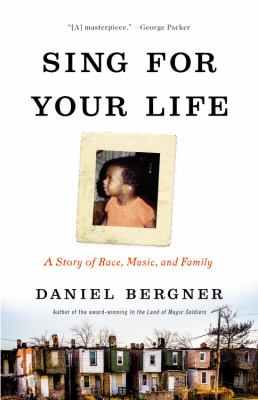
Sing for Your Life: A Story of Race, Music, and Family by Daniel Bergner inspired our next reader to ask “What choices do you make in your life?”  Ryan Speedo Green, a young African American man, grew up in southeastern Virginia, struggling to achieve his goals in a poor single parent family.  From there Green went on to become a well-known opera star and continues to inspire others with his voice.  Our reader was impressed with Green’s achievements.


Lastly, Divisadero by Michael Ondaatje was brought to the table.  Set in Northern California in the 1970’s, a father and his daughters make their living from the land, until violence forces change upon them.  Our reader commented that there were very intense situations between lovers, and that her takeaway was that we all have to get past saying that others are at fault, and we must find something that we can do personally to make things better.

Monday, September 4, 2017

Scythe by Neal Shusterman


Reviewed by Ambrea


Citra and Rowan live in an extraordinary world.  No hunger, no disease, no war, no poverty—for most, it is a perfect world where incredible technology has evolved a collective consciousness and humanity does not age, does not die, unless a Scythe chooses you for gleaning.  Citra and Rowan, however, discover their world is far from perfect.

Chosen as apprentices for Scythe Faraday, Citra and Rowan must endure a grueling regimen of training to become scythes, free agents who select individuals for gleaning—for permanent death.  They must learn how to end a life through any means necessary, no matter how grisly.  As they step into the world of the scythes, they uncover a bewildering world of policies and politics and danger…especially when Scythe Goddard sets his eyes on them.

Scythe by Neal Shusterman is incredibly compelling.  I’ll be honest, it’s one of those books that I could hardly put down for more than a few minutes.  I mean, on the one hand, it’s like watching a train wreck:  something very bad is happening, but it’s difficult to look away.  On the other hand, it’s a breathtaking story with endearing characters, a fascinating setting, and an intriguing plot.

As the story goes on, it’s easy to become attached to Citra and Rowan.  I was right in the middle of their story from the moment Scythe Faraday selected them as apprentices, so I quickly became invested in their lives and caught up in their world.  Speaking of which, I was particularly fascinated by how this futuristic world worked , because everything down to the smallest detail is micromanaged by the Thunderhead, a “cloud” system in which the collective knowledge of all humanity is stored.

Shusterman creates a unique story with Scythe, because he doesn’t immediately offer readers a dystopian world even if that’s what we eventually get.  It wouldn’t be a stretch to say dystopian is a popular genre in YA literature (think:  Hunger Games, Maze Runner, Cinder, City of Ember—and I’m sure there’s even more); however, Shusterman doesn’t start out with a terrible world.  In fact, the world seems pretty perfect.

There’s no war, no disease, no hunger, no inequality, no aging, no natural death.  Humanity has reached the zenith of its evolution:  it is perfect.  Yet beneath this veneer of perfection, you have the scythes who help keep the human population in check—and you have a world that, for all its perfection is stagnating.

What does humanity have left to achieve if everything has been done already?

Scythe is one of those YA novels that cause readers to ask some very hard questions about life and death, humanity’s relationship and/or dependence on technology, and what would really happen in a Utopian society.  It’s an exciting, spine-tingling thrill ride, but it’s also an intriguing examination of human psychology because it constantly made me wonder, “What is really the purpose of life when life never ends?”

I quickly fell in love with Scythe, but I’ll be the first to admit that it’s a pretty intense novel.  Although death is everywhere in this book, it seems like such a distant concept as people can no longer truly die.  There are revival centers where, if someone unexpectedly dies, they’re brought back to life and reconstructed.  Diseases are nonexistent, aging is a thing of the past, and horrific accidents are merely an inconvenience.  There’s blood and gore and horrific things that happen, yet they’re only temporary—and it’s really difficult to digest this cavalier attitude about death.

Besides which, I think I was spooked by the way people lived.  I don’t mean the general prosperity or lack of disease or the utopia the Thunderhead has appeared to create; rather, I was a bit perturbed by the general disrespect for life.  In one of the journal entries between chapters, which are shared by the various Scythes readers meet, I stumbled across one that really made me think:

“If you’ve ever studied mortal age cartoons, you’ll remember this one.  A coyote was always plotting the demise of a smirking long-necked bird.  The coyote never succeeded; instead, his plans always backfired.  He would blow up, or get shot, or splat from a ridiculous height.

“And it was funny.  […]  Because no matter how deadly his failure, he was always back in the next scene…

“I’ve seen human foibles that have resulted in temporary maiming or momentary loss of life.  […]  And when it happens, people laugh, because no matter how gruesome the event, that person, just like the coyote, will be back in a day or two, as good as new, and no worse—or wiser—for the wear.

“Immortality has turned us all into cartoons.”

Human life has been downplayed, made into something laughable.  More importantly, it’s not seen as a finite, precious thing; rather, it’s an indefinite commodity that can be wasted.  Immortality has created a type of stagnation in human culture.  There’s nothing new to discover, nothing new for which to strive, nothing new to create—so what’s really left?

Scythe brings up some very interesting questions about life and human emotion and immortality, specifically what it could mean and what it could bring.  It’s entertaining, yes; however, it also makes you think and it makes you wonder.  It feels distinctly dystopian, even though humanity is arguably faced with a utopian society; it makes you wonder, like Citra and Rowan, what’s the real price tag for a perfect world.

Friday, September 1, 2017

Mrs. Pargeter’s Public Relations by Simon Brett


Reviewed by Jeanne

Mrs. Pargeter is a very wealthy widow who harbors no illusions about the reason she receives so many invitations: there are always those who wish to part her from some of that wealth.  She can be quite generous, providing the charities measure up to her standards, or if the cause in question concerns some of her late husband’s employees, all of whom are still exceedingly loyal to his widow.

It’s the latter reason that finds Mrs. Pargeter at a charity ball—something she detests, often paying NOT to attend such events—for a cat rescue, animals being another thing of little interest to Mrs. P.  However, Jasmine Angold, a recent widow of one of Mr. Pargeter’s most trusted employees, wants to attend so off they go. It’s there that she meets a woman who is her late husband’s sister—or so she claims. It’s quite a surprise, but then Mr. Pargeter was (as she puts it) quite economical with facts, believing they should be issued on a “need to know basis.”

After all, one can’t be successfully questioned by the police about things one knows nothing about.

A murder after the charity ball has Mrs. Pargeter consulting her husband’s little black book to solve the case and prevent a scoundrel from sullying Mr. Pargeter’s reputation.
This was my first foray into the world of Mrs. Pargeter and it will not be the last.  I was assured that I did not have to read the books in order and I had no trouble keeping up with this one.  Simon Brett’s writing is a delight. His characters are vivid and entertaining. Mrs. Pargeter herself is elegant, intelligent, and resourceful with a strong sense of duty to her husband’s employees, all of whom are unfailingly devoted to her.  

 Brett also has a dry, straight-faced sense of humor and a turns a fine phrase, such as:

“Suicides may deal efficiently with the actual process of killing, but they very rarely manage to bury themselves after their deaths in shallow graves in Epping Forest (which is, incidentally, London’s go-to destination for the burying of bodies in shallow graves.)”

Brett has earned numerous awards for his writing, including a Diamond Dagger from the Crime Writers Association. If you like British humor and mysteries, then you’ll find Simon Brett a treat.