Showing posts with label animals. Show all posts

Friday, November 21, 2025

The Panda of Death by Betty Webb


Reviewed by Jeanne

Zookeeper Theodora “Teddy” Bentley has settled into her life with her new husband, Sheriff Joe Rejas, his two young children, and Joe’s mother, Colleen.  Then a number of events disturb the calm waters of happy matrimony:  first, a man is found dead near Teddy’s boat in the marina.  He turns out to be the scriptwriter for a local children’s TV show connected to the zoo where Teddy works.

The second disturbance is more personal, when a young man claiming to be Joe’s son turns up at the house.

Naturally, Joe doesn’t want Teddy to do any snooping into the suspicous, but that becomes harder when Joe’s newly discovered son is accused of the murder.

I have enjoyed all the previous entries in this series, and this one is no exception.  I’m drawn to the series because of all the information about the various animals and zoo-keeping; it’s like getting a behind the scenes peek at what goes on.  Webb tends to spotlight less showy animals rather than elephants or tigers, giving the reader a greater appreciation for some fascinating animals.  (After the first book, my interest in anteaters was piqued, and now I make it a point to visit them at the zoo.) The reader learns about some of the animals—Poonya the red panda is the featured animal this time—and has a mystery to solve to boot.  Webb is a long time zoo volunteer so her books have the ring of truth. 

And let me say that I adore Poonya!

Teddy is a fun character and Webb makes it easy for readers to root for her.  With a glamorous mother who despairs of at her daughter’s choice of career (and wardrobe and living on a boat and everything else), an imperious aunt, Teddy always has to stand her ground or be turned into a debutante. Later in the series, we’re introduced to Joe’s mother Colleen who is an Irish delight; she figures in this story and is the catalyst for discovering Joe’s teenaged son.

While there are character developments during the series, you don’t necessarily have to read these in order to enjoy.

The books in order are:

The Anteater of Death

The Koala of Death

The Llama of Death

The Puffin of Death

The Otter of Death

The Panda of Death

These are all the books to date, but though Webb has seemingly turned her attention to a new series, fans can still hope to see more of Teddy and friends in the future.

Friday, November 24, 2023

Shady Hollow by Juneau Black


Reviewed by Jeanne

Vera Vixen is the star reporter for the Shady Hollow Herald because this quick red fox has quite the nose for news.  Most of the time she covers events of local interest such as the spelling bee, but this time something almost unheard of has happened:  one of the citizens of the Hollow is dead and it looks like murder.  The deceased, Otto Sumpf, was the town curmudgeon with a sharp tongue but would that have been a reason for murder?  With police chief Theodore Meade too busy fishing (and avoiding unpleasantness) to take an active part in the investigation, Deputy Orville Braun dusts off The Big Book of Policing to solve the case.

Enjoyment of this book is highly dependent on your tolerance for whimsy.  The characters are all animals, from Lenore the raven who runs Nevermore Books to Reginald von Beaverpelt, leading citizen and sawmill owner.  The pace is leisurely but I liked the resolution.

I have to say I enjoyed it, but then I like movies like Zootopia or Fantastic Mr. Fox.  I’m not going to spend a lot of time wondering how a moose serves coffee or a snake does a medical examination.  I’m going to go with the flow.  I thought the idea was cute and I enjoyed the characters, enough so that I will be reading the rest of the series. 

Books in the series are:

Shady Hollow

Cold Clay

Mirror Lake

Twilight Falls

Summers End  (2024)

Monday, August 2, 2021

The Total Eclipse of Nestor Lopez by Adrianna Cuevas


Reviewed by Abby

The Total Eclipse of Nestor Lopez follows titular character Nestor as he tries to adjust to a new school and new surroundings. He and his mother have just moved to the home of his abuela (grandmother) in Texas while his father is on military deployment.  Nestor is upset about the move in part because he believes he won’t be in Texas long before his family is uprooted and forced to move again. If this wasn’t enough of a problem, Nestor has a secret: he can talk to animals.

Nestor still tries to enjoy himself at his new school and makes friends with classmates Talib and Maria Carmen. They tell him how there have been several cases of missing animals throughout town. With his ability to talk to animals, Nestor hears rumors from the woodland creatures about a witch who can shapeshift. Nestor feels obligated to take action and find the witch before more animals are taken or harmed. Even worse, Nestor’s abuela has been accused of stealing the animals by witnesses who claim to have seen her running around the forest at night. 

The witch, known as the tule vieja to Nestor and his abuela, is a mighty, mystical force to be reckoned with. Nestor is unsure if he can stop her on his own. With his friends as backup, Nestor attempts to learn as much as he can about the tule vieja before pursuing her. He learns that she can obtain the power of an animal by biting it during a solar eclipse. Unfortunately for him, the date of the next eclipse is quickly approaching. Nestor has to muster up as much courage as he can to battle the tule vieja to clear his abuela and to save the animals. But will it be enough?

 (Fun fact: the tule vieja, also spelled as tulivieja, in this novel is loosely based on a Central American folktale about a woman who was punished and transformed into a monster after she killed her baby.)

I typically do not read children’s or middle grade books as pleasure reads. I was introduced to this novel as a reading assignment for one of my college classes, so I decided to check it out from the library. I am grateful for the introduction. This book was quite entertaining! I had no clue what to expect at first. All I knew was that The Total Eclipse of Nestor Lopez was about a boy who could talk to animals. I assumed the story was aimed more towards juvenile audiences, so I did not have high expectations of relating to the plot, but I ended up really enjoying it!

I am a big fan of multicultural literature and will always advocate for others to read it when the opportunity arises. This novel is a prime example of how diverse authors are able to effortlessly include their culture into their writing. Cuevas does this in several ways: when Nestor and his abuela occasionally speak in Spanish, when his abuela makes Cuban inspired recipes for her family, and the inclusion of the Panamanian folklore of the tule vieja. This book appears lighthearted from the cover alone, but does touch on more mature topics that can easily attract the attention of older audiences. It is certainly a unique story with its combination of realistic and magical elements. I would highly recommend it!  


Wednesday, June 19, 2019

Nevermore: Homes, A Goddess, Lady First, Biden, Mama's Last Hug


Reported by Christy


First up, we had Homes: A Refugee Story by Abu Bakr al Rabeeah with Winnie Yeung.  Homes tells the story of the al Rabeeah family and their journey to Syria from Iraq for a safer life – just before the Syrian civil war broke out. Though our reader thought it was a little biased in favor of Sunnis, she also found it intriguing and the descriptions of hearing a war advancing “block by block” memorable.

Our next reader picked up Norman Lewis’ A Goddess in the Stones: Travels in India. Lewis traveled to India and hoped to record as much as he could about the tribal colonies there. Our reader admired the beauty of the writing and Lewis’ sympathy for the native people.


Lady First: The World of First Lady Sarah Polk by Amy S. Greenberg is a biography of the wife of President James K. Polk. Sarah Polk, unlike other women of her time, was raised to discuss politics and business. She was also a trusted confidant and advisor to her husband during his presidency. Polk lived for many years after her husband died, and devoted her life as a widow to being a hostess. However, our reader wasn’t entirely sure her story was worth a biography.


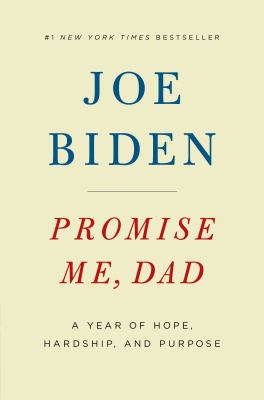
Joe Biden’s Promise Me, Dad is a memoir of the months leading up to and following the death of his son Beau from brain cancer. Though our reader had not finished it yet, she admired the family values espoused in the book and called it a “must read."


In Mama’s Last Hug by Frans de Waal, de Waal explores the rich emotional complexity of animals by discussing facial expressions and animal sentience among other topics. Our reader found it moving and “really interesting.”

Friday, March 20, 2015

Kittens Can Kill by Clea Simon


Reviewed by Jeanne


When animal behaviorist Pru Marlowe makes a house call, she expects to take a new kitten for a wellness check and perhaps dole out advice on litter boxes and scratching posts.  She does not expect to find a man dead from undetermined causes.  David Canaday, the deceased, was not a known animal lover, so it strikes Pru as a bit odd that his middle daughter decided to fly in from California to gift him with a kitty. The three Canaday sisters aren’t exactly a warm and loving family, and suspicion heats up when it comes out that their lawyer father may have been planning to change his will. Still, a lawyer makes many enemies so it could be someone else had it in for dear ol’ dad.  Pru is willing to let them fight it out until the eldest daughter demands the kitten be put down. Then her interest becomes personal.

Pru has a few advantages when it comes to an investigation.  Even though Jim her cop boyfriend (of sorts) isn’t exactly forthcoming about the case, she has some of her own sources:  Pru is an animal psychic who hears what every bird and beast has to say.  Interpreting what they say is another matter entirely.  Animals have their own interests and preoccupations, and generally aren’t interested in the doings of humans if it doesn’t impact them directly.  The other part is that Pru generally tries to understand their answers from a human point of view, which can lead to misunderstandings.
The other problem is turning conversations off, which Pru can’t do.  She hears courting sparrows and disgruntled dogs, hungry predators and frightened prey.  Doctor Doolittle, it ain’t.  That’s part of the reason that Pru tends to hit the bottle a bit more than she should, and is more than a little reluctant to let her boyfriend get too close.  She’s terrified of others discovering her secret; after all, the first time she realized she was hearing animals talk, she checked herself into a mental hospital.

The result is an interesting mix of hardboiled noir mystery and supernatural cozy.  It’s definitely grittier than your average cozy.  Pru’s life was difficult enough before; this odd ability only complicates things further.  She still has a self-destructive streak and a prickly personality.  She drinks too much, she tries to push away those who, like Jim, care about her—except for Wallis, her opinionated tabby cat who never pulls her punches and who never sugarcoats anything. Wallis and Pru communicate on a much higher level, though there are still things neither understands about the other.  On the other hand, Simon doesn’t wallow in explicit details of death, sex, or gastrointestinal disorders as some darker mysteries feel compelled to do.  I was heartened to see in this installment that Pru is starting to come to terms with some of her problems; it’s a first step, a crack in the character’s hard exterior.  

As with the earlier entries in the series, some of the most interesting characters are non-human.  Wallis the tabby is as imperious as her namesake the Duchess of Windsor and has very definite views on things.  She’s also not amused when Pru brings the upset kitten home with her; Ernesto is very much a toddler still, obsessed with play and looking for Mama.  Bitsy the Bichon who prefers to be known as Growler is another who has very firm views but who is kept in check by an owner to whom the little dog is just another possession. This time readers are introduced to a sheltie who is seeking her purpose in life now that her person is gone.  Biscuit, like most working breeds, needs something to do with her time, but her present owners are oblivious. However, I want to point out that the mysteries are solved via non-psychic means:  no animals name the murderer or give Pru clues.  What they do is remind Pru that most crimes come from the most primal of impulses, from competition for a mate, defense of territory or from a perceived threat, desire for resources, or the like. We are all animals after all.

As with most of the best books, Simon gives the reader more than just a mystery.  It’s an exploration of the relationships between people and animals, both domestic and wild, and how one can impact the other in unexpected ways and sometimes unhappy ways.  Food for thought! 

Kittens Can Kill can be read as a standalone book, but if you enjoy character development you’ll want to start with an earlier book in the series.  The titles are:

Full disclosure:  I was sent a copy of the book by the author but that did not influence my review. It did, however, give me an idea for a photo op with blue eyed Bonnie who was not in a cooperative mood.