Showing posts with label Conroy. Show all posts

Wednesday, November 2, 2022

Nevermore: Mama Makes Up Her Mind, The Water Is Wide, We Have Always Lived in the Castle, Real Queer America


Reported by Garry


Mama Makes Up Her Mind: And Other Dangers of Southern Living by Bailey White is the hilarious and heartfelt collection of essays based on the author’s life in the South along with her eccentric relatives. First published in 1993, this memoir is a series of fifty short anecdotes about White’s experiences being a first-grade teacher (in the school she went to as a child), and living with her elderly mother in rural Georgia. This delightful book comes recommended by no less than three of our Nevermore readers, who agree that it is a lovely, easy, feel good book.  KN


The Water is Wide by Pat Conroy is another memoir set in the South. In this 1972 book, Conroy recalls his time as a teacher on the extremely poor and isolated Daufuskie Island (called Yamacraw in his writing) on the coast of South Carolina. The island was economically depressed and lacked much of what we take for granted as modern infrastructure – there are no bridges. Conroy found that many of his early-teen students were illiterate and innumerate, some not even knowing what country they lived in. Facing multiple hurdles, Conroy (or “Conrack” as his students called him) clashed with the authoritarian school board and utilized unconventional ways of teaching. Our reader says that while idealistic, Conroy has an honest voice in this book and that the resulting book is very authentic and moving.  PP


We Have Always Lived in the Castle is the classic psychological horror story by Shirley Jackson. Narrated by Merricat (Mary Katherine) Blackwood, this slim novel follows the remains of the Blackwood family, living in their immense estate after the deaths of several family members. The arrival of a far-flung relative sets in motion an explosive and harrowing series of events in this claustrophobic (and highly recommended) tale of family, murder and isolation.  CD


Real Queer America: LGBT Stories from the Red States by Samantha Allen is a combination of memoir and reportage. Allen, a former Mormon missionary and now a transgender reporter on LGBT issues, has traveled the country stretching from Provo, Utah to the Rio Grande Valley and even to Bristol!  Traveling through many “Red” states, Allen found that queer people are everywhere and are actively creating change and lives for themselves even in those states often dismissed as “obviously unsafe” for the queer community. Our reader comments that this book is “quite uplifting” and highly recommends it for showing that America is a more accepting place than we are led to believe.  KM


The Thread Collectors by Shaunna J. Edwards and Alyson Richman

Riverman: An American Odyssey by Ben McGrath

The Lioness by Chris Bohjalian

Chains by Laurie Halse Anderson

Pachinko by Min Jin Lee

The Red Cotton Fields by Michael Strickland

The Jackaby Series by William Ritter

What If? 2: Additional Serious Scientific Answers to Absurd Hypothetical Questions by Randall Munroe

By Hands Now Known:  Jim Crow’s Legal Executioners by Margaret A. Burnham

The Hurting Kind by Ada Limón

Queen of Our Times: The Life of Queen Elizabeth II by Robert Hardman

Broken News: Why the Media Rage Machine Divides America and How to Fight Back by Chris Stirewalt

Wednesday, December 23, 2020

Nevermore: My Sunshine Away, March, Calypso, Water Is Wide, Night Strangers, Birchbark House, 1491


This week’s Nevermore opened with the book My Sunshine Away by M.O. Walsh.  Set in Baton Rouge in the 1980s, the book is narrated by a 14 year old boy with a crush on Lindy Simpson, a slightly older neighborhood girl.  The seemingly idyllic area is rocked when Lindy is raped and our narrator is determined to bring the perpetrator to light.  Although the themes are dark, our reviewer said that the crime isn’t the real focus of the book.  It is suspenseful but it’s more a coming of age story as told by an appealing character.  The one criticism of this otherwise well written book is that at several points the narrator would start to impart some important piece of information only to say, “I’ll tell you about that later.”  She found that quite frustrating, but still recommends the book.


Another literary delight was March by Australian author Geraldine Brooks which imagines the life of Mr. March, father of the Little Women family.  In the book, he is largely absent because of the Civil War which was raging at the time.  Brooks tells that hidden part of March’s story, basing the tale (as did Louisa May Alcott) on the real Alcott family.  Our reviewer found it well written and intriguing, and the entire group took an interest in the “story behind the story.”


David Sedaris’ Calypso continues to delight readers and listeners.  Again, it was in audio book format, as listener after listener praised Sedaris for his wonderful and expressive voice.  Most had first heard him on NPR, either as part of “This American Life” or else one of the other programs.  Everyone has found his stories of family dynamics to be quite relatable and very, very funny.  The current listener has moved on to another collection of his essays, this one with a seasonal theme:  Holidays on Ice.


Poisoner in Chief by Stephen Kinzer took the group discussion into darker territory.  Starting in the 1950s, chemist Sidney Gottlieb worked with the CIA on various drugs and techniques for mind control.  The idea was to attempt to re-program people, and to develop interrogation techniques to break even the most stubborn of prisoners.  Experiments were even carried out on civilians without their knowledge, sometimes with horrifying results.  Gottlieb’s research is still used today.  It’s a book both fascinating and appalling in equal measure, and should be required reading.


 While Pat Conroy is best known for his novels such as The Prince of Tides and The Great Santini, one of his first books was actually a memoir.  The Water Is Wide is his account of teaching on Daufuskie Island, South Carolina in 1969.  His pupils knew very little of life in the outside world beyond the island.  Conroy sought to expose them to the wider world, wanting to make a positive difference in their lives. The book is based on Conroy’s experiences but has been somewhat fictionalized, including the name of the island.  The book is recommended.


The Night Strangers by Chris Bohjalian is set in a small town in New Hampshire.  Chris, his wife Emily, and twin daughters have just moved to town in search of a new start after the crash of a plane Chris was piloting which resulted in the deaths of 39 passengers.  At first, the family enjoys the attentions of the new neighbors and exploring the house, but soon strange things begin happening.  Some of the local women seem to be taking a lot of interest in the couple’s daughters and Chris thinks he can hear some of the dead passengers.  Our reader says it was kind of a weird book, rather scary, but interesting.  She didn’t think it was one of his best but still good.


Next up was The Birchbark House by Louise Erdrich. Set in 1847 near what is now called Lake Superior, the story centers around Omakayas, an Ojibwa (Chippewa) girl, and her family.  Rich with detail and history, our reader felt that Erdrich’s books should have a much wider audience and recommend her work to all.  Most of her books deal with Native American culture—Erdrich herself is Chippewa—and all are excellent.

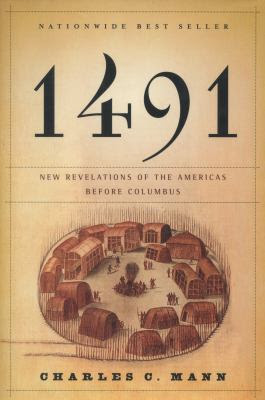
Finally, 1491:  New Revelations of the Americas before Columbus by Charles C. Mann was promoted as a fascinating look at pre-European North and South America.  Mann wants to dispel the idea that it was a pristine wilderness but was instead host to sophisticated societies and cultures who created cities, governmental structures, advanced agricultural techniques, and more.  Mann makes sometimes complex subjects very accessible to the average reader.  Our reviewer praised the book and found it fascinating.