Wednesday, December 9, 2020

Nevermore: Gordon, Segovia, Epstein, Picoult, Getty, Cep, Golding, LeGuin, Cooper, Flagg


This week our readers reviewed some classics, some new books, and we learned a thing or two that we didn’t know (and may not have wanted to know) about vultures.


Our first reader reviewed Matters of Choice by Noah Gordon, the third book in the historical fiction Cole Trilogy. This book talks about wanting proper health care and freedom of choice.  The main character, Roberta, comes from a long line of physicians and continues the family tradition.   After a personal crisis, she ends up in a small town in Massachusetts and she takes care of the local people and they take care of her.  Our reader liked this book so much that she will look for the initial books in the series.   The trilogy starts with The Physician and is followed by Shaman.   Many of our other readers who have read the first two thought they were far better than this last book, but highly recommend the entire series. 


The next book was The Murmur of Bees by Sofia Segovia, a historical fiction book about a family in Mexico during the flu and also about the revolution and the time that they were banning priests.  At the time of this writing, our reader was about two-thirds of the way through the book and wasn’t yet sure it is headed – it is kind of mysterious yet thoroughly enjoyable. 


Next up was a biography of early 20th century writer Edna St. Vincent Millay who was considered one of the most romantic modern poets. What Lips My Lips Have Kissed by Daniel Mark Epstein details Millay’s life and real romances and explores some of her best-know works.  Our reader felt the book was very well written and thinks that if you like Millay’s works, you will love this book.
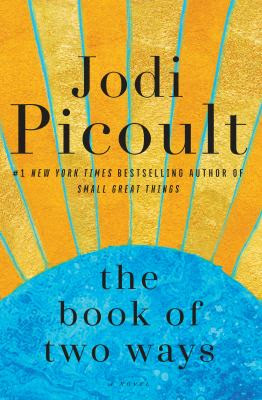


The next book reviewed was The Book of Two Ways by Jodi Picoult.   This book goes back and forth in time so much that our reader found it confusing to keep the timelines straight and wished the book had been written in a more straightforward fashion.  Overall, she found it to be a very good book due to the writing, but confusing with the jumping timelines.  The main character, Dawn Edelstein is a death doula and the story centers on her relationships in both America where she has a husband and family, and in Egypt with her former lover.  Our reader’s opinion that the book would be easier to read if it were written linearly was echoed by other readers that had also read the book.


Our next reader told us a hilarious and revolting story about a time in 1876 when meat rained from the sky over Mrs. Crouch’s farm near Ranking in Kentucky.  This mysterious happening gathered widespread attention, including that of a local chemistry professor Kirk Gohde who had the taste of the meat duplicated by a lab and put into jelly beans for the locals to safely sample at the local yearly festival.  It turns out that the meat was from vultures – a whole flock of vultures who had thrown-up over the Crouch farm!  The story came from the website https://www.atlasobscura.com/ which is a travel site featuring strange stories from around the world.  There is also a book by the same title which collects some of these essays.


Next up was another reader of How to They/Them by Stuart Getty.  As with our previous reviewer of this book, it opened our reader’s mind to things that she had not taken into account before.  She thoroughly enjoyed it and learned a phenomenal amount from How to They/Them.  This book makes you very aware of how gender terms are used today.


Furious Hours by Casey Cep is a true-crime book about the intersection of one of America’s most honored authors, Harper Lee, and a possible real-life serial killer, Reverend Willie Maxwell.  Maxwell was an African-American preacher and voodoo practitioner whose relatives seemed to have a habit of dying violently, but not until after Maxwell took out insurance policies on them. Lee covered his trial with the idea of writing a true-crime book (she had helped research the groundbreaking In Cold Blood for her childhood friend Truman Capote) but that book never came into being and instead Lee became famous for her novel To Kill a Mockingbird. Furious Hours paints an unflattering portrayal of Lee.  Some feel that To Kill a Mockingbird would never have been published if Lee had not had such a good editor who did a lot of editing and rewriting for her. 


Speaking of classics, the same reader re-read Lord of the Flies by William Golding, and she could keep thinking about was how prescient the book was - we have two sets of people now, and so many of us are shocked to find out who our friends are; they are not who we thought they were.  It is sort of like the two groups in the book.  While our reader liked the suspense and writing in the book, she just kept thinking about it mirrors today’s society – and not in a good way.


Another of our readers highly recommended two young adult series that are touchstones for him:  The Earthsea Cycle and The Dark Is Rising series.  The Earthsea Cycle, written by Ursula LeGuin has become a classic in young adult literature – it follows the life of Ged, a young wizard, through his life and trials, and finishes with the story of Tehanu a mysterious young woman who does not know her past. The first book in the series is A Wizard of Earthsea.  The Dark Is Rising Series by Susan Cooper is a five book series based in England and is steeped in Aurthurian and pre-Christian British Isles mythology.  The series focuses on Will Stanton, the last of the Old Ones, born into this world to do battle with The Dark for the future of humanity.  While technically the first book is Over Sea, Under Stone, some readers prefer to start with The Dark Is Rising.


The Wonder Boy of Whistle Stop by Fanny Flagg won effusive praise from our next reviewer.  This long awaited sequel to the beloved Fried Green Tomatoes at the Whistle Stop Café was deemed a fitting sequel.  She loved the book and now wants to go back and read the first book again – it is like visiting with family you haven’t seen in a long while.  Definitely recommend. 


Monday, December 7, 2020

Audio Book Recommendations by Christy


            I didn’t start listening to audio books until I was in my 30s, and I’m kicking myself that I waited that long. I still read traditional books but for some genres (specifically non-fiction), I prefer the audio medium now. Listening to audio books has almost doubled my yearly reading count, and opened up a new world of content for me. Here are a few of my favorite audio books that I highly recommend.

I Must Say: My Life as a Humble Comedy Legend by Martin Short

            This book is what got me into audio books. I checked it out on a whim after seeing a few glowing reviews pop up on Good Reads. I liked Martin Short just fine but never really gave him a second thought. This book made me love him and appreciate his talents. He does silly voices and sings songs but he’s also clearly grateful for his friends, family, and the life he leads. He also tenderly remembers loved ones who have passed, and it’s hard not to feel his grief along with him. A well-rounded and charming memoir.


True Crime from Texas Monthly

            A collection of five articles from Texas Monthly, this audio book is perfect for true crime fans who may not be in the mood to commit to one story. As someone who seeks out in depth, true crime articles, Texas Monthly always seems to deliver, and this audio book is further proof of that. Whether you want to hear about a woman who robbed banks for years dressed as a man or a mother who plotted murder to secure her daughter’s spot on a cheerleading squad, there’s something here for everyone.


Best Christmas Pageant Ever by Barbara Robinson

            This is a great, quick listen that you could probably finish up while wrapping Christmas presents. I hadn’t read this book since elementary school but it’s still as charming as ever. Elaine Stritch does a fantastic job narrating, and she sounds like she’s enjoying herself too. A delightful way to kick off the holiday season!

Friday, December 4, 2020

Monsters and Mythical Creatures from Around the World by Heather Frigiola


Reviewed by Jeanne

I picked this book up with the intention of just glancing through it but became intrigued. Frigiola starts from various cultural areas instead of individual countries, and briefly explores some of the creatures from those areas.  Greek and Roman myths occupy their own chapter because of the strong influence these have had on Western civilization, but they didn’t dominate the book. 

While in most cases the author looked at ancient legends, a few creatures of more modern vintage did show up, such as the Mothman, Jersey Devil, and the jackalope.  Entries tend to have some history, a description and variations, and sometimes a brief retelling of a story about the creature.  I especially liked that Frigiola noted how some descriptions changed after conditions in the area changed, whether from conquest or migration. 

Some creatures are not at all well known outside of their homeland while others have international reputations.  There are also comparisons between creatures who have superficial similarities:  the Russian Firebird is compared to the legends about the phoenix ; the Yeti, Yowie, and Sasquatch are contrasted as are the Egyptian and Greek versions of the Sphinx.  I had heard of the Australian bunyip but not the yara-ma-yha-who which draws blood out of its victims by way of suckers on its fingertips and toes.  Parents advise children to play dead if attacked as the creature loses interest if it believes the victim is dead.

The entries are certainly not comprehensive and don’t pretend to be.  They’re short essays designed to whet the appetite and to give the reader some idea of the amazing variety of the world’s mythical beasts and beings.  There are several I want to follow up on.

I also like that the author doesn’t present each entry as if this is the last word.  For example, under Latin America’s “Were-jaguar,” it’s explained that the term is used by archaeologists and researchers who aren’t really sure what it meant in the culture.  It could have been an object of worship or an ancestral totem; it could represent a cryptid or a shapeshifter.  The text also makes clear that shapeshifting can mean something different than a typical Western European interpretation. 

The illustrations are simple but effective.  I would have enjoyed seeing more artistic interpretations (or in some cases photos of native artwork) but given the sometimes greatly divergent descriptions of some of the creatures a full representation would have taken up several volumes. 

A simple index ups the value and maps make clear which geographic area is being referenced.

I think this is a nifty little book and was certainly worth my time.

Wednesday, December 2, 2020

Nevermore: Deadliest Enemy, Long Hello, W. Kamau Bell, Stars of Alabama, History of the World in 10 1/2 Chapters, Ghosts of Harvard, Wind Done Gone


Our first book was the timely Deadliest Enemy by Michael T. Osterholm. Our reader highly recommends this non-fiction book, in which the author both predicts a pandemic and outlines a prescription for how to handle it. Osterholm especially notes a pandemic can’t be controlled unless we have a vaccine. This book was released in May 2020, at the beginning of the Covid-19 pandemic. The author points out that previous pandemic viruses including SARS, MERS, AIDS, tuberculosis and malaria are still with us and that we should never forget them. He goes on to talk about antibiotic resistant organisms and how they are so very dangerous – they are ticking biological bombs.  One example he points out are the microbial mats on the walls of Carlsbad Caverns - the bacteria sampled from the walls are already resistant to penicillin and synthetic antibiotics even though they have never been directly exposed to synthetic antibiotics.


Our next reader read three books that left her unsatisfied. First, The Awkward Thoughts of W. Kamau Bell: Tales of a 6' 4", African American, Heterosexual, Cisgender, Left-Leaning, Asthmatic, Black and Proud Blerd, Mama's Boy, Dad, and Stand-Up Comedian, which she thought was a very good book, but a bit over her head as she couldn’t totally identify with it but liked anyway. Next on her reading list was The Long Hello: Memory, My Mother and Me by Cathie Borrie, a memoir about the author’s mother dying with Alzheimer’s disease. Our reader thought this book was just okay, and that there other books that are better. Last was a parody of the classic Gone With the Wind, entitled The Wind Done Gone, by Alice Randall, told from the perspective of Cynara, the mulatto half-sister of Scarlett, who she just called “the other.” Our reader found it just silly and felt it was a waste of her time.


Next up was The Stars of Alabama by Sean Dietrich. This novel begins during the Depression with Marigold, a 15 year old girl who has a baby by her father. Rejected by her family, she leaves home to fend for herself. One day she hides the baby in the woods in order to go find food, and somebody else finds and takes the seemingly abandoned baby. Our reader said that she enjoyed this book, but it was not a favorite.

Our next book club member picked up A History of the World in 10 1/2 Chapters by Julian Barnes. These eleven (or ten and a half) seemingly unconnected stories have an interconnecting thread that becomes apparent as the book goes on. This book surprised our reader and was not what she had expected when she picked it up, but she called it well worth reading.


One staff recommendation this week was Ghosts of Harvard by Francesca Serritella. Cady Archer is a freshman at Harvard, despite the fact that her mother strongly disapproved of her college choice.  Cady’s older brother Eric struggled with mental illness for years, and had committed suicide at Harvard only the year before. As Cady struggles to adapt to the stresses of college academics and social interactions, she starts to hear voices – just as Eric had.