Wednesday, October 26, 2011

Raven Report: October 18


 Reported by Jeanne
The Nevermore Book Club was very lively this week!  Russell Banks was still under discussion, with one person championing his novel Rule of the Bone as his best, while others praised The Sweet Hereafter.  Director Jud Barry had a serendipitous experience by following Cloudsplitter with Barbara Kingsolver’s The Poisonwood Bible.  He felt the themes of the two books complimented each other.
Michael Connelly was praised by several there, especially his novel The Poet.  When reporter Jack McEvoy finds evidence that a series of suicides might be the work of a serial killer, he finds himself behind the scenes of an investigation.  The killer is leaving quotations from Poe at the scene, so the reader learns quite a lot about Edgar Allan in the course of the investigation.  McEvoy turns up in several other Connelly books, including Scarecrow and The Narrows.
Stuart Woods’ Son of Stone was praised as a fun read as were the books of the late Stephen J. Cannell.  The latter made his name first in television where he was a successful writer and producer, overcoming dyslexia to do so.  His ability to tell a good story makes his Shane Scully novels great escapist reading.
Ken Follett has started a new epic after his best selling Pillars of the Earth.  The new book is Fall of Giants and it follows the fortunes of five families from different countries (England, Germany, Russia, America, and Wales) through the tumultuous years of the First World War.  There are two sequels planned.
At the other end of the scale is Abide with Me by Elizabeth Strout which deals with a small New England community in the 1950s.  The town’s minister suffers a terrible loss and finds himself questioning his faith and his community questioning his fitness as church leader.  Strout is also the author of the critically acclaimed Olive Kitteridge.
Non-fiction was well represented, too.  1491 by Charles C. Mann is a new look at the Americans before Columbus. New archaeological research offers challenges to our previously held view of Native American civilizations, which were both thriving, complex and, in some cases, technologically superior to their European counterparts.  Mann is careful to explain how these new conclusions have been reached in a fascinating challenge to conventional views.
Howard Zinn’s A People’s History of the United States also questions some standard assumptions.  Zinn’s focus is not on towering individuals but on what he perceives as the struggle between various classes and groups of people.  It was noted that some of what Zinn says might have particular resonance today with the “Occupy Wall Street” movement. 
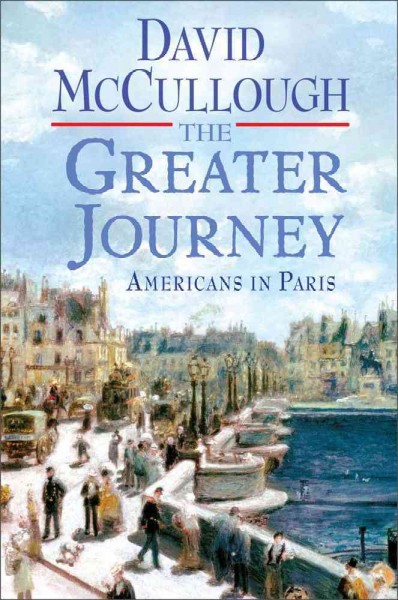
The Greater Journey:  American in Paris by David McCullough is another winning look at history from the man who gave us 1776 and John Adams.  Americans in the 1800s were venturing abroad in goodly numbers, bringing back with them ideas and inspirations that would change their homeland.  At that time France was seen as the center of the arts and sciences, a place where dance and medical advances stood together.  Many of the people were accomplished in several areas, though became known for one:  Samuel Morse, for example, is justly celebrated for his telegraph, but he was also an accomplished painter.  James Fennimore Cooper, Mark Twain, Mary Cassalt, Elizabeth Blackwell and Harriet Beecher Stowe are just a few of the accomplished folk we meet in these pages. As ever, McCullough tells a fine story and makes history come alive.

Monday, October 24, 2011

New Book News!

Some favorite authors have new books out in October!  Here are some of the ones we think you might like:

Back in 1977, there weren’t many female detectives outside of Nancy Drew or  nosy little old ladies in English villages.  That was the year Marcia Muller debuted her detective Sharon McCone, a hard-boiled private eye in San Francisco. In  City of Whispers, a search for her half-brother leads her to two murders and a race against time.  This series just keeps going strong!
If you love English historical fiction, you’re in for a treat!  Philippa Gregory has a new book out, The Lady of the Rivers.  It’s set just before the War of the Roses, and the main character is Jaquetta, who will be the mother of Elizabeth Woodville.  Passion, power, and the fate of a nation—what more could you ask for?
 
For years, Eve Duncan has tried to discover what happened to her seven year old daughter.  Now at last, Iris Johansen gives fans the answers in a three book arc:the first book is  Eve, followed by Quinn and now at last comes Bonnie. Yes, we do get the answers we've waited for; and no, it is not the end of the series.  
Lethal is the new book by Sandra Brown and it's another thrilling page-turner!  Honor Gillette finds her world turned upside down when an accused mass murderer shows up in her yard, claiming that he was framed and that Honor's late husband's death was no accident.  There are twists and turns aplenty, just as we've come to expect from Ms. Brown!


You can tell the holidays are fast approaching when the publishers start putting out the Christmas books!  Debbie Macomber fans are already on reserve for 1225 Christmas Tree Lane, the latest in her popular series set in Cedar Cove.   Glenn Beck has followed The Christmas Sweater with another holiday tale, Snow Angel.  The publisher describes it as a tale about family, forgiveness and "a future free of the past."  Donna VanLiere's 2011 book is The Christmas Noe, which tells the story of an unlikely friendship between two women as one searches for a family she didn't know she had. Christmas Treasures is the title of the new Cape Light book Thomas Kinkade.  It's due out in November. Last but certainly not least, there's The Christmas Wedding which sounds as if it should be the new Nora Roberts or Danielle Steel.  Surprise!  It's the new book by James Patterson and Richard DiLallo.  As the title suggests, it's a family drams about a widow who announces that she is going to remarry at Christmas-- but she won't tell her children the identity of the groom.


You can reserve these books online, in person at the library or by calling 276-645-8780.


Friday, October 21, 2011

Raven Report: Russell Banks


The Nevermore Book Club had a lively discussion of Cloudsplitter by Russell Banks.  The novel is told from the point of view of Owen Brown, son of John Brown who led the 1859 raid on Harper’s Ferry.  It’s a masterful recreation of a pivotal point in American history, drawing a vivid picture of the political and emotional turmoil in the years immediately preceding the Civil War.  The themes are just as timely now as then:  when does idealism turn to action then to violent confrontation?  Is violence in pursuit of a greater good justifiable?  On an individual level, Cloudsplitter details the evolution of one man’s beliefs and the effect it has on his family and a nation.
Also recommended was another of Banks’ novels, The Sweet Hereafter.  When a school bus accident claims the lives of several children, a community is changed forever.  In this novel, Banks uses a variety of points of view to draw the reader into the story:  Delores, the school bus driver who survives; Billy, who witnesses the accident and the deaths of his two children; Nicole, a cheerleader left paralyzed by the accident; and a lawyer who helps—or manipulates—the bereaved. 

Saturday, October 15, 2011

Statue in Search of a Pedestal: A Biography of the Marquis de Lafayette by Noel B. Gerson


Reviewed by Gena

I read a lot of strange things for escapism. Lately I can't get enough of the 18th century. There is just something endlessly fascinating to me about a century that began with an elderly Louis XIV in stockings and high-heeled boots and ended with George Washington on his deathbed.

One of the most interesting characters from the latter half of that century was the Marquis de Lafayette. At age 19 he was already a French military officer, married with children, and unfathomably wealthy. Then he risked it all when he defied direct orders from King Louis XVI and snuck out of the country to fight the British in the American colonies. By his death at age 76, he had taken part in one American and two French revolutions and supported many revolutionaries in other lands.

Noel B. Gerson nimbly follows Lafayette through seven decades of exploits in the out-of-print gem Statue in Search of a Pedestal: A Biography of the Marquis de Lafayette (Call Number 921 LAF). You need not be a historian to enjoy this book. It is a light read that presents Lafayette's story with just enough background detail to help along readers who haven't had a history class in years. The historical detail doesn't bog down the narrative, but it still does a comprehensive job of covering Lafayette's life as a teenaged major general under Washington, his complicated and controversial role in the French Revolution, his stormy relationship with Napoleon, and his part in the July Revolution that deposed Charles X, the last Bourbon king of France.

At this point, I’ve read a lot about Lafayette, and I know most of his story. Still, this book held some surprises even for me. A favorite unexpected anecdote involved the Huger family of South Carolina. Benjamin Huger was the first to greet Lafayette upon his arrival in America when his boat landed near Georgetown, SC (well shy of his intended destination of Philadelphia). Years later, when Austria imprisoned Lafayette while at war with the French revolutionary government, Benjamin's son Francis went all the way to Austria and attempted to break him out of jail. Talk about Franco-American relations!

The book may be too much for schoolchildren doing quick reports on the American Revolution, but for anyone wondering what actually happened in the French Revolution and why so many people lost their heads, Lafayette's story might be a good start.

Note:  Gena is a new librarian who is volunteering at Main.  She reads widely, and is going to share some of her book picks with us.  Thank you, Gena!

Tuesday, October 11, 2011

Southern Living Off the Eaten Path: Favorite Southern Dives and 150 Recipes That Made Them Famous by Morgan Murphy


Reviewed by Jeanne
If you’re looking for a cookbook with hundreds of recipes, this isn’t the book for you, but we have some wonderful Southern Living cookbooks that should fit the bill.
If you’re looking for a book with hundreds of suggestions of places to eat, I’d recommend one of the books by the Jane and Michael Stern, the authors of several books about road food.
If you’re looking for a book with the stories behind local eateries, I’d recommend Fred Sauceman’s  wonderful series of books called “The Place Setting.”
If, on the other hand, you’re looking for a fun browsing book with charming pictures, local color and delicious recipes, a book to dip into while relaxing, then this is just the book for you.  It’s one of those rare delights which is the total package: text, photos and design just come together perfectly.  There’s even an introduction by Fannie Flagg!
The cover as well as the title is a good indication of content:  it has a 50s retro look, evoking those old roadside diners that are usually dismissed as “greasy spoons,” yet which evoke fond memories.  My father’s was Black’s Fish Camp, a place I don’t think I could ever find again if I tried.  I seem to remember something about a very long dirt or gravel road out in the middle of nowhere.  It was several hours out of our way, but Daddy swore they served the best catfish he’d ever eaten and he was a man who liked to eat.
This book is an homage to such places, with wonderfully evocative photos and commentary.  The theme is definitely “Road Trip.”  The book is divided up by state, starting with a “Best Drive” recommendation.  The one for Tennessee is Highway 129, the (in)famous  twisty road beloved by motorcyclists and nicknamed the “Tail of the Dragon.” Tips offered include “Don’t go on a full stomach” and “Don’t take interns who get carsick.”  For each state, there is a small selection of out-of-the-way places to eat.  Photos give you a good visual sense of the place, while the text gives you some of the spirit.  Unsurprisingly, most are mom-and-pop establishment with a folksy feel.  There are recipes for the signature dishes of each establishment.  Not only did most sound absolutely delicious, but the photos were definitely drool inducing. (Note:  NOT a good book to peruse unless you’re going to have a very good meal very soon.  I found my brown bag lunch to be woefully inadequate.)
The food selections are very interesting, and I don’t mean that in a negative sense.  I’m fascinated by the idea of a chocolate fried pie, and the recipe for strawberry rhubarb pie sounded easy enough.  Some old favorites showed up as well, including one for Watergate Salad and another for Hummingbird Cake. Other notable recipes included Jalapeño Hushpuppies, Kentucky Bourbon Chocolate Pecan Pie and (are you ready for this?) White Chocolate Banana Cream Pie with Sugar Cookie Crust. I can't even begin to imagine what that tastes like
While no really local places made the cut (and no Black’s Fish Camp, either), there are places you’ll recognize such as “The Roanoker” in Roanoke.   “The Snappy Lunch” in Mount Airy, NC has been immortalized in a song by the VW Boys and yep, the recipe for their Pork Chop Sandwich is included. 
I’ve mentioned the book’s design already, but it’s hard to do it justice.  Every detail has been thought out, from the endpaper maps to using route sign shapes for the page number.  The author even made the trip in a blue vintage Cadillac. The book reminded me of all those childhood trips we took, stopping at diners and some genuine dives where the food was all the things we’re now told we shouldn’t eat.
The author asks for suggestions and I do have a couple I want to send.  Not only do I want some recognition for local treasures, but I want another volume of this wonderful book! It’s pure nostalgia for those of us of a certain age, and a peek back for younger folk.

Saturday, October 8, 2011

Knight in Shining Armor


A Knight In Shining Armor by Jude Deveraux

Reviewed by Susan

A Knight In Shining Armor is one of the most romantic stories I have ever read.  It was the first of Jude Deveraux’s books to come out in hardcover and even she says it is her favorite.  It is here that she establishes a pattern that she continued to use in most of her romances. 

It is a historical romance set in the present and in Tudor England.  The characters fall in love not once but three times: in the present, the past, and in their future.  It is wonderful how she does it.
In the present, Dougless Montgomery is abandoned by her abusive fiancée and his daughter in the middle of nowhere England.  Totally alone and without her cell phone, she goes into a small church and prays. When she weeps upon the grave of a knight, he is pulled from the past into the future—our present.  They don’t believe each other’s story at first.  There is a lot of humor as the knight, Nicholas Stafford, is introduced to modern times.  Eventually Dougless realizes that she really is a strong woman and she and Nicholas fall in love.  When they finally have an intimate relationship, he is pulled back into the past.  No one in the present except Dougless remembers him.  She begins to research history to find out what happened to him. She discovers that he died the date he disappeared, and that he was executed by royal command. He was innocent of the crime of which he was accused but his innocence wasn’t discovered for years.  

Once again she goes to the church, weeping and praying.  This time she is the one who changes times as she is pulled back into the past with Nicholas.  The problem is that he doesn’t remember her.  In order to save him, she has to warn him of the plot against him but he doesn’t believe her.  Once again they fall in love just in time to be torn apart again, as Dougless is returned to her time.

There are more twists and turns in store in this wonderful novel.  I highly recommend that you read this book.  Believe me, you will enjoy it.  You need to read the about the power of chocolate brownies, too!

Wednesday, October 5, 2011

Raven Report: Sept. 27


Reported by Doris
There was a broad range of great books discussed today.  One member discussed South Carolina author Mary Chestnut who has been called the most important Southern writer of the Civil War era. Chestnut kept extensive diaries during the war and worked them into a book in the early 1880’s. Her detailed descriptions of life on her family’s five plantations in the Carolina Low Country and her comments on the slaves and their treatment lead to a lively discussion about slavery. This tied into the previous discussions on Gone with the Wind by Margaret Mitchell and Uncle Tom’s Cabin by Harriet Beecher Stowe.
Another member grew up in California and said she really did not remember a great emphasis on the Civil War in her school history classes. She said that while there are so many books on the issues of slavery, there are relatively few books that point out the issues of the Native Americans. It was pointed out by some that the different sections of the country each had their own concerns at the time: while the eastern part of the country was fighting the Civil War, the West was embroiled in its own brutal war as Native Americans lost more freedoms and their lands. Library Director Jud Barry mentioned two books he thought very interesting on the topic—Everything You Know About Indians is Wrong by Paul Chaat Smith and Lies My Teacher Told Me: Everything Your American History Textbook Got Wrong by James Loewen. Another member observed that most of what people read about the Native Americans of today comes from the books of Margaret Coel, James Doss, Tony Hillerman, Dana Stabenow and other writers who place their stories within the Native American culture. She also pointed out that reservations have changed due to the oil, gas, and mineral deposits and these changes along with the serious issues such as alcoholism, poverty, and crime are being reflected in the new novels.
The work of Russell Banks was highly recommended by one member, especially The Sweet Hereafter. He has a new book coming out which has been very well reviewed, The Lost Memory of Skin.  Banks tends to write about people who have fallen through the cracks or who are otherwise isolated or shunned by society.  In his new book, the protagonist is a twenty two year old sex offender called “the Kid” who is more or less forced to live under a causeway with other dregs of society.  He’s befriended—more or less-- by “the professor,” an arrogant and manipulative man who claims to be doing a sociological study.

The discussion then switched to the new “wave” of Norwegian and Scandinavian mystery writers that have gained popularity since Stieg Larsson’s series of tremendously popular “The Girl Who” mysteries. Henning Mankell was suggested as a great read. His Kurt Wallander series by Mankell has it all—crime, Swedish setting, great plots, and a fast pace.


Doris suggested Daniel Silva and his Gabriel Allon series to those who like thrillers. Allon is a deep cover Israeli agent who is an art restorer. The newest book in the series is Portrait of a Spy and it is an intense, very timely look at the current situation in the Middle East along with an intriguing plot about a new terrorist cell that plans to strike deep into America.