Showing posts with label dan brown. Show all posts

Wednesday, August 17, 2016

Nevermore: Deception Point, The Universe Below, Mind's Eye, Iris Lady, Shifting Tide, and Empire of the Summer Moon


Reported by Ambrea


This week, Nevermore started with an old favorite, a novel that’s passed between numerous readers and received some excellent reviews:  Deception Point by Dan Brown, a thriller that bounced from the offices of NASA teeming with scientists and engineers to the far and distant ice floes of the Arctic.  Featuring Michael Tolland, a scholar, and Rachel Sexton, an intelligence analyst, Deception Point is a suspenseful story about a bold and terrifying deception that threatens to destroy a nation—and possibly the world.  Although Dan Brown’s novel received some high praise from other readers, it didn’t fare so well this week.  Our most recent reader said she just wasn’t thrilled by Deception Point, calling it both “formulaic” and “incredibly disappointing.”  Too much of the novel felt predictable for our reader, and she argued she couldn’t enjoy the trite romantic entanglements between Rachel and Michael; moreover, she just didn’t like it and called it quits.  She decided, as she told her fellow readers, “[If I’m] not hooked by page 107, then it’s not worth it.”


Next, Nevermore looked at The Universe Below:  Discovering the Secrets of the Deep Sea by William J. Broad.  A Pulitzer Prize author and scientific journalist, William J. Broad delves deep into the “planet’s last and most exotic frontier” in his book, taking readers on an incredible adventure to the deepest parts of the sea.  He follows modern and ancient explorations of the ocean, examines the darkest trenches and recesses of the sea to show readers the bizarre wildlife of the depths, and offers compelling articles about advance technology and research that is slowly allowing humankind to explore this last great frontier and uncover what strange things still lurk beneath the surface.  Our reader absolutely loved reading Broad’s book.  A thrilling examination of one of Earth’s little-known territories, The Universe Below is an intriguing and wonderful book that offers unparalleled insight into the ocean and provides readers with beautiful illustrations (courtesy of Dimitry Schidlovsky).  Overall, she was very pleased with her pick, saying the illustrations alone were worth flipping through the book.


Nevermore also picked up an Inspector Van Veeteren mystery by HÃ¥kan Nesser and introduced a brand new Scandinavian crime mystery to the group.  In Mind’s Eye, Chief Inspector Van Veeteren is confronted by one of the easiest cases of his career:  Janek Mitter, after a debauched night of wine and excess, is accused of murdering his wife of three months in the bathroom—and having only the flimsiest excuses, Mitter is found guilty and imprisoned in a mental institution.  But when Mitter is found murdered, Chief Inspector Van Veeteren knows his case isn’t as open-and-shut as he hoped.  Our reader greatly enjoyed reading Inspector Van Veeteren’s first mystery.  Compelling and surprising, Mind’s Eye was an incredible little Nordic novel that left our reader reeling with the concluding pages.  The ending, she said, was “really awesome.”  It made the entire novel worth reading.


Additionally, our readers decided to look at local author Marilyn Smith Nielans, reviewing her novel Saying GoodBye to the Iris Lady.  The “Iris Lady” of Williamsburg, Virginia, is an eccentric and obsessive widow who has become an icon in her community.  But when she is hospitalized with cancer, her three middle-aged children must return home to confront their mother’s dwindling health, her house and gardens, and their long-buried sibling roles and rivalries.  Labeled a “true life novel,” Saying GoodBye to the Iris Lady is a poignant story that captures the family dynamics of mothers and children.  Our reader actually had the opportunity to meet the author one year, saying she really enjoyed their conversation.  Neilans was a delightful personality and a wonderful author, and her book was decreed equally enjoyable.


Next, one reader picked up an old, battered paperback from a friend to share with Nevermore:  The Shifting Tide by Anne Perry.  William Monk is a private investigator, spending his days earning his living from the streets and the mysteries which lurk there.  But when Clement Louvain hires him to investigate a missing shipment of ivory from the Maude Idris, Monk finds himself caught in a desperate situation as he attempts to keep his family and his wife’s charity clinic afloat—and stop a terrifying plague from ravaging London.  Although our reader has never been a fan of Anne Perry, she said The Shifting Tide was not a bad book.  She noted it’s quirky and “very improbable,” but it wasn’t a terrible novel.  “It’s a day-and-a-half book, at best,” she pointed out, so it’s a very quick read for a slow afternoon.


Last, Nevermore looked at a familiar title, Empire of the Summer Moon by S.C. Gwynne.  Although our reader had only finished half of the book, he was very impressed by Gwynne’s work and the depth of the author’s research.  Split into two narratives—one, an inspection of the Comanche, Apache, Sioux and other tribes of the western United States; two, a narrative about Cynthia Ann Parker, who was kidnapped by the Comanche, and her son Quanah Parker who was the last and, arguably, the greatest chief of the Comanches—Empire of the Summer Moon was “amazing to read.”  Our reader said Gwynne’s book is incredibly complex.  “There’s so much [to keep track of],” he said, “with the hierarchy of the tribes…and relationships.”  Even between the Comanches, relationships were complex and, sometimes, difficult.  He continued, saying it’s a fascinating book, but it has to be taken in slow doses to remember all the little details, to fully comprehend this vast well of Native American history.

Wednesday, August 10, 2016

Nevermore: On the Beach, Deception Point, Black Hole Blues, & A Wolf at the Table


This week’s Nevermore started with Nevil Shute’s modern classic, On the Beach.   A nuclear war has devastated most of the world, leaving Australia as the only unbombed area.  The story surrounds a group of survivors who learn that the nuclear fallout will soon reach their shores, but who try to continue to live normally.  Even though the book was published in 1957, the book still exerts a powerful influence and feels quite relevant.  Our reader felt it was grim but realistic.

On the other hand, Deception Point by Dan Brown isn’t as realistic.  A meteor is discovered in the Arctic Circle which may contain fossils, thus proving there is life on other planets.  Intelligence analyst Rachel Sexton is sent to assess the situation, but it quickly becomes obvious that there is a conspiracy afoot--or perhaps more than one.  Our reader said it was a thrill a minute and that anything you believed for more than 15 minutes would turn out to be wrong.  He enjoyed it thoroughly.

Black Hole Blues (And Other Songs From Outer Space) by Janna Levin is a nonfiction book about the search for gravitational waves, a phenomenon first predicted by Albert Einstein, but only proved nearly a century later.  Levin, herself a professor of astronomy and physics at Barnard College, not only explains the search, but tells readers about the searchers themselves in this accessible and fascination book.

Augusten Burroughs continued to delight several of our readers who have been reading through his entire body of work.  This week’s book was A Wolf at the Table, which is a memoir of Burroughs’ father, a philosophy professor who inspired awe and fear and who seemed to enjoy inflicting emotional pain.  While the stories are harrowing, the writing is superb and I’m sure more of Burroughs’ work will come up for discussion in future meetings.

Friday, June 14, 2013

Nevermore: Dan Brown, Christopher Coake, DNA and Game of Thrones

Dan Brown’s new novel, Inferno, was the subject of discussion in more than one Nevermore meeting. Robert Langdon, the professor of symbology from The Da Vinci Code, Angels and Demons, etc. awakens in a hospital in Florence with a touch of amnesia.  The next thing he knows, he’s on the run and following Brown’s trademark trail of codes, ciphers and clues. The first reviewer was definitely unimpressed, feeling that the book had too much padding-- much in the form of architectural description. Another reviewer found it very slow going at first, but then the plot did pick up.  He too noted the abundance of information on various Italian cities and architecture as well as on Dante. Finally, the book was sort of summed up as "excellent plot, terrible narration."

Another reviewer highly recommended a collection of short stories by Christopher Coake entitled We’re In Trouble.  As the title promises, each story opens with a character in some sort of serious trouble, love in the face of death.  Each character is challenged and the reader anxiously waits to see how the character will react.  Our reader said she was instantly drawn into each story and thinks Coake is definitely a writer to watch.  The book earned strong reviews from Publishers Weekly and Booklist.

Game of Thrones by George R.R. Martin is proving popular across various media.  The recent HBO series has attracted a wide and avid viewership, and putting the original novels back on the library’s reserve list in both printed and audio formats.  A Nevermore member put in a plug for the new graphic novel version of the books, and requested we get the others in the series as they come out.

Louise Erdrich’s novel Love Medicine was mentioned by another reader.  This was Erdrich’s first novel and revolves around two Chippewa families, spanning some fifty years. The novel moves back and forth in time, and is actually a series of interwoven short stories that form a whole.

Two non-fiction books were mentioned, both involving DNA.  Origins of the British by Stephen Oppenheimer uses the latest genetic, archaeological, and linguistic findings to determine the composition of the British people.  Oppenheimer argues that the bulk of the genetic heritage predates the Anglo-Saxons and is a great deal more complex than was previously believed.  The subject is fascinating, but our reviewer found the book to be almost too technical.

A similar comment was made about The Violinist’s Thumb by Sam Kean.  The title refers to the Paganini’s extremely flexible fingers, the result of a genetic mutation which aided his musical ability but may also have shortened his life. Other parts of the book discuss an assortment of human and some non-human DNA (Neanderthals, for example) which makes for an interesting book, although the reviewer said there was a bit of a slog through the more technical aspects of DNA.

Friday, May 24, 2013

May Favorites: Most Requested Books

Here’s our list of the most requested books for May:

10. Best Kept Secret by Jeffrey Archer is the third book in the riveting Clifton family saga, following Sins of the Father.

9. Bone Tree by Greg Iles is scheduled for December 2013.

8. Second Honeymoon by James Patterson and Howard Roughan has FBI agent John O’Hara seeking a killer who kills newlyweds. O’Hara first appeared in Honeymoon.

7. Deeply Odd by Dean Koontz follows Odd Thomas across the west as he searches for a man he believes is going to murder three children.  This is the seventh “Odd Thomas” novel; a movie version of the first book is scheduled to come out this year.

6. Life After Life by Kate Atkinson is NOT one of her Jackson Brodie mysteries.  Instead, Atkinson recounts the life of Ursula Todd—or rather, the lives of Ursula as the main character progresses through different versions of her life, from dying as an infant to attempting to assassinate Hitler.

5. Ninth Girl by Tami Hoag has detectives Nikki Liska and Sam Kovac investigating the murder of a mutilated girl by a serial killer who seems to strike around holidays.

4. Don’t Go by Lisa Scottoline begins with a soldier in Afghanistan being told that his wife Chloe has died in an an accident.  He returns home but soon discovers Chloe had secrets he feels compelled to uncover.

3. Inferno by Dan Brown is the long awaited new novel featuring Harvard professor Robert Langdon. This time Langdon is in Italy, trying to unravel a mystery connected with Dante.

2.Whiskey Beach by Nora Roberts has attorney Eli Landon moving into his grandmother’s house to try to put his life back together after being suspected of murdering his wife.  His grandmother’s attractive caretaker, Abra, inspires him to try to prove his innocence in this romantic mystery.

And the most requested book is:

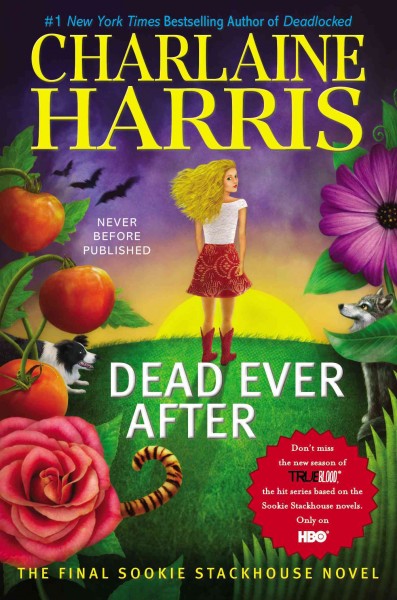
1. Dead Ever After by Charlaine Harris is the book every fan wants and dreads: the last of the Sookie Stackhouse series.  Harris’ psychic waitress and her world of vampires, faeries, and shapeshifters have attracted a very loyal following, so it’s no wonder everyone wants to know how it all turns out.

Monday, March 29, 2010

The All-Seeing Eye

The Lost Symbol by Dan Brown

Reviewed by Sue Wolfe

Ooh.  Do you like Conspiracy theories?  Cliff-hangers?   If so, The Lost Symbol by Dan Brown will keep you turning pages from one chapter to the next.  I found the book almost impossible to put down until the very end.

And what an action packed adventure it is.   In a Masonic ritual at the very beginning, a plot is planned by a new inductee, Mal'akh, to embarrass the country’s leadership, expose Freemasonry, and unexpectedly, to seek revenge on a family’s misdeeds.   The action really starts with a severed hand.  And then, the race is on.


This is the third Robert Langdon novel.   Again, Dan Brown dishes up a plate full of symbolism, historical mysteries, and brilliant twists and turns.  The villain is as smart as Langdon.   It is a chase up, down, over and through several of the best known sites in Washington.  Just the descriptions alone of the Capital building makes you wonder:  how does he know this stuff?  The symbolism, details on architecture, and secret rites had to have taken years of research.   Did you know that there was an eternal flame in the capital?  Or that a little known misprint about Moses having horns led to statues of a horned Moses?

Freemasonry has had a bit of a black eye in the media over recent years, and we have books that touch on this.  From what I have heard, the rituals described are accurate.  Plus, Brown goes into a bit of a background about the symbolism behind them.  This alone makes this a fascinating read but the information about the Masonic background of the original leaders of America left me way impressed.  Their touch is imprinted all over Washington, DC.  They tried to pass on the best of hope for our country.  Did you know why there is a limit to the height of buildings in Washington?  It has to do with the “Lost Symbol” and the sun daily hitting a monument capstone with an inscription.  (Sorry, don’t want to give away one of the best parts.)

The Lost Symbol also does a great job of introducing mass numbers of readers to Noetic Science.   It’s a newer field of science that is relatively unknown, and wow…it is like magic.  Surely there have now been thousands of Google searches about it, thanks to this book.

Brown’s books are always controversial.  They’re rich in detail, fun and unusual.  You will not be disappointed!

Both Main and Avoca hold copies of this book ( F BRO); in Large Print (SSB F BRO); and on CD  (CD F BRO).