Reported by Ambrea

Nevermore
started our meeting off with a review of It
Can’t Happen Here by Sinclair Lewis.
Written during the Great Depression, It
Can’t Happen Here is a political satire about, as the cover states, “a
president who becomes a dictator to save the nation from welfare cheats, sex,
crime, and a liberal press.” Shocking
and unexpectedly timely, It Can’t Happen
Here proved to be a hit for Nevermore.
Our reader enjoyed Lewis’ novel immensely. She noted it was incredibly well written with
such an amazing story, but she said she also found it surprisingly
predictive. Despite its age, she thought
It Can Never Happen Here could happen
at any place at any time.
Next,
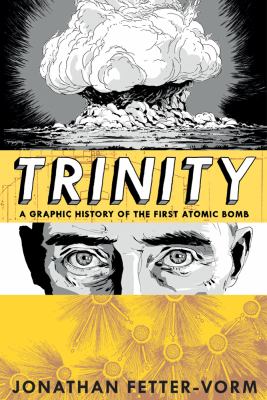
Nevermore took a look at Trinity: A Graphic History of the First Atomic Bomb
by Jonathan Fetter-Vorm. An interesting and
gripping debut, Trinity recounts the
history of the atomic bomb from its inception in a laboratory to its eventual
detonation at Hiroshima and Nagasaki during World War II. Our reader said he found Trinity incredibly interesting.
“You get the whole process [of the construction of the bomb],” he told
his fellow members. Most notably,
Fetter-Vorm’s debut documents both the history and the science of the atomic
bomb. It doesn’t just focus on its
implications in WWII; rather, it looks at the wider reaching effects on the
rest of the world and delves in deep to the tiniest details, like how silver
from Fort Knox was used to help build the original bomb and how scientists
eventually picked Los Alamos for their original experiment.

Nevermore
also shared Fatal by John Lescroart,
a thrilling and terrifying story of an innocent crush turning into a dangerous
obsession. Kate and her husband, Ron,
have a perfect life: a wonderful
marriage, lovely children, and a beautiful home in San Francisco. But when Kate meets Peter, her perfect world
starts to fray at the edges—and one mistake has graver consequences than she
ever anticipated. Our reader said Fatal was a dark, ambiguous story that
he couldn’t put down. He described the
story as a bit like “chasing rainbows,” in that it always left him guessing and
striving to catch the thread of the narrative.
“And the ending is quite surprising,” he said.

Switching
gears back to nonfiction, Nevermore explored The Brain That Changes Itself:
Stories of Personal Triumph from the Frontiers of Brain Science by
Norman Doidge. Not so very long ago, The Brain’s Way of Healing: Remarkable Discoveries from the Frontiers of
Neuroplasticity made the rounds at Nevermore; this month, Doidge made a
triumphant return with his first book.
In The Brain That Changes Itself,
Doidge discusses the ability of the brain to change as the title suggests. Each chapter is dedicated to a specific
scientist or researcher in neuroscience, offering interesting insight into
neuroplasticity and human nature. Our
reader said she was fascinated by Doidge’s book. She noted it was not an easy read, admitting
it’s “rather dense,” but she said it was a fascinating look at science and
human kind’s ability to recover, adapt, and change.

Next,
Nevermore dived into history with a look at Sarah Vowell’s Lafayette in the Somewhat United States. Vowell’s book chronicles the career of
General Lafayette as he spent years helping Washington build up, supply, and
protect his Revolutionary army, as well as offers an amusing glimpse into the
relationships and experiences of John Adams, Thomas Jefferson, Lord Cornwallis,
and Benjamin Franklin. Incredibly funny,
irreverent, and witty, Lafayette in the
Somewhat United States was an immediate hit. As a fan of Vowell’s other work—Assassination Vacation and The Partly Cloudy Patriot—our reader had
high praise for her latest book. She
highly recommended Lafayette in the
Somewhat United States; in fact, our reader said, “I recommend [Vowell] any
time, [because she’s] always historical and hysterical.”

Last,
but certainly not least, Nevermore checked out 30 Lessons for Living: Tried and
True Advice from the Wisest Americans by Karl Pillemer. After meeting an extraordinary
ninety-year-old woman, Pillemer began a quest to uncover what it is that older
people know about life that, well, most of us don’t. Pillemer interviewed more than a thousand
Americans over sixty-five, collecting some of the most interesting, funniest,
and poignant quotes about life and love and age. Our reader really enjoyed 30 Lessons for Living, saying it was such
an uplifting book. It contained a
multitude of wise quotes, offering an overwhelmingly optimistic look at
life. She highly recommended it, noting
she wished she’d had such advice 20 years ago.


