Reviews by the Reference Department of the Bristol Public Library, Bristol, Virginia/Tennessee.
Showing posts with label Elizabeth and Hazel. Show all posts
Friday, March 28, 2014
Elizabeth and Hazel: Two Women of Little Rock by David Margolick
Reviewed by Christy Herndon
In 1957 Little Rock, Arkansas agreed to comply with the Supreme Court ruling that segregated schools were unconstitutional and carefully selected nine black teenagers to attend the local Central High School. Of the Little Rock Nine, perhaps the most recognizable is Elizabeth Eckford – or at least the fifteen year old version of Elizabeth.
On the first day of the segregated school year the National Guard blocked the students of color from entering the school at the order of the Governor of Arkansas. He wanted to appease segregationists. Walking by herself, Elizabeth made her way up the street, through the crowd, towards the school only to be denied again and again by the soldiers. Finally deciding to retreat Elizabeth headed for the bus stop as the angry crowd followed close behind. They hurled racial epithets at her and told her to “go home”. One young white girl, the same age as Elizabeth, fell in line right behind her and joined in. That’s when Will Counts snapped his famous photograph.
In Elizabeth and Hazel: Two Women of Little Rock, David Margolick tells not only the story of that picture but the aftermath as well – how it affected the lives of each girl. Elizabeth, probably already dealing with depression beforehand, sank even deeper during her thirties after the birth of her two children. She was so depressed she couldn’t work and soon fell into poverty. The white girl in the photo, Hazel Bryan, married young and went on to have several children and grandchildren. Neither woman particularly felt they fit in anywhere, however. Elizabeth was withdrawn and slow to open up. Hazel always had a bit of a wild, independent streak – even in her older years when she stopped going to church and took up belly dancing.
Each anniversary of that September day brought new interest to the photo and Elizabeth herself. She was often asked to speak at events and sometimes did so even though it petrified her. With the 50th anniversary looming in 1997, Will Counts suggested another photo be taken with Elizabeth and Hazel. This time a photo of reconciliation. Both agreed and soon the picture was printed on posters to be sold in the local visitor center. Soon after, much to everyone’s disbelief, Elizabeth and Hazel became friends. Between their speaking engagements, they went to flower shows, took day trips, and went out to dinner. Many people were skeptical of this new found friendship. How convenient Hazel had a change of heart during the 50th anniversary. What they didn’t know, however, was that Hazel had actually tracked down Elizabeth’s phone number and apologized to her decades earlier.
Unfortunately, the friendship lasted less than two years. Although at first she seemed to believe Hazel to be sincere in her apology, Elizabeth felt that Hazel wanted forgiveness too easy. She wanted to gloss over their history without any real introspection and begin anew. Hazel, on the other hand, felt Elizabeth was stubborn and lived too much in the past. Their relationship soon dissolved. They have only spoken twice since the end of their friendship (once right after 9/11) and Hazel sent her condolences when Elizabeth’s son died.
This book was fascinating and heartbreaking. Both women suffered for their brief friendship. Neither whites nor blacks could understand why they were doing this, and both Hazel and Elizabeth dealt with harassment. However, some good came from it. Hazel helped Elizabeth come out of her shell a bit (she began speaking at more engagements with a little more ease), and Elizabeth offered Hazel simple companionship – something not in particular abundance for Hazel. I must admit I did want them to reconcile once more. Who doesn’t want a happy ending? Especially after reading that Elizabeth admits to missing Hazel, and how Hazel’s eyes tear up when speaking of Elizabeth. So there’s no happy ending for now but I suppose there’s still time for them to come around. In the meanwhile, I’d highly recommend this book.
Psst! Speaking of women and history, March is Women’s History Month! Here are some other books about historical ladies if you’re interested:
Hedy’s Folly: The Life and Breakthrough Invention of Hedy Lamarr, the World’s Most Beautiful Woman by Richard Rhodes
Pink Sari Revolution by Amana Fontanella-Khan
Girls of Atomic City: the Untold Story of the Women Who Helped Win WWII by Denise Kiernan
The Immortal Life of Henrietta Lacks by Rebecca Skloot
I Am Malala: the Girl Who Stood Up for Education and Was Shot by the Taliban by Malala Yousafzai
Thursday, April 26, 2012
Nevermore: Hunger Games, Elizabeth & Hazel, Calico Joe, Miss Julia & more!
Every seat around the table was filled at the Nevermore Book Club last Tuesday and the discussion lively as the Club took on topics ranging from the Pulitzer Prize to DNA that provides a plot twist in the best seller Defending Jacob. (Yes, Gone with the Wind was mentioned again!)
This year the Pulitzer Prize Board refused to award a Pulitzer for fiction. A couple of us thought the possibility of a tie in the vote from the Pulitzer jury may have given the Board which makes the final Pulitzer choices reluctance to award a prize to just one author. Others felt the three choices put forth by the Pulitzer jury did not appeal to a large audience. The three-person Pulitzer selection jury read more than 300 books from which they chose The Pale King by David Foster Wallace, Swamplandia by Karen Russell, and Train Dreams by Denis Johnson. Several club members had read one or more of the selected books. No one seemed overly enthusiastic with the choices. (The fiction selection committee has since revealed they were unanimous in their choices of the books nominated for the Prize in fiction which does away with our tie theory!)
Mr. Barry read from an article published by Meg Wolitzer that raises questions about women authors’ works being considered “woman’s fiction” and being relegated to the second shelf while male authors who do “serious” fiction are top shelf. (See the link to the article http://www.nytimes.com/2012/04/01/books/review/on-the-rules-of-literary-fiction-for-men-and-women.html?_r=1) The discussion that followed was pointed and clear: how important is the gender of the writer to most people? Most of us are interested a good story or a well-done book without regard to gender. When you look at the books that have truly become part of the public consciousness over the last few years, women authors such as J. K. Rowling, Stephenie Meyer, E. L. James, and a host of other women writers have dominated the field.
Books being read by Club members include:
Elizabeth and Hazel: Two Women of Little Rock by David Margolick tells the story of the 1957 desegregation of Central High School in Little Rock, Arkansas. The names Elizabeth Eckford and Hazel Bryan Massery may not be well known, but the image of them from September 1957 surely is: an African-American high school girl, dressed in white, walking stoically in front of Little Rock Central High School, and a white girl standing directly behind her, face twisted in hate, screaming racial epithets. This famous photograph captures the full anguish of desegregation—in Little Rock and throughout the South—and an epic moment in the civil rights movement. Our reader said the book tells a very painful story about the women and bond they share even today, but it also gives a look at what was really happening at the time. She said, “Everyone had a hand in this pie.”
Miss Julia to the Rescue by Ann B. Ross is another adventure with the intrepid Miss Julia as she rescues her favorite private detective from a deadly situation in West Virginia. Ross’ Miss Julia is what we call in the South a “hoot.” Ever so proper, determined to help her loved ones, and egged on by her own nosiness and need to meddle in other lives, Miss Julia jumps right in with hilarity and sweet resolve. Our reader says Miss Julia makes him laugh out loud.
Calico Joe by John Grisham is a baseball story and a story of fathers and sons. Our reader says it is beautifully written and totally different from Grisham’s legal novels, but it does show baseball as “brutality disguised as sport.”
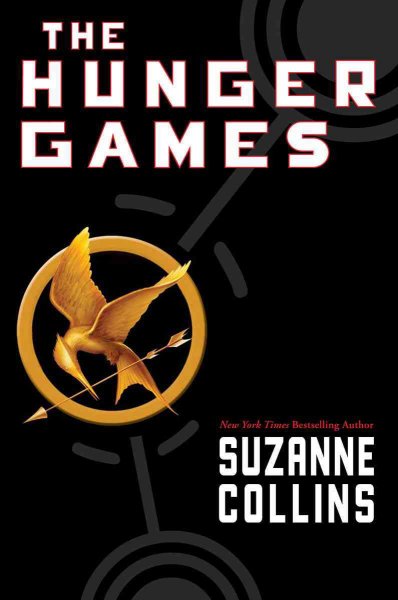
Hunger Games by Suzanne Collins has another reader enthralled. One of the hottest book series in the world and a blockbuster movie, these books are highly popular with both young adult and adult readers. Several members of the group have read all three books and loved them!
Lois Lowry wrote an earlier dystopian YA series which began with the Newbery Award winning book The Giver. The book is set in the year 2078, where everything is peaceful. People are assigned their roles in life and young Jonas has been assigned the role of Receiver of Memories. As he begins his training, he begins to find that his world may not be quite as he has been told. Gathering Blue is the second book in the series, and our reader had progressed to the third and final book, Messenger. This is a series that should be read in order.
Based on the recommendations of another member one reader is immersed in Defending Jacob by William Landay. His take is that the novel is not only an excellent mystery, but also a study in relationships between parents and children, and husbands and wives. He thinks the ending brings about a new definition of parenthood. Defending Jacob is highly recommended by three members of the Club!
The Shoemaker’s Wife by Adriana Trigiani is Mr. Barry’s book of the week. Spurred by Ms. Trigiani’s visit last week for National Library Week, he is finding the book a relaxing, easy, enjoyable read.
Subscribe to:
Posts (Atom)