Showing posts with label Dark Money. Show all posts

Wednesday, April 7, 2021

Nevermore: Dark Arts and a Daiquiri, Best of Iggy, Promised Land, Dark Money, Paris Hours, Murder List

 Reported by Garry


Nevermore started with some light and fluffy reading, which was just what our reviewer needed.   Dark Arts and a Daiquiri by Annette Marie, which is part of the Guild Codex series that follows the adventures of Tori, a sassy, redhead ex-waitress with an attitude.  Our reader said these were easy, fun reads to help you get through a dreary winter day.   


Another book for a cold winter day is The Best of Iggy by Annie Barrows.  Our reader says this is a really cute book to read with kids.  Curl up on the couch with a blanket and share this story of Iggy Frangi, a good hearted fourth-grader who often ends up in trouble and only occasionally regrets it.  “Clever” is the word that our reader used to describe this slim book.


For the more politically minded, we had two reviews this week: A Promised Land by former President Barak Obama and Dark Money by Janet Mayer.  A Promised Land was lauded as a fantastic book by our reader.  She said it was easy to read, and covered happenings that she remembered, but offered insights that were not apparent at the time.  Highly recommended.  


Dark Money is the dark companion to Obama's optimistic tome.  This book outlines the ways in which immensely wealthy right-wing ideologues are working to widen the income inequality gap and steer America further to the right.  Impeccably researched with hundreds of hours of interviews, public records, private papers and court proceedings, our reader found this book eye-opening, and highly recommends it.


Our next reader took on The Paris Hours by Alex George, a historical novel set in a single day in Paris in 1927.  This book intertwines the stories of four characters, Souren, Jean-Paul, Camille and Guillaume who are all struggling with the aftermath of World War I in their own ways.  Our reader loved this book, and highly recommends it.


Another fiction book reviewed this week is the latest mystery by Hank Phillipi Ryan:  The Murder List.  This multiple award winning mystery follows Rachel North, a Harvard law student as she helps investigate a cold case involving the murder of a colleague.  Loyalty to her husband, her employer, the victim, and the truth are all tangled up in this gripping mystery.

Wednesday, September 7, 2016

Nevermore: Fairstein, Florence, Food, Dark Money, Northern Reflections, and The Namesake

Reported by Ambrea


Starting out this week, Nevermore looked at a heart-pounding thriller by Linda Fairstein.  In Killer Look, District Attorney Alex Cooper finds herself diving deep into the glitzy, glamorous world of fashion to solve the murder of Wolf Savage, a prominent businessman and designer.  But Alex isn’t facing just a dangerous killer, she’s struggling to retain her endangered position at the DA’s office and control her PTSD.  Along with detective Mike Chapman and Mercer Wallace, Alex will have to delve deep into the Garment District if she hopes to solve a murder—and stop a killer before he strikes again.  Our reader said she really enjoyed reading Fairstein’s novel.  Although she hadn’t quite finished, she said “it’s good [so far]” and she couldn’t wait to dive into more books by Fairstein.


Next, Nevermore read a collection of what has been dubbed “wild, wacky, and nostalgic short stories” by Jerry Harju.  In Northern Reflections, Harju offers stories from his childhood in upper Michigan during the 1940s—everything from wild childhood antics, like playing chicken with a train, to his troublesome adolescence when meeting girls during the frigid Michigan winter proved difficult.  Our readers said they both enjoyed reading Northern Reflections.  Full of “colorful, colloquial stories,” it had a universal appeal which our readers greatly appreciated.  One reader said Harju’s stories translated very well.  Although the author grew up in Michigan, his experiences could have happened anywhere in the country, such as the Deep South of Mississippi or Arkansas—or even the Appalachian Mountains of northeast Tennessee.


Nevermore returned with an old favorite this week:  Dark Money by Jane Mayer.  A book that confronts the “profound economic inequality” of modern America, Dark Money has circulated through the ranks several times as readers find their interest piqued by Mayer’s work.   As usual, our readers found Mayer’s book fascinating and “absolutely frightening” with its depictions of political corruptions and economic turmoil; however, one reader picked out a local story that she thought hit close to home.  In Mayer’s Dark Money, Saltville, Virginia, takes the stage in an exposé on the Olin Chemical Company which dumped millions of pounds of mercury into local water sources from 1951 to 1970.  Interesting but simultaneously startling, Dark Money is still a big hit for our readers.


Nevermore also shared an interesting book this week about Florence Foster Jenkins by Nicholas Martin and Jasper Rees.  Dubbed the “world’s worst singer,” Florence Foster Jenkins is one of America’s best-known sopranos and she’s famous for her unique recordings—and her sold-out concert at Carnegie Hall.  Despite her limitations as a singer, Florence made a name for herself as both a talented young pianist and a patron of the musical arts.  She set up a prestigious music club, staged multiple operas, and embraced the musical scene of New York City, inspiring and assisting many young singers as they started upon the stage.  Florence Foster Jenkins proved to be an amusing and fascinating biography on the famous madame; however, the real treat was an actual recording of Mrs. Jenkins’ singing brought in by one reader.  Not only did our members have the opportunity to hear about her unusual exploits, they had the chance to hear her singing and “enjoy” her musical endeavors.


Next, Nevermore took a look at The Chain:  Farm, Factory, and the Fate of Our Food by Ted Genoways.  The Chain is a powerful, poignant work of investigative journalism that explores the growth of the American meatpacking industry—and its dire repercussions.  Genoways interviewed dozens of individuals for his book, including union leaders, industry line workers, hog farmers, migrant workers, politicians and activists, which lends his work an wonderful level of credibility.  Our reader said she was absolutely fascinated by The Chain, calling it a brilliant book that follows in the vein of Upton Sinclair’s The Jungle and, like that classic, it’s at once captivating and horrifying.


Last, Nevermore shared The Namesake by Jhumpa Nahiri, which follows the Ganguli family from their roots in Calcutta to their journey to the United States.  Gogol Ganguli is named for a Russian writer by his Indian parents, a collision of heritage and modern, American ideals, and he struggles to balance his American life and his parents’ heritage.  A stunning novel about identity and tradition and reconciling the two, The Namesake is simultaneously fascinating, thrilling, tragic, and beautiful.  Our reader was particularly pleased with Nahiri’s novel.  She said it was a “beautifully written book,” and she recommended it highly to her fellow readers.

Wednesday, July 20, 2016

Nevermore: Dark Money, Running With Scissors, Alligator Candy, Shiloh Autumn, Houses of Civil War America


This week, our readers kicked of Nevermore with Dark Money:  The Hidden History of the Billionaires Behind the Rise of the Radical Right by Jane Mayer.  A profound and insightful piece of literature, Dark Money offers a glimpse into the skewed political climate and economic inequality of the United States and explains how “a network of exceedingly wealthy people with extreme libertarian views bankrolled a systematic, step-by-step plan to fundamentally alter the American political system.”  Our reader said it was very well written with pages and pages of notes in the back, detailing Mayer’s resources; however, she also said it was one of the more depressing books she’d ever read.  The subject matter was frustrating, because it detailed many of the outrageous inequalities inflicted on the American public by individuals like David and Charles Koch, who created organizations to influence everything from academic institutions to Congress.  She admitted that she had to stop a few times in order to take a breather from such frightening and disheartening material.


Next, our readers looked at a memoir by Augusten Burroughs:  Running with Scissors.  At the tender age of twelve, Burroughs came to live with his mother’s psychiatrist, a startlingly unorthodox guardian who bore a striking resemblance to Santa Claus and provided few, if any rules, for the young ward in his care.  A harrowing and sometimes hilarious account of one boy’s struggle for survival in a new, eccentric household, Running with Scissors is a strange but incredibly memorable book.  According to our reader, Burroughs’ memoir is “one of the most bizarre books I’ve read in a long time,” but she praised it for its depth and its originality.  Another reader chimed in, saying, “It’s so weird,” but she too had enjoyed it when she finished her own copy.  Both highly entertaining and incredibly unusual, Running with Scissors was a big hit at Nevermore and received excellent reviews—and it quickly traveled to the hands of another reader, who was extremely excited to read it.


Nevermore also took a look at another memoir, Alligator Candy by David Kushner.  Kushner, an award-winning journalist and contributor to popular magazines like Rolling Stone, The New Yorker, and Vanity Fair, among others, has written a poignant memoir about his childhood in the 1970s Florida suburbs—and the day his older brother, Jon, disappeared.  On the inside cover, it reads:  “Every life has a defining moment, a single act that charts the course we take and determines who we become.  For Kushner, it was Jon’s disappearance…”  Kushner, intent on discovering something new about his brother’s disappearance, returns to his hometown as a reporter and investigates that “defining moment” in the hopes of capturing something he lost long ago.  Our reader was intrigued by Kushner’s book; however, she discovered she wasn’t a big fan.  Although she finished reading Alligator Candy, she said it was a bit of a downer and not quite what she wanted to find this week.


Next, Nevermore took a look back at the Great Depression with Shiloh Autumn by Bodie and Brock Thoene.  Even in the heart of the Great Depression, the Canfield and Tucker families live peacefully in Shiloh, Arkansas—until the cotton market collapses in Memphis on October 1, 1931.  Based on the lives of Bodie Thoene’s grandparents, Shiloh Autumn is a “really wholesome [book], but it was really good,” according to our reader.  She said she was initially interested in the book because of the title, thinking it was a book about the Civil War and the Battle of Shiloh; however, she was surprised to find a very different story—and very surprised to find she enjoyed it.  While Shiloh Autumn was her typical fare, she found she was fascinated by the historical detail Bodie and Brock included in their novel and she said the story was particularly compelling.
 Product Details
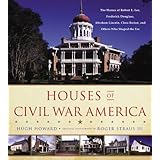
Last, Nevermore went even farther back into history to take a look at the Civil War, specifically the architecture in Houses of Civil War America:  The Homes of Robert E. Lee, Frederick Douglass, Abraham Lincoln, Clara Barton, and Others Who Shaped the Era by Hugh Howard.  The title was a bit of a mouthful, but our reader really enjoyed reading Howard’s collection on Civil War era houses.  He said it was fascinating, calling it “a marvelous thing.”  Houses of Civil War America offered a comprehensive and insightful look into the houses of notable individuals involved in the civil war, offering both historical documents and a photographic tour of each of the homes.  It has lots of “super pictures” and history, which he enjoyed—and he especially enjoyed reading about Longwood (otherwise known as “Nutt’s Folly”) in Natchez, Mississippi.  An old antebellum mansion, Longwood was a house designed by Samuel Sloan with the unique occupants in mind, combining Italianate architecture with an octagonal design to create a truly unique residence; however, with the start of the Civil War, the Nutt house was never finished and has remained unfinished for the better part of 150 years.  It’s a wonderful coffee table book, our reader enthused.  He highly recommended it to everyone.