Showing posts with label Civil War. Show all posts

Wednesday, July 12, 2023

Nevermore: Between the States, Gardens in the Dunes, Stringbean, Girl Forgotten


Reported by Rita

Between the States: Bristol, Tennessee/Virginia During the Civil War by V.N. Bud Phillips is an account of what daily life was like in the new town during a very difficult time. Phillips wrote several books of local history about Bristol, and relied heavily on oral stories from Bristol’s oldest citizens. Our reader liked the inclusion of documents and diary entries from the period as well as other information about the beginnings of Bristol. PP

Gardens in the Dunes by Leslie Marmon Silko is a historical novel about Indigo, a young Native American girl taken from the fictional Sand Lizard tribe by white soldiers. Indigo is forced into a government school to learn the ways of white children before being rescued by a kind woman and her husband. Our reader enjoyed it and said it is worth reading more than once. AH

Stringbean: The Life and Murder of a Country Legend by Taylor Hagood is the true story of David “Stringbean” Akeman, famed cast member of country music variety show Hee Haw, and his tragic murder along with his wife in 1973. Our read found this unsolved murder and courtroom drama to be sad but very interesting. DC


Girl Forgotten by Karin Slaughter is the suspense-filled tale of a new US Marshall who has a hidden connection to her first assigned case. Emily Vaughn was killed in a small town in 1982, but forty years later clues emerge to bring a killer to justice. Our reader enjoyed this recent standalone novel, as she enjoys most anything written by Slaughter. KP


Also Mentioned:

All Quite on the Western Front by Erich Maria Remarque

Violeta by Isabel Allende

The Questions That Matter Most: Reading, Writing, and the Exercise of Freedom by Jane Smiley

Wish You Well by David Baldacci

Ripper by Isabel Allende

Tipping the Velvet by Sarah Waters

Subpar Parks by Amber Shore (E-book only on TN READS)

With My Little Eye by Joshilyn Jackson


New Books:

Bloody Breathitt: Politics and Violence in the Appalachian South by T.R.C. Hutton

All the Sinners Bleed by S.A. Cosby

Wednesday, July 8, 2020

Nevermore: The Big Finish, Defying Hitler, Secret Service, and Delia Owens


Reported by Kristin


Nevermore began with a humorous debut book, The Big Finish by Brooke Fossey. (Previously reviewed by Laura here.) Duffy Sinclair and Carl Upton are roommates, but they are not rowdy college freshmen, they are senior citizens in an assisted living facility. When a young woman crawls in their window one night and announces that Carl is her grandpa, the octogenarian men do their best to keep her a secret, and not get kicked out of their comfortable living situation. Their escapades are funny, endearing, and make for an excellent novel.

Our next reader found Defying Hitler by Sebastian Haffner to be an insightful memoir of the author’s eyewitness account of German power changes from 1907-1933. Written in 1939 and published more than sixty years later, this history details how the rise of the Nazi party was gradual as they took power a little at a time. Our reader appreciated that the author’s son chose to publish his father’s writing in 2000, and she found it well worth reading.

Another book of historic writing came to the virtual table with The Secret Service: The Field, The Dungeon, and The Escape by Albert D. Richardson. This memoir was written in 1865 by a journalist who examined the crumbling infrastructure of the South in the years leading up to and during the Civil War. Our reader was intrigued by the extensive vocabulary used by the author and highly recommends this volume for anyone who fancies themselves an amateur historian.

Before she wrote her debut novel Where the Crawdads Sing, Delia Owens and her then-husband Mark Owens wrote memoirs of their time studying African wildlife. Cry of the Kalahari has been passed around between several Nevermore members, enchanting readers with the beautiful descriptions of the animals and the landscape. Although the Owens family was subsisting on very few resources, they were able to observe brown hyenas and other wildlife in such remote areas that the animals had not yet learned to be afraid of humans. Our current reader was impressed by the authors’ sensitivity to the animals and charmed by the photography.

Another reader was working through another Owens book, Secrets of the Savanna: Twenty-Three Years in the African Wilderness Unraveling the Mysteries of Elephants and People. Set in Zambia, the zoologists lived and worked in the Luangwa Valley, studying the devastation faced by the elephant population as poachers decimated their numbers. Our reader particularly noted that when the elder male elephants were killed, much of the herd’s collective survival knowledge was lost.

Wednesday, June 29, 2016

Nevermore: Free State of Jones, Eleanor Roosevelt's India, Invention of Wings, Arthur C. Clarke, Full Body Burden


Reported by Ambrea


This week, Nevermore focused on nonfiction and history, starting with The Free State of Jones:  Mississippi’s Longest Civil War by Victoria Bynum.  A historian with family ties to Jones County, Bynum delves deep into the history of the Mississippi Valley with her narrative and explores the startling social upheaval that gripped Jones County during the Civil War—and what happened in the aftermath.  Starting in 1863, the Knight Company—named for their fearless leader, Confederate deserter Newton Knight—set up camp in the swamps of the Leaf River region and declared themselves the Free State of Jones, a lone community intent on the freedom of all men.  Although skirmishes between Newton Knight and the Confederacy were legendary, especially since Knight was never captured, one of the most lasting legacies of the Knight Company came from the mixed-race community that endured long after the war ended.  An intriguing and compelling narrative about the lingering effects of the Civil War, The Free State of Jones was an instant hit for our reader.  He said it was fascinating to read about Jones and his exploits, and it was interesting to see the impact that the mixed-race community of Jones had on the rest of the community and, incredibly, the legal precedents of the county.  Our reader was incredibly pleased with Bynum’s work and highly recommended it (and the upcoming movie) to his fellow Nevermore members.
 
Eleanor Roosevelt, courtesy of the FDR Library
Our next reader rediscovered her book from her bookshelves, taking another opportunity to read Eleanor Roosevelt’s India and the Awakening East.  A compelling narrative about Eleanor Roosevelt’s travels through India after World War II, India and the Awakening East is an intriguing and thought-provoking piece on the social growth of India, Lebanon, and many other eastern countries.  Part travel journal and part political/social commentary on the state of eastern nations, Eleanor Roosevelt’s book is a dynamic book that our reader said she enjoyed immensely.  She considered it compelling and brilliant, filled with Eleanor’s passion for humanity and her zeal for humanitarian work, and she said she especially loved the insightful pictures that helped depict the conditions of the time and offered further insight into Eleanor Roosevelt’s travels.  She said it was incredibly insightful, and she loved reconnecting with an old book she’d almost forgotten.


Next, Nevermore looked at The Invention of Wings by Sue Monk Kidd, a sweeping novel about the Grimke sisters—Sarah and Angelina—and their gradual journey toward becoming abolitionists and suffragists.  Based on characters both real and invented, The Invention of Wings tells the story of Hetty “Handful” Grimke, an urban slave in Charleston who serves in the Grimke household.  Given to Sarah on her eleventh birthday (Hetty was only ten-years-old, at the time), Handful and Sarah forge a remarkable and unusual relationship as, for the next thirty-five years, they attempt to forge their own destinies and identities.  Our reader really enjoyed reading about the Grimke sisters and Handful, and she highly recommended it to other history lovers.  Thorough and detailed, The Invention of Wings is an excellent piece of fiction that combines a thoughtful narrative with a close observation of facts, breathing life into individuals known only from the history books.  In fact, our reader said, “If you like historical fiction, you’ll [definitely] like this.”


Our readers also explored The Light of Other Days by Arthur C. Clarke and Stephen Baxter.  Although Clark and Baxter’s novel falls under science fiction, it’s an intriguing book that discusses the connectivity of a future world—a not-so-far-in-the-future world—where the barriers of space and time are no longer a matter of fact, but a malleable principal that breaks down the boundaries of privacy and, more importantly, time.  Suddenly, people are able to see one another at all times and, finally, look into the distant past to view history as it unfolds.  An interesting mix of historical and science fiction, The Light of Other Days is a fascinating story that’s “really about society and the effects of technology on it,” according to our reader.  He said it was an interesting and compelling novel that dealt with the disappearance of privacy, an idea which he said is very relevant to the modern world, as well as other fascinating scientific concepts.  Overall, he highly recommended it to his fellow readers as a highly thoughtful and incredibly insightful novel.


Last, Nevermore looked at Full Body Burden:  Growing Up in the Nuclear Shadow of Rocky Flats by Kristen Iverson.  Iverson grew up in a small Colorado town close to Rocky Flats, a secret nuclear facility that produced weapons for the U.S. Government under the guise of a simple chemical company.  But as strange cases of cancer and diseases began to crop up all over town, people, like Iverson, began to question what happened at Rocky Flats—and discovered the terrible truth behind the plant which stretched its shadow across the county.  Filled with EPA and FBI documents, interviews of local citizens affected by Rocky Flats, and pages from a class-action lawsuit, Full Body Burden combines the best of investigative journalism with the wrenching testimony of a witness.  Not only does it expose the dangers of radiation, it also exposes the dangers of secrets—and, sometimes, putting trust in a government that doesn’t always have its citizens’ best interests in mind, our reader noted.  She said Iverson’s memoir is a fascinating window into the depth of secrets and deceit that were practiced at Rocky Flats.  It reminded her of Oakridge, offering an eerie parallel to the secrecy of a similar facility that’s so close to home.  Overall, she said she enjoyed Full Body Burden and she feels she learned a lot from Iverson’s and her neighbors’ experiences.

Friday, May 29, 2015

The Dante Club by Matthew Pearl

Wednesday, June 19, 2013

Nevermore: Procrastination, Religious Intolerance, Southern Unionists, and The Searchers

Library director Jud Barry brought in a slim volume he recommended, The Art of Procrastination by John Perry.  Perry believes that one of the most effective ways to avoid doing Project A is to work on other things.  As a result, the veteran procrastinator can get a good deal done.  He refers to Robert Benchley’s essay “How to Get Things Done,” which provides the astute observation that “anyone can do any amount of work, provided it isn’t the work he is supposed to be doing at that moment.” Jud described it as a fun book even if the author is a professor of philosophy, which brought up the question, “Does philosophy equal fun?”

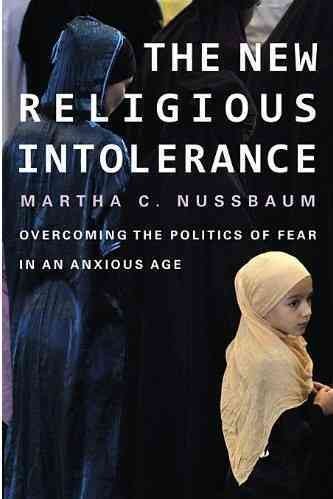
Next up was the definitely more serious The New Religious Intolerance:  Overcoming the Politics of Fear in an Anxious Age by Martha Nussbaum, a professor of law and ethics at the University of Chicago.  She believes that there is a rise in intolerance for Islam worldwide as evidenced by new legislation banning headscarves in France and the immediate belief that a Norwegian massacre was the work of an Islamic extremist before it was discovered that the perpetrator was in fact a right-wing Norwegian. Nussbaum believes that the United States may be better equipped to handle these questions because we don’t have one single ethnic or linguistic identity but are a blend of many different influences.  We already have the ideals in place, even though the performance is sometimes lacking such as with the early Mormon Church. Our reviewer thought it was a thought-provoking book and especially liked the international approach.

 The popular image of the Civil War has all the people in a state firmly on one side or another, Rebel or Yankee.  The truth is more complex, as Lewis F. Fisher demonstrates in No Cause of Offence, the true story of a family of slave-owning Unionists in Virginia’s Shenandoah Valley.  Samuel Lewis, the patriarch, made no secret of his conviction that the United States should remain as one nation, putting him at odds with his neighbors.  At one point, the family had to abandon their home as a battle swirled over their land, leaving dead and wounded behind; Stonewall Jackson used their home as his headquarters.  The family story continues after the war, when the family is involved in Reconstruction.  Fisher, a Lewis descendant, drew on family records as well as newspaper and official accounts to produce this slim but most interesting book.

Last but certainly not least, The Searchers by Glenn Frankel drew rave reviews from two club members. The book’s title comes from the movie of the same name, an extremely influential Western starring John Wayne and directed by John Ford. Frankel doesn’t limit himself to the movie, and therein lies the strong appeal of this book.  He examines the true story on which the movie is based, the kidnapping of Cynthia Ann Parker by the Comanche, looking not only at the facts as we know them but at the changing interpretations of those facts and mythologizing of the West.  Finally, he looks at the effect the movie had on the American psyche.  This multifaceted approach has made this a very popular book, and it continues to make the rounds of Nevermore readers.

Wednesday, September 26, 2012

Nonfiction from Nevermore!


The readers of Nevermore Book Club have some non-fiction books to recommend:
Autopsy of War:  A Personal Memoir by John A. Parrish portrays the trauma of war and its lasting effects.  Parrish was a navy physician during the Vietnam War. He returned to the U.S. and appeared to be quite successful, but his emotional life was crumbling.  He was unable to bond with his family due to PTSD, and he began a downward spiral that nearly destroyed him. Parrish is brutally honest about the war as well as his own failures and successes. 
Rabid:  A Cultural History of the World’s Diabolical Virus by Bill Wasik and Monica Murphy not only explores the history of this most feared disease, it examines the hold it has on human imagination.  The stories of werewolves may have had their origin in the history of rabies, a disease that can turn even a mild mannered creature into the stuff of nightmares. Even today rabies remains a dreaded and deadly disease.  Our reviewer said this book was like The Hot Zone by Richard Preston:  interesting, entertaining, and terrifying, all at once.
Cracking the Egyptian Code by Andrew Robinson is the fascinating story of how one man finally discovered the key to reading Egyptian hieroglyphics.  People had puzzled over the strange symbols for years but no one was able to figure out how to read them.  The 1799 discovery of the Rosetta Stone a stele  with the same inscription in Greek,  Egyptian demotic, and Egyptian hieroglyphs, seemed to promise a way to reading the ancient writing but it still took over 20 years before a young Frenchman named Jean-Francois Champollion, an extremely gifted linguist, was able to provide a translation.  It sounds simple enough, but the true story is strewn with political upheavals within France and international rivalries with other scholars.
Snow- Storm in August: Washington City, Francis Scott Key and the Forgotten Race Riot of 1835 by Jefferson Morley brings to life a little-known incident of racial tensions in the nation’s capitol.  As free blacks entered Washington, D.C. and abolitionist literature was being distributed, fears of a black uprising began to fester among part of the population.  The city’s District Attorney, Francis Scott Key—yes, the author of the Star Spangled Banner—decided to vigorously prosecute not the rioters, but two people he blamed for inciting the riots:  a young slave who threatened his owner with an ax and an abolitionist handing out antislavery material.  Besides Key, the cast of characters includes President Andrew Jackson, threatened owner Anna Thornton, free black restaurateur Beverly Snow, and Sam Houston.  The result is a riveting tale which vividly illuminates the era just before the Civil War.