Showing posts with label China. Show all posts

Friday, January 27, 2023

The Rape of Nanking: The Forgotten Holocaust of World War II by Iris Chang


Reviewed by Ben


I just finished The Rape of Nanking by Iris Chang. Chang was a Chinese-American writer for whom this book represented a personal quest to bring the story of the Japanese Imperial Army's war crimes to more modern-day Americans. The book was published in 1997. WARNING: this book is a disturbing read.


This book tells the story of what the Japanese army did to the population of China's then capitol city, Nanking-or Nanjing-, during the Sino-Japanese War of the late 1930s, part of the larger conflict of World War II. After defeating Chinese forces and capturing the city, occupying soldiers from Japan subjected locals to brutality that is arguably unsurpassed by any other war crimes carried out during the Second World War. The victors executed Chinese soldiers and civilians alike-men and women, children and the elderly-at times using their helpless victims for bayonet practice, training the more green Japanese troops to kill without remorse. The Japanese media even kept the public up to date on a killing contest between two officers. The first to kill 100 Chinese people with his sword would win. The total was later upped to 150 after both contestants unknowingly surpassed 100, without tracking who did so first. The war crimes didn't stop at killing. The Imperial Army carried out rapes on a massive scale, brazenly dragging women from their homes and refugee camps, frequently torturing and killing them in the process.


To tell this story, Chang wove together Japanese and Chinese history far preceding World War II, survivors' accounts, contemporary media reports, and diary entries from westerners who lived in Nanking at the time and maintained a neutral zone to protect the local civilians. The source material gives valuable insight into how the Japanese army got to the point of mindless brutality and how the reader can get past modern Japanese denials of the Nanking massacre. One thing that stuck with me was that two Nazi party members who resided in Nanking were shocked at the war crimes committed against the Chinese civilians. They played a key role in efforts to protect locals from the occupiers.


As indicated by the title, the Nanking massacre is one of the lesser-known episodes from the Second World War. Political developments meant Japan was not compelled to publicly apologize for its actions in the Asian theater, including what its soldiers did in Nanking. I had not heard of this event until my mid-twenties. However I was not aware of exactly how bad things were until I read this book. After reading the chapter that went into the most detail regarding the atrocities of the Nanking occupation, I actually had a nightmare! I never thought I would be shocked by WWII war crimes after learning about The Holocaust in the sixth grade.


I recommend this book for readers who have a strong stomach and an incomplete understanding of what people in the Asian theater faced under Japanese occupation. I come away from this experience with a better understanding of the political and historical baggage between China and Japan.


Monday, September 26, 2022

Shadow of the Empire: A Judge Dee Investigation by Qiu Xiaolong


Reviewed by Jeanne

Di Renjie, a seventh century Chinese magistrate and statesman, was the inspiration for an eighteenth century Chinese detective novel.  The book greatly intrigued Robert van Gulik, a Dutch scholar who studied Chinese culture, especially art and literature.  He reworked the book to suit Western sensibilities, taking out some of the supernatural elements, and then wrote several novels using the character “Judge Dee.” These proved very popular.

Now Qiu Xiaolong, a Shanghai-born, award-winning mystery author has decided to do his own version of a Judge Dee story.  As the story opens, Dee has just been appointed as Imperial Circuit Supervisor by Empress Wu and is setting out to assume his new post.  He is contacted by a representative from Internal Minister Wu—the nephew of the Empress—about investigating a recent shocking murder.  A renowned poet/courtesan, Xuanji, brutally murdered her maid and buried her body in the courtyard of a Daoist nunnery.  She has been arrested and has confessed, but her confession seems suspect.  Dee agrees to stop a day or so and investigate the matter.

Dee knows from the start that there is something very odd about the matter—not just the murder, but the request for him to investigate.  There are obviously some political machinations going on, and the confession is unbelievable, but the broader picture remains murky. Dee is going to have to be very careful, lest he fall into someone’s trap.

I had read the van Gulik books years ago and was fascinated by them, so I was eager to pick this one up.  I am pleased to report that I enjoyed it very much.  The politics of the Tang Dynasty were more prominent in this one than I recall from van Gulik’s work, and I felt I had a bit more insight into the culture.  Poetry is enormously important in this era, and Qiu includes some of Xuanji’s poetry;  the murder in the book is indeed based on a true story, although the real case occurred long after Judge Dee’s time.  The ending was satisfying, though I’m not sure others would agree. I see it as a reflection of the time, and remain intrigued by some of the characters.

I would certainly read another Dee book by this author, and now I want to go back and read some of van Gulik’s as well.

Wednesday, June 23, 2021

Nevermore: The Premonition, Imperial Woman, A Map of the World, Sold on a Monday


Reported by Garry


The first new book this week was The Premonition: A Pandemic Story by Michael Lewis.   This non-fiction book traces the unravelling of the US response to the Covid-19 pandemic.  This is an unflinching look at the men and women who trace, predict and fight disease outbreaks and how the US government turned a willful blind eye to their findings and recommendations.  Our reader found this to be a both heartening and disillusioning book:  heartening in that the author points out the everyday heroes who risked their professional lives to bring attention to the growing threat of Covid and disillusioning in how he lays out how very badly our public health system has been politicized to the point that hundreds of thousands of people suffered and died needlessly.  Our reader highly recommends this book if you want a look behind the scenes of what went on during the past year fighting the novel Covid-19 virus.


Our next reader reviewed The Imperial Woman:  The Story of the Last Empress of China by Pearl S. Buck.  Written in 1956, this novel is a fictionalized account of the life of Empress Dowager Cixi, spelled Tzu-Hsi in this book.  Born into poverty, Tzu-Hsi moved into the Forbidden City at age 17 to become a concubine of the Xianfeng Emperor.  She became the de facto head of the Qing dynasty after his death, and remained so until her death in 1908.  Tzu-Hsi reigned for 47 years and guided China through a turbulent time of modernization unparalleled in China’s history.  Our reader was fascinated with the details of the daily life in the Forbidden City and the structures and strictures of daily life in a world bound by tradition and ceremony, and the portrait of a woman who had the vision, tenacity and ruthlessness to guide an ancient society into the modern world. 


Next up is the gripping novel A Map of The World by Jane Hamilton.  Set in modern day Wisconsin, this story follows the Goodwin family and focusses on Alice, a nurse in the local elementary school.  Disaster strikes the family when a local child drowns in the Goodwin’s pond while under Alice’s care.  Subsequently, Alice is accused and charged with the sexual assault of one of the students at the school.  Our reader highlighted Hamilton’s writing style as particularly engaging and liked the ambiguities and nuances of the characters in this novel.


Sold on a Monday by Kristina McMorris was the next book reviewed this week.  This historical novel uses as its foundation the story of a 1948 photograph of four children for sale in Chicago.  McMorris used that starting thread to weave a new story, set near Philadelphia in 1931.  Sold on a Monday follows struggling reporter Ellis Reed who captures a gut-wrenching photograph of two small siblings and a “2 Children for Sale” sign on a farmhouse porch.  Ellis’s newspaper story and photograph rock the nation and make him a star reporter, but he now has to deal with the fallout.  Our reader did not want to rush through this book, pointing out the poignant and heart-touching prose in this novel, which she highly recommends.


Also mentioned:

The Sunday Times Travel Book

The Phone Booth at the Edge of the World by Laura Messina

Catwad by Jim Benton

Welcome to Night Vale by Joseph Fink and Jeffrey Cranor

The Kitchen Front by Jennifer Ryan

Caste:  The Origins of Our Discontent by Isabel Wilkerson

Slavery by Another Name by Douglas Blackmon

Animal, Vegetable, Junk by Mark Bittman

When She Woke by Hillary Jordan

When Stars Rain Down by Angela Jackson Brown

The Secret Lives of Color by Kassia St. Clair

Wednesday, June 13, 2018

Nevermore: Matheson, Genova, Kushner, Tyson, Chang, Butler


 Reported by Ambrea


Nevermore jump-started their meeting off with The Best of Richard Matheson.  Best known for his novel I Am Legend and his work on Twilight Zone, Matheson was a master of twentieth-century horror and fantasy.  According to the cover synopsis, “Matheson revolutionized horror by taking it out of Gothic castles and strange cosmos and setting it in the darkened streets and suburbs we recognize as our own.”  Our reader picked up Matheson on a whim and, while she didn’t regret picking up a collection of his greatest works, she noted that she didn’t finish much of it.  “I made it through two chapters, but I had to stop [because] it scared me,” she admitted.  She noted that Matheson had a gift for the frightening, creating stories that had a heavy emotional impact—“a lot of oomph,” she said—and an underlying feeling of suspense that left her shoulders coiled with dread long after she put the book aside.


Next, Nevermore explored Factory Girls:  From Village to City in a Changing China by Leslie T. Chang, which offers a look at the everyday lives of the migrant factory population of China.  More than 130 million migrant workers live and toil in China’s cities, many being young women from impoverished, rural towns.  Our reader had previously explored Two Years on the Yangtze and Country Driving:  A Journey Through China from Farm to Factory by Peter Hessler, who happens to be married to Chang, and she thought Factory Girls was a wonderful book to round out her exploration of China.  Although she noted the book was rather long, she thoroughly enjoyed Chang’s book.  It was an interesting and in-depth study of women who had the courage to uproot their lives and start fresh somewhere else.


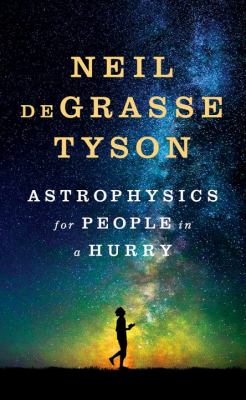
Astrophysics for People in a Hurry by Neil deGrasse Tyson was very popular with our next reader.  A quick but concise examination of the universe, Astrophysics for People in a Hurry offered incredible insight into the subtleties of astrophysics such as the nature of space and time, humanity’s place in the universe, and what quantum mechanics really mean.  “[The author] admitted there are things they don’t know,” our reader said, “and I was thrilled about that.”  He noted that, as a scientist, Tyson was willing to admit that human knowledge is still growing and expanding like the universe; moreover, he offered reflections on the cosmic perspective that was both enlightening and truly fascinating.


Nevermore also checked out a new book by Lisa Genova:  Every Note Played.  In her new novel, Genova tells the story of Richard, a world-renowned concert pianist with ALS, and his estranged wife, Karina, who is living an unfulfilling life as a piano teacher—and, soon, Richard’s reluctant caretaker.  As Richard slowly succumbs to his disease, he and Karina must reconcile their tumultuous past and learn forgiveness before it’s too late.  Our reader said, “This is a book that will make you cry.”  Although it was rather depressing and, of course, tragic, she noted that Every Last Note was incredibly well written, beautifully told, and wonderfully enlightening.


Next, Nevermore took a look at Kindred by Octavia Butler.  Dana, a modern black woman, is celebrating her twenty-sixth birthday with her new husband when, suddenly, she is transported from her home in California to the antebellum South—somehow summoned through time to save Rufus, the white son of a plantation owner.  Time and again, Dana is drawn back to the old plantation and each stay is longer, more arduous, and more dangerous until Dana fears her life will end long before it even begins.  Our reader, who is a fan of Butler, said she really enjoyed reading Kindred.  She noted that the author seriously researched her subject, drawing on historical details to give the story a strong sense of place and an astonishing emotional impact.  She highly recommended it to her fellow readers, along with Butler’s other works Fledgling and Lilith’s Brood.


Last, but certainly not least, Nevermore shared Angels in America by Tony Kushner.  Set in the 1980s, Angels in America is a Pulitzer prize-winning pair of plays that follows the interweaving lives of Prior, Louis, Joe, Harper, and Roy Cohn as they attempt to reconcile the disheartening truths of their world—and the heartbreaking reality of AIDS within the gay community.  Our reader said, “[Kushner’s play] was a tough book, but, at the same time, it’s tough to put it down.”  It’s very real, very raw, and limned with unexpected bouts of humor and heart-wrenching moments of tragedy.  Although she wouldn’t say she loved Angels in America, she liked it very much and she recommended it to anyone who might enjoy a serious, thought-provoking play on human nature.

Monday, September 5, 2016

Ghost Bride by Yangsze Choo


Reviewed by Ambrea


Li Lan, a young woman from an impoverished aristocratic family, stands to inherit little from her dissolute father and her marriage prospects are dwindling each year.  But, suddenly, Li Lan finds herself confronted with an unusual proposal from the wealthy Lim family:  they want her to become a ghost bride to Lim Tian Ching, a young noble who recently perished under mysterious circumstances.  Ghost marriages are uncommon, even in the sleepy port town of Malacca, but the wealthy Lim family is desperate to appease the spirit of their deceased son.

Despite the wealth she stands to inherit, Li Lan has no interest in becoming a bride to a ghost.  Haunted by Lim Tian Ching, her ghostly would-be suitor, and her growing attraction to Tian Bain, the Lim family’s new heir, Li Lan must fight for her freedom—and possibly her very soul—if she ever hopes to escape the clutches of the dead and marry the man she truly loves.  In this haunting debut, Yangze Choo takes readers on a marvelous journey through the Malaysian spirit world and the frightening underworld that exists just beneath the surface of Malacca.

I originally picked up The Ghost Bride on a whim.  I’d noticed a discussion thread on Goodreads which mentioned it and, after reading a quick synopsis, I found my interest piqued.  It qualified for my Read Harder Challenge and it sounded like a great story, so I thought, “Why not?”  And I’m very glad I decided to give it a chance, because I was pleasantly surprised by Yangsze Choo’s novel.  The more I read it, the more I loved it—and I quickly became entangled in the complicated relationships of Malacca and the ethereal spirit world that overlapped the city.

Detailed and intricate, The Ghost Bride was a fascinating and fantastical journey through Malaysian society of the late 19th century, a romp through the afterlife and funeral rites of the British colony.  I loved the history, the myths, the ceremonies and legends of Malaysia quietly woven into the story.  It was a beautiful narrative that crafted an eerie, but entirely unique afterlife, an intriguing story riddled with incredible imagery of a ghastly spirit world and strange, ghostly creatures.

It’s a bit of a dark, creepy story, a frightening fantasy that tickles at the mind and breeds doubt.  I was often left wondering how it would end:  would Li Lan escape her ghostly tormentor?  Would she be able to avoid the hungry ghosts, or would she fall into some malevolent spirit’s clutches?  It’s a story that kept me on the edge of my seat, but it also managed to give me chills.  I loved the ethereal qualities of the spirit world Li Lan encountered, like the ghosts which seemed intangible like a puff of wind or the paper funeral gifts that had a faint, fluttery quality.  I found the descriptions lovely and brilliant, and I constantly wanted to learn more of the strange and deadly underworld lurking just beneath the surface of Malay.

And, speaking of Li Lan, I thought she made a lovely narrator.  She’s a curiously free-spirited and progressive young woman, but she’s also a reflection of her society’s beliefs and expectations.  She’s living in a time of transition, when Malay is a colony of Britain in the late 19th century, so there’s a confluence of Malaysian traditions, Chinese folklore from next door, British exploration and industry that gives The Ghost Bride a unique flavor—and gives Li Lan a very unique perspective.

For this reason, she makes a wonderful storyteller.  She gives explanations about her culture, insights into her city and country without overwhelming the reader or, more importantly, compromising the flavor of the novel.  It may offer many explanations, maybe even more than strictly necessary, but it manages to give me a better image of the world which Li Lan inhabits.  It’s a complex, fascinating story full of plot twists and family secrets and traditions I don’t usually encounter, so I appreciated Li Lan’s ability to skillfully weave an intriguing tale and appropriately explain the things which I didn’t always understand.

I loved every minute of The Ghost Bride.  Granted, I thought the ending was a little unexpected, but, ultimately, I was pleased with the outcome—and, more importantly, Li Lan’s decision.  And, yes, it did get a little confusing, because I’m not familiar with the myths, cultural expectations, or beliefs of colonial Malaysia; however, I didn’t let my lack of familiarity deter me.  I was rewarded with a scintillating story rich in Malaysian myth and culture, a story so wholly unique and fascinating I couldn’t help becoming enthralled.